Now cycling is safer thanks to drones and IoT

Luis Simón Gómez Semeleder    12 September, 2019

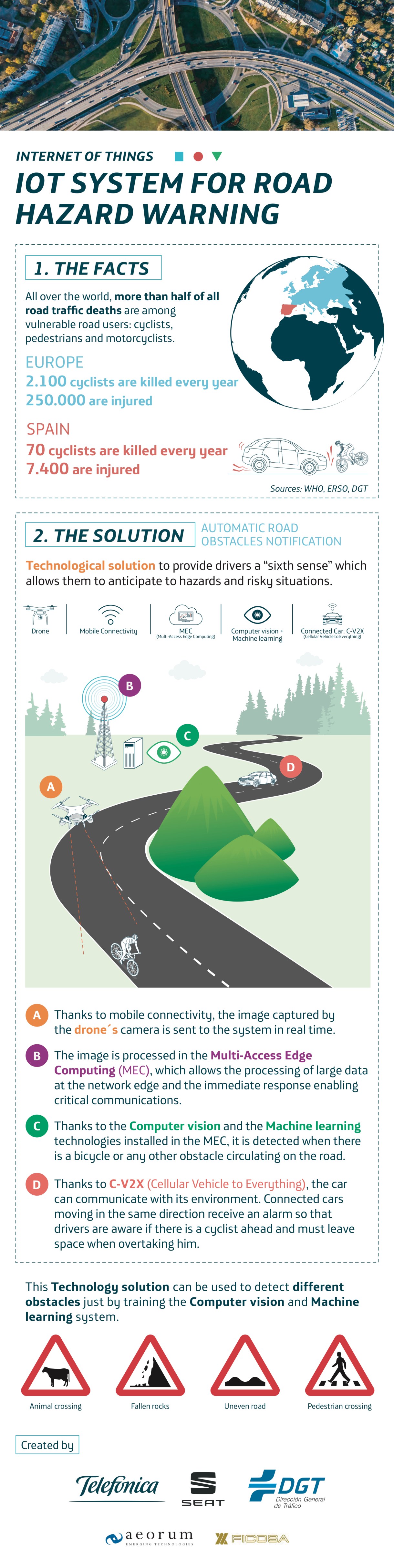
How many of us don’t feel safe overtaking a bike on the road?  The truth is that while driving a car we could be presented with a dangerous situation, but also if we are the ones riding on the bike. Now IoT technology can help us and give drivers a ‘sixth sense’.

Telefónica has been involved in the development of a road warning system that provides assisted driving. Using camera drones, it is able to warn the driver if there is a bicycle ahead or a vehicle stopped.

If you still can’t imagine how it works, find out in this infograph we show you today and see how  you can prevent accidents on the road thanks to Internet of Things.

Now that the Vuelta a España is taking place, we have tested this solution with Perico Delgado, former professional cyclist.
Aura arrives in Colombia to transform the relationship with its customers

Fernando Menéndez-Ros    11 September, 2019

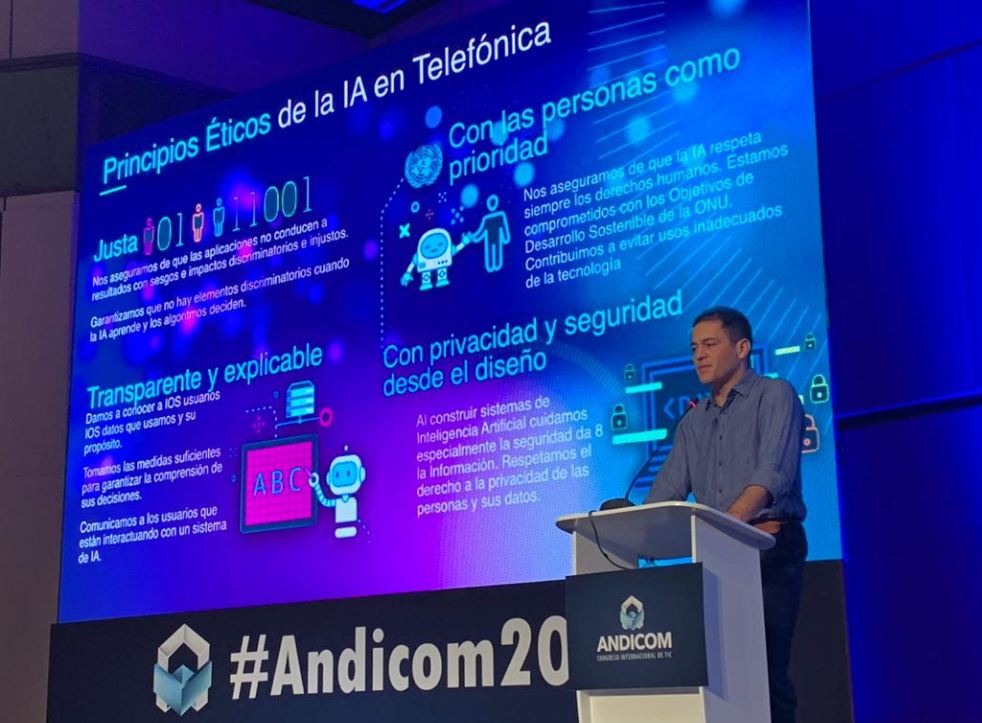
During the Andicom International ICT Congress, which took place last Friday in Cartagena de Indias (Colombia), the CEO of Telefónica Movistar in Colombia, Fabián Hernández, announced the launch of Aura through the Mi Movistar application. The virtual assistant, Aura, will allow the company’s users to find out, among other things, details of their data consumption, see their bill, their contracted products and services, and consult their balance in real time. All this using a natural language, in a personalised and simple way to make the relationship between the customer and the company easier.


“We are the first Telco in the country to launch an Artificial Intelligence system to facilitate our customers’ digital relationship with the company. With a renewed experience, and taking advantage of cognitive improvements and global synergies, through Aura we are strengthening our channels in Colombia to enrich our customers’ personal experiences by generating innovation with automated learning models,” said Fabián Hernández.

Fabián Hernández during his presentation at Andicom 2019

He also emphasised that, in the coming months, work will continue in the country to integrate Aura into new channels (the Website, WhatsApp, Call Centre and Facebook Messenger) and thus take advantage of cognitive improvements and global synergies.

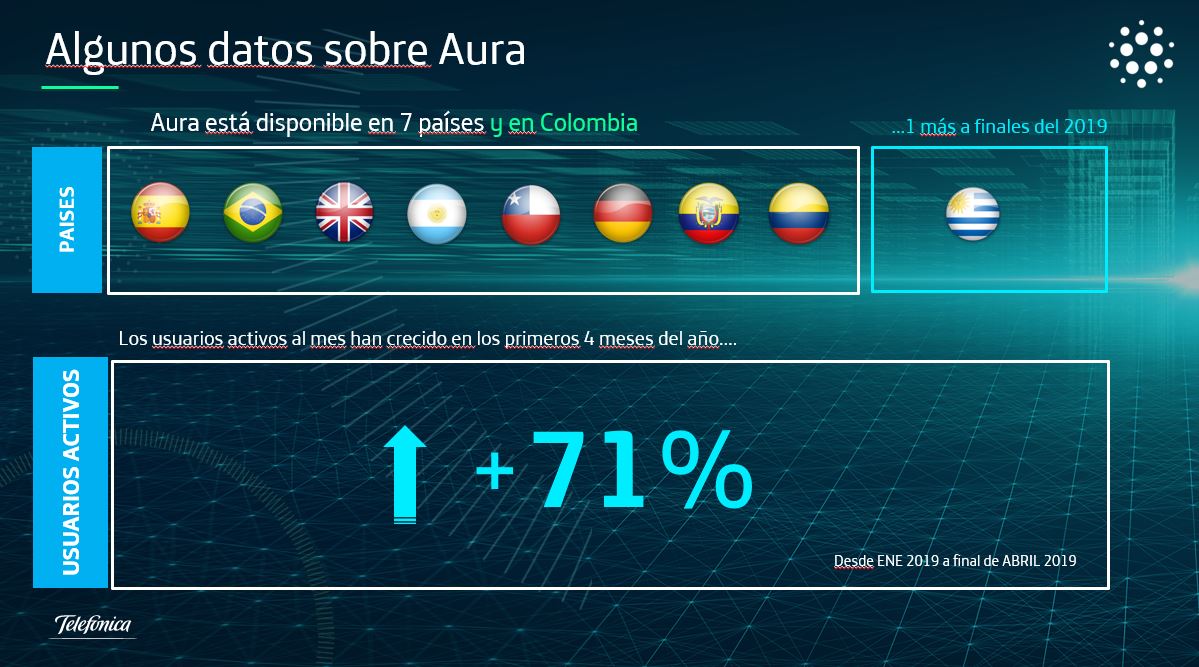
From a global perspective, Irene Gómez, Global Director of Telefónica Aura, has commented in various forums that Aura has more than two million active users per month and has grown at a rate of 71% in the first months of the year. The service is already a reality in eight countries: Brazil, Argentina, Chile, Ecuador, Spain, the United Kingdom, Germany, and Colombia. Aura is the result of Telefónica’s comprehensive digitalisation and its commitment to transforming the relationship with our customers, offering them personalised experiences in real time.

During the conference, Fabián also explained the scope of the company’s digital strategy, highlighting Artificial Intelligence developments in Colombia. He also commented that the country is the only operator in providing digital care through WhatsApp for B2C customers, through which various concerns regarding their services can be clarified using Bots. Use cases of AIOps (artificial intelligence for operations) have also been developed, and by July 191 cases had been developed and were in production. Another of the Company’s great advances is related to robotic process automation (RPA), whose objective is to reduce human intervention in the use of computer applications, particularly in repetitive tasks.

LUCA Talk: RCS for Business Messaging, a New Generation

AI of Things    11 September, 2019

It is undeniable that we are in the midst of a revolution in communications. With more than five billion active accounts in mobile messaging applications and a strong upward trend in the use and creation of voice assistants, we can say that how we communicate amongst ourselves, with businesses and also with technology is changing very fast. This is where the great potential of the Rich Communication Services (RCS) fits in.

RCS is seen as the next generation of SMS and offers an enhanced user experience, in order to increase the connection between the users (potential customer) and brands.

Figure 1: RCS is a new messaging service for businesses to communicate efficiently with their customers.

Businesses know they need to be where their customers are and, as communication trends are developing, customers want to be able to talk to businesses in a more convenient and personalized way, without sacrificing their privacy. This is what our expert Jenny Whelan, Head of Business Management at LUCA Advertising, spoke about in our last webinar. She explained how to take advantage of this effective way of communicating with our audiences and why it is vital to business strategy as we move forward. Click here to watch the complete webinar.

https://youtu.be/RbyLGZSPIDk

To keep up to date with LUCA visit our website, subscribe to LUCA Data Speaks or follow us on TwitterLinkedIn or YouTube .

Facebook signed one of its apps with a private key shared with other Google Play apps since 2015

Sergio de los Santos    9 September, 2019

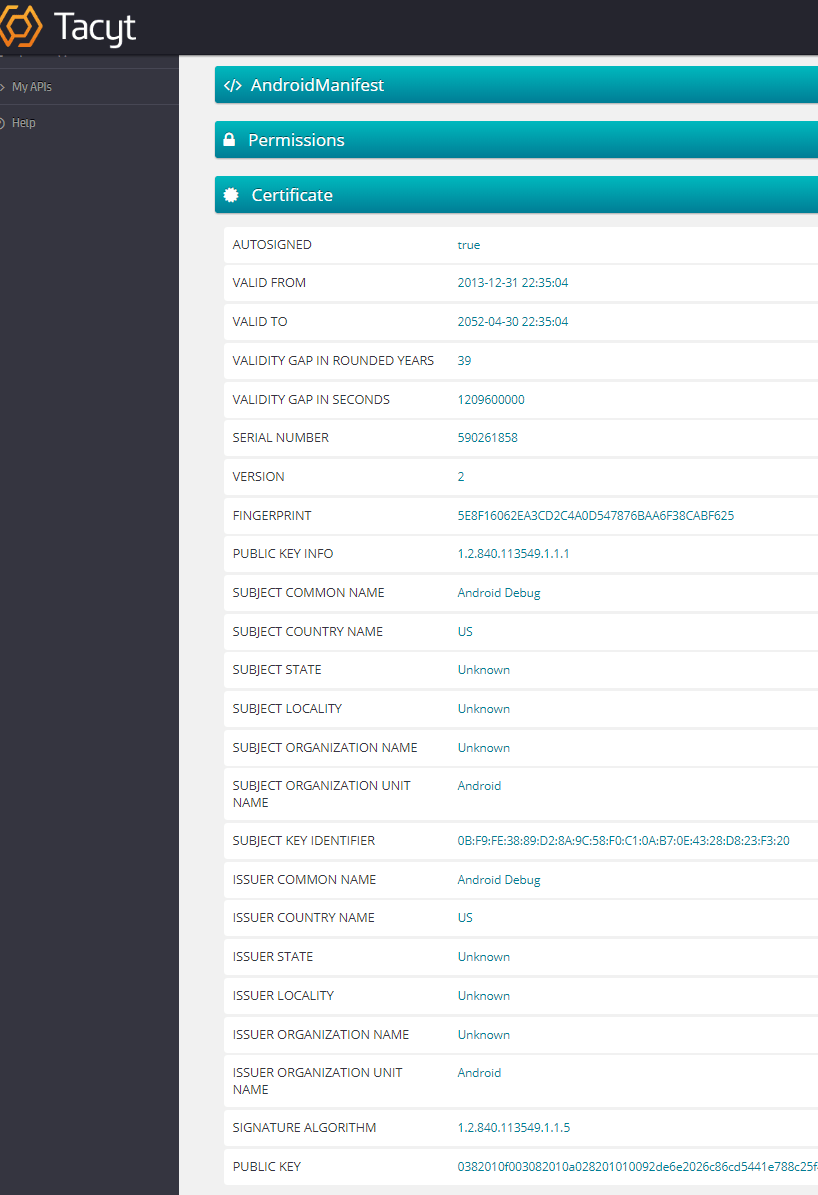
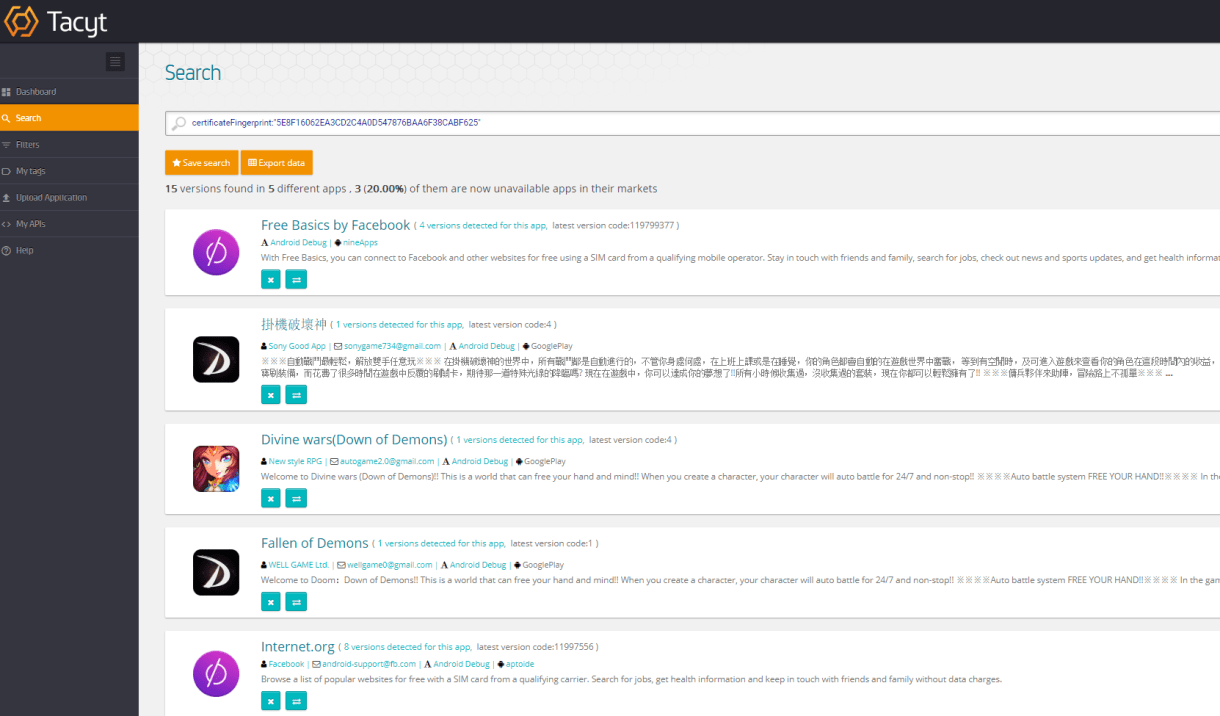
Facebook Basics is a Facebook app aimed at countries with poor connectivity, where a free access service to WhatsApp and Facebook is provided. It has been discovered that the Android version used a “Debug” certificate shared by other unrelated applications and in other markets. Moreover, within ElevenPaths we have verified that since 2015 such certificate was shared with Chinese apps on Google Play. This means that they shared private key and could even influence the original app.

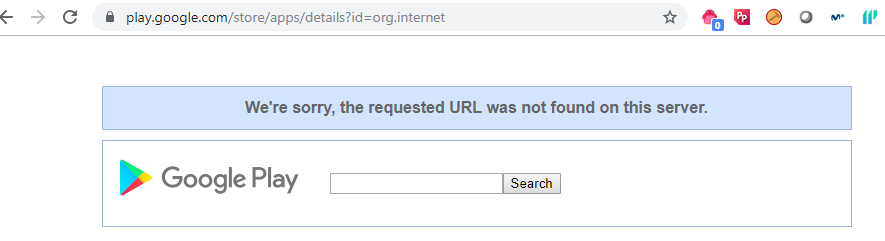
A few days ago, the owner of the Android Police page reported that the same certificate used to sign the app Facebook Basics was being used by many other apps in other markets, with no apparent relationship.

Facebook has downplayed the issue by claiming that there is no evidence that the certificate has been exploited and that it has already been fixed. However, this is not so simple, so both consequences and potential causes are only bad news.

Causes

Android APKs must be signed with self-signed certificates. This breaches a little bit any rule from a chain of trust, but at least it preserves the integrity of the app and allows its updating. If you sign an app with a certificate and upload it to Google Play, you will never be able to change the certificate (or the package name) if you wish to update it. If you lose the certificate, you will have to create a different appꟷand this is what Facebook has done to “fix it”.

Nevertheless, Facebook has not (supposedly) lost the private key of the signing certificate. They have done something different (worse?) what we can only speculate about. To begin with, they have used an ‘Android Debug’ certificate without real filled data. This, in addition to the bad image, means that they have left the typical test certificate at the production stage.

How is it possible that third parties use this certificate? This certificate might be public. There are some cases, and some developers use it by ignorance or because they do not make efforts to develop high-quality apps… But they may have lost control over this certificate as well, which would imply a lack of security over its development. Another possibility is that the app had been commissioned to a third party (freelance?) and this one worked on it later by signing with the same key (which is strongly inadvisable).

Furthermore, from ElevenPaths we have ascertained that the apps signed with the same certificate were not exclusively in other markets, but that already in 2015 (when Facebook Basics was released) we found Chinese applications signed and already taken down from the market.

* App: af739e903e97d957a29b3aeaa7865e8e49f63cb0
Signed with: 5E8F16062EA3CD2C4A0D547876BAA6F38CABF625
On Google Play from approximately 2015-09-20 to 2016-10-07.
* App: 063371203246ba2b7e201bb633845f12712b057e
Signed with: 5E8F16062EA3CD2C4A0D547876BAA6F38CABF625
On Google Play from approximately 2015-10-21 to 2016-06-22.
* App: c6a93efa87533eeb219730207e5237dfcb246725
Signed with: 5E8F16062EA3CD2C4A0D547876BAA6F38CABF625
On Google Play from approximately 2015-09-15 to 2015-09-16.

Impact

In addition to the poor image of Facebook (is there any area where privacy has not been brought into question?), an attacker could have taken advantage of this to fraudulently update the app of Facebook. How? Well, to update an app it just needs to have the same certificate and it is only necessary to have access to the Google Play account. It’s not easy, but with this Facebook was doing half the work to be performed by an attacker.

Moreover, the work to perform a potential collusion attack in Android applications would be facilitated as well. These are well-known attacks involving different applications which are not malicious by themselves but working together may lead to an attack. An example is by adding permissions of two applications so that together the attacker can have more power on the phone, even if individually they seem harmless. To achieve this kind of attacks, such apps must be signed with the same certificate. Again, the necessary work was being provided to a potential attacker. On top of all this, Facebook did not want to reward the discoverer because he made it public on Twitter before reporting the issue.

Can Big Data help reduce Deforestation in the Amazon?

Olivia Brookhouse    6 September, 2019

The disturbing images and videos of the Amazon ablaze last month were truly shocking and saddening. Not only trees, but wildlife, animals, habitats and homes burned to the ground. 41,858 fires have been recorded so far this year in the Brazilian Amazon which is the highest number since 2010. Furthermore, satellites used for hotspot tracking in Brazil have limited capacity to detect sub-canopy fires, meaning the reality of the situation could be even worse. The environment has been in a state of emergency for decades and continued destruction puts our health, lives and existence on earth at even further risk. So how can Big Data and Artificial Intelligence Technologies help?

The extent of the fire in the Amazon area is shocking and threatening, not only for Brazil and the other affected countries, but also for the whole world

Spokesperson for Angel Merkel

To put the situation into perspective, if the current rate of deforestation continues, around 18.7 million acres of forest are lost annually which is equivalent to 27 soccer fields every minute. The WWF estimates that 27% of the Amazon will be completely without trees by 2030. Between 1990 and 2016, the world lost 502,000 square miles (1.3 million square kilometres) of forest, according to the World Bank. Currently forests cover 30% of the world but are at risk by human-driven deforestation due to illegal logging, agricultural expansion, cattle breeding, mining, oil extraction, dam construction and infrastructure development.

The process of deforestation has heightened with the election of right-wing president, Jair Bolsonaro. He hasn’t actively encouraged the destruction of the Amazon, but has turned a blind eye to the increase in agricultural expansion and urbanization which would help achieve his economic development plan.

WWF have launched an initiative to save forests with Big Data and forensics to tackle illegal wood trading, one of the primary causes of deforestation in the developping world. With the use of Big Data, WWF are able to analyse trade data to correctly identify log exports from countries that have known export ban. WWF has teamed up with data scientists at Virginia Tech University in order to create a software tool and algorithms that could eventually be incorporated within law enforcement agencies to identify suspicious timber shipments.

This could allow for appropriate corrective measures in areas where illegal wood is being traced to most. So why should we be protecting the Amazon in particular?

Indigenous populations of the Amazon who are threatened by Deforestation

The region is home to 10% of the worlds’ known species and 75% of all plants found in the Amazon are unique to the region. The diversity of plant species is the highest on earth with some experts estimating that one square kilometre may contain over 75,000 types of trees and 150,000 species of higher plants. Biodiversity is extremely important to many functions, such as:

  • Protection of water resources
  • Nutrient storage and recycling
  • Pollution breakdown and absorption
  • Contribution to climate stability
  • Maintenance of ecosystems
  • Recovery from unpredictable events

We must not also forget about the hundreds of indigenous populations who have called the Amazon their home for 1000’s of years and have been displaced as a result of the fires.

Forests are the lungs of earth, but we are treating them like kindling. Deforestation is bad for the environment in two sesnes. It destroys biodiversity which ensure the stability of the climate, moreover ecosystems and trees play a vital role in removing toxic greenhouse gases already present in the atmosphere in a process called carbon-cycling. When Carbon Dioxide is not absorbed, it contributes to global warming. Furthermore, burning instead of cutting the trees down, (often used to speed up the process of deforestation), is even more harmful, as they release the carbon dioxide stored inside them along with other harmful gases.

The Amazon is home to 10% of the world’s known species

Despite Jair Bolsonaro’s best efforts to deny the evident increase in deforestation, he has still been the target of many environmental protesters since his election in January earlier this year. He has even refused help by the G7, led primarily by Macron to fight the fires to get the situation under control, stating that the proposal to “save” the Amazon portrayed Brazil as a colony or a no-man’s land. Increased action comes at a time when official data from Brazil’s environment agency shows fines for environmental crimes from January to 23 August dropped almost a third compared with the same period last year.

Whilst Jair Bolsonaro may be unwilling to halt his plans of deforestation all together, other Big Data initiatives are being employed to maintain ecosystems and reduce deforestation. 20tree.ai is combining AI and satellite imagery powered by NVIDIA’s (NVDA) computing power to gain information into forest composition like tree species, tree height and diameter (DBH), tree growth and productivity, resulting in more efficient use of resources and limited negative impact. Analysing the land can aid in maintaining endangered zones.

Our system enables us to gain insights into the impact of deforestation, drought, plagues and unsustainable forest management, which previously were unattainable

Den Bakker, CEO and Co-founder of 20tree.ai

The forest management system by 20tree.ai allows for the monitoring of entire forests in a fraction of the time while providing near real-time intelligence into forest and wood inventory. The system is used by locals, NGO’s, corporates and governments to get actionable insights about deforestation, drought, insect plagues, soil health, storm damage, and other forest disturbances.

At LUCA Telefonica Data unit, AI and Big Data technology is being used to help solve the effects of climate change within their department of Big Data for Social Good. Initiatives include using telephone data to improve preparation and responses to natural disasters, to analyse migratory flow data due to climate change and provide insights that help predict NO2 levels in cities.

https://www.youtube.com/watch?v=F8SqWg0lHPs&list=PLi4tp-TF_qjOXBQIEEBH8znMMuIkrQzqI&index=1

To stay up to date with LUCA, visit our Webpage, subscribe to LUCA Data Speaks and follow us on TwitterLinkedIn YouTube.

New tool: Masked Extension Control (MEC), don’t trust Windows extensions

ElevenPaths    3 September, 2019

Windows relies too much on extensions to choose the program that must process a file. For instance, any .doc file will be opened by Word, regardless of its “magic number” (the first two bytes that define the real nature of a file better than its extension). This may entail serious security problems. Opening .rtf files that exploit vulnerabilities in Word may be avoided if such files are processed by WordPad, for example. Masked Extension Control (MEC) is our open-source response to solve this, since each file is opened with the appropriate program and consequently the risk of exploiting vulnerabilities due to masked extensions is minimized.

What is Masked Extension Control?

Masked Extension Control is a program that makes Windows rely on magic numbers, and not only on extensions, to choose the program that will be used to open a file. This is much safer for your system, since a lot of attacks begin by fooling extensions and trying that a vulnerable program opens or executes them ꟷinstead of the one the file is really supposed to be opened with.

Prevent attacks based on fake extensions

Attackers usually change file extensions to make you trust the file, and this is dangerous. For example, some very popular attacks make .rtf files to be opened with Word, just by replacing the .rtf extension with .doc or .docx. This way, they build exploitable .rtf files that will take advantage of Word vulnerabilities or weaknesses to release their payload. However, if these .rtf files were opened by WordPad, the threat will disappear.

Easy to use

This program does not need to be resident on memory. It modifies the Windows registry to open .mht, .doc, .rtf and .docx files with the appropriate program, so trusting in magic numbers instead of extensions. If you want to stop using it, you just need to uninstall it.

Most common formats and extensions

Not only .rtf and .doc files, but .mht files as well: if they are opened with Word, some vulnerabilities may be exploited, but if they were opened with a browser it is less likely that something occurs. Masked Extension Control works even with malformed magic numbers in .rtf (which is much more common than you might think).

https://www.youtube.com/watch?v=AIsXkaynpAo

Masked Extension Control is an open-source tool written in C#, so any contribution will be welcome. It is available from: https://mec.e-paths.com

IoT transforms the gaming universe

Beatriz Sanz Baños    29 August, 2019

Debate is open between those who think that the traditional game console is dying and those who think that it still has a lot of life to live. Could the Internet of Things be its salvation? Experts think so.

In Spain, the video game industry billed more than 1.5 billion euros last year. This figure gives us a clue to the growth that the gaming world is experiencing in our country, where in the last 10 years the games, devices and ways of playing have changed so much.

Although game consoles and computer games are still very popular, the mobile video game industry has grown exponentially with the emergence of free games. In addition, as more and more devices connect to the Internet of Things, developers have been creating more social games and applications, focused on creating connected communities in which users can interact.

The popular Pokémon Go! is a great example of how IoT combined with augmented reality has incorporated mobility to video games and also makes players feel part of the game’s narrative. A few years ago, to enjoy a video game you had to be connected to a screen from home. However, IoT allows us to go catching Pokémon by synchronizing the app with the GPS, camera and other sensors of our smartphone.

Platforms such as Microsoft’s Azure Service Fabric are helping to collect usage data in real time, which developers can use to create more amazing experiences for similar players in real time. Currently, all Xbox titles such as Halo and Forza use IoT to improve the feeling of connectivity in their games.

IoT has also made possible the gamification of certain activities that are part of our daily lives. For example, health and wellness apps are trying to make sports attractive and fun for its users. The Zombies Run! app is linked with activity wristbands and with the smartphone to make the user feel that he is running to save himself from the zombies and fighting the apocalypse in his races.

Smartphones and tablets contain a variety of sensors (cameras, accelerometers, tactile and pressure sensors and even heart rate monitors) but accessories have also evolved and adapted to the Internet of Things era.

This is the case of the ARAIG suit, a gaming vest with multiple sensors and functionalities to create a unique gaming experience. It has a transmitter that connects to the game platform and updates the physical and sensorial information of the player. The suit also has speakers with surround sound for a full audio immersion and vibration sensors on the torso and shoulders so that the player experiences all the sensations, as if he were in the game.

The future of video games will be cloud gaming and this is where IoT will have a more relevant role. Cloud gaming will allow developers to skip platforms such as PlayStation, Xbox, iOS and Android to connect directly with gamers, all due to the possibilities that IoT will bring.

New Business Opportunities with IoT

Beatriz Sanz Baños    21 August, 2019

IoT combines virtual and real worlds for smart devices to generate a wealth of information, such that objects can act without human intervention.

One way or another, the development of technology has always been a revolution in the business sector. In the case of Internet of Things, its use in the internal organizational aspect of companies can be considered revolutionary in terms of optimizing work.The connectivity provided by the use of technology devices in the cloud allows users to create new market strategies and new business models.

IoT combines virtual and real worlds for smart devices to generate a wealth of information, such that objects can act without human intervention. In the business field, this generates a number of advantages, such as optimizing asset usage, improving the customer experience, saving on operating costs or creating new jobs.

On one hand, this technology allows companies to identify their strengths and weaknesses. This is because they are aware of the activity of their customers and even their interests due to the data provided by these devices. This is an advantage, because the company can tailor the products or services offered to the specific needs of each customer. On the other hand, it also allows for the analysis of strengths and weaknesses of the employee in order to make the smartest decisions and distribute work in the most efficient way.

Business logistics are also improved, facilitating coordination with distributors and suppliers. The implementation of IoT in the production chain allows companies to anticipate when they will run out of stock before it happens. Sensors can alert you if a product is running low, so you can quickly replenish when needed. An example of IoT applied in logistics is Fleet Optimise, a service that begins with the installation of a device on a company’s distribution vehicles, later obtaining real-time vehicle usage and status information. This allows for the optimization and protection of personnel, vehicles and cargo.

IoT’s remote monitoring reduces operating costs by automating internal and external processes and allowing for the redistribution of available resources more consistently with business objectives. Examples include IoT services such as Things Ready Link, which gives companies the ability to connect their assets to monitor statistical data on their operation at all times, or Spotlabel, an easy-to-install and self-managed digital tagging system with which companies can create smart point-of-sale methods.

The great challenge that companies working with IoT must face is the control and management of this type of technology. Employees must be trained to know the functions of these new devices in order to take full advantage of them and to ensure that there are no errors in their use. In this way, the installation of this technology also entails the creation of new jobs. In fact, new courses and master’s degrees specializing in IoT operation are progressively being established.

This type of technology has already been successfully used in various market sectors such as agriculturetourismhealthretail, construction and the mass productionindustry. This variety is a demonstration of what IoT can offer to make business environments more efficient and productive.

All of this without losing sight of the main objective: to facilitate the day-to-day life of the people involved in the different processes. After all, human beings are at the center of all IoT transformation.

Improving Effectiveness at a Call Center with Machine Learning

Víctor González    19 August, 2019

Understanding our clients and giving the best response to meeting their needs in the shortest amount of time possible is key to improving satisfaction and engagement with the company.

The problem begins when the number of clients is high and we are receiving hundreds or thousands of messages per day. In this situation, we have two problems to solve. First, we have to prioritize which messages we are going to respond first and, second, we have to understand what it is that they are saying. It is clear that some messages will be more important or more urgent than others and that it will not always be easy to prioritize. To make things easier, we can use Machine Learning techniques to help with this task, which can do part of the work for us.

In this post, we are going to focus on the case of a Call Center for B2B clients of a Telco operator. Part of the communication and management with the clients of the Call Center is done by e-mail. By analyzing these e-mails, it is possible to extract some metrics that can help us to understand the needs of the clients who communicate in this way. This analysis is mainly done through Natural Language Processing (NLP) techniques. In fact, we did the analysis on two levels:

  • Operational level – This level is more basic and implies a level of sending and answering e-mails. This is done simply by analyzing the subject lines of the e-mails.
  • Content level – In other words, processing the content of the messages from the clients in order to automatically classify them according to their content. We can understand this to be rules of filtering that we program for our e-mail clients, but much more advanced.

The analysis on the operational level allows us to obtain simple metrics such as how many e-mails are received by the Call Center, from which clients, what times the most e-mails are received, how long it takes to respond to each e-mail, etc.

But it is also possible to carry out a more complex analysis, extracting data from entire conversations: analyzing e-mails from one conversation (an e-mail thread), we can discover how long we take in solving a client’s problem, how many people from the Call Center were involved or which departments were involved.

The content level analysis is more complex as it requires a more sophisticated pre-processing of the data, but it allows us to extract much more interesting insights. E-mail cleaning includes extracting the body of the messages, cleaning them (here the challenge is to eliminate signatures or responses to other e-mails) and using Natural Language Processing (NLP) techniques that allow us to transform the content into characteristics that can be understood by the automatic learning algorithm that we want to use. This step usually includes eliminating stop-words (words without meaning such as prepositions or articles), creating “bags of words” or “n-grams” and vectorizing them with algorithms such as TF-IDF.

Once the data is prepared, we can feed an algorithm that will learn to automatically categorize the e-mails. We approach this problem as one of classification as the operator provides us with the categories in which they want the e-mails classified. Thus, we end up with eight categories (activations, line modifications, technical incidents or cancellations among others) that we manually tag together with the data for training.

Although this may seem like a laborious process, interesting results can be obtained very quickly. For example, with a sample of just 100 tagged e-mails, it was already possible to distinguish perfectly some of the categories suggested by the client.

As follows, we detail some of the KPIs that we obtained from the Call Center:

  • Average response time by the operators
  • Incident resolution time (that is, the time between the first and the last e-mail in the chain of e-mails)
  • Size of the e-mail inbox and list of incidents to be resolved in each moment. That is to say, the number of e-mails to be answered and incidents to be resolved in each moment (we can obtain the sizes of these waiting lists by hour or day of the week), which allows us to know if we are on top of incidents.
  • As we process the content of the e-mails, we can categorize them automatically and with these categories, we can automatically assign categories to the correct person to answer them.
  • Additionally, knowing these e-mail categories, it is possible to have metrics for each category in advance. For example, volumes and response times per category.

In this post, we have seen which metrics we can obtain from an analysis of e-mails from the clients of a call center. By analyzing the subject lines and content of the e-mails, it is possible to obtain metrics that provide us with KPIs of the operational and dimensioning capacity of the Call Center as well as data that helps us to profile clients and their needs.

To stay up to date with LUCA, visit our Webpagecontact us and follow us on TwitterLinkedIn YouTube.

Could Artificial Intelligence be used to prevent suicide?

Olivia Brookhouse    19 August, 2019

The UK and Europe are experiencing a Mental Health crisis, where Suicide is the most common cause of death for men aged 20-49 in England and Wales. According to the World Health Organization, even 10% of children (aged 5-16 years) have a clinically diagnosable mental health problem. With Artificial Intelligence and Machine learning technologies being rolled out into many healthcare services, could AI also be the solution to prevent suicide?

Artificial Intelligence in Healthcare can be used to aid early detection, diagnosis and decision making for Heart Disease, Cancer and many more. Not only helping reduce strain on the NHS, but in many cases providing a more accurate and efficient service. The use of AI enables the review and translation of mammograms 30 times faster than conventional analysis, at a 99% accuracy rate, reducing the need for unnecessary biopsies. Could the same concept be applied to detect the often invisible illnesses that lead to suicide?

Employing Big Data to detect symptoms of depression is something LUCA has talked about before. Early detection of mental health problems could help local authorities provide appropriate services to those most in need. It is estimated that 70% of children and adolescents who experience mental health problems have not had appropriate interventions at a sufficiently early age. “#It’s okay not to be okay” went viral on social media last year, encouraging those struggling to reach out, regardless of the severity. However, with limited funding and long waiting lists, even those who seek help, often do not receive it fast enough, and in some cases, will not receive any help at all.

So how could AI help? Crisis Text Line in the US are using machine learning to extract words and emojis that highlight someone may be at a higher risk of suicide or self-harm. The system will prioritise incoming messages according to need. At the Vanderbilt University, a study was undertaken to assess the effectiveness of Machine Learning in anticipating high risk cases.  The outcomes showed that the system accurately anticipated future suicide attempts with 84 to 92 percent accuracy, within one week of a suicide event. Healthcare services must look closely at these kinds of studies, considering we live in a world where one person loses their life every 40 seconds to suicide, amounting to 800,000 every year.

One of the hardest aspects of suicide prevention is providing enough data to machine learning systems to ensure they can accurately assess the severity in each situation. Using patients records, Amazon has launched a new service called Amazon Comprehend Medical that uses machine learning to identify trends in diagnoses, treatments, medication dosage and symptoms. The sources include prescriptions, doctors’ notes, audio interviews and test reports. However sophisticated, the process required to input the data is still arduous.

Identifying this information today is a manual and time-consuming process, which either requires data entry by high skilled medical experts, or teams of developers writing custom code and rules to try and extract the information automatically.

Concerns over data privacy have been raised in response to many of these developments. Never a stranger to controversy, Facebook in the US has introduced suicide prevention algorithms which complies phrases found in posts on the platform to identify people at risk. However, medical experts are concerned that Facebook is compiling pseudo-health information and categorizing people accordingly. Since Facebook introduced livestreaming on the site, they have experienced complaints over the streaming of illicit content, including suicides. The site now, if it deems the case serious enough will contact emergency services to dispatch immediate help. Problems occur when ‘high risk’ individuals are wrongly identified and unnecessary measures are taken.

Is it better to be safe than sorry or does this cross a line? Whilst Facebook has rolled out its suicide prevention in the US, the EU has stalled the expansion across the Atlantic due to the data privacy concerns.

Communication experts are also sceptical about the ability to identify complex mental health problems from the social media platform alone, especially cases that are less overt. Even verbal components only convey 1/3 of human communication, hence nonverbal components such as facial expressions are important for recognition of emotion. Researchers at Stanford have recently explored the use of machine learning to measure the severity of depressive symptoms by analyzing people’s spoken language and 3-D facial expressions aiming to give a more rounded analysis. 

Whilst AI has a large role in the detection side of diseases, could it also be utilized for treatment. Woebot is a conversational chatbot which aims to identify symptoms of anxiety and depression in young teens. The chatbot tracks moods through graphs and displays the progress every week. Then, using Cognitive Behavioral Therapy (CBT) the chatbot creates an “experience of a therapeutic conversation for all of the people that use him.”

AI may become an advanced assistant but will it ever replace a doctor? The reality is that AI in healthcare is still at a developping stage and at an even earlier stage at detecting and responding to complex emotion, especially those emotions which individuals will often try their hardest to conceal. If AI could be used to detect those cases in which “nobody saw it coming” and personalize a response to console the individual or help doctors in their analysis, the benefits could be enormous.

To stay up to date with LUCA, visit our Webpage, subscribe to LUCA Data Speaks and follow us on TwitterLinkedIn YouTube.