How to fund your data journey

Richard Benjamins    3 October, 2018

As of 2018, most large multinationals have started their journey to become a more data-driven organization, usually as part of their digital transformation. For most of them, it is also clear that starting a data journey requires funding: a team needs to be created and a data infrastructure needs to be available (cloud or on-premise). The first pilot projects will be selected, usually together with several of the business areas. If the pilot is successful, it will be put into production to obtain the data benefits on a structural basis. For instance, a churn pilot gets a customer dataset from the marketing department and predicts with Machine Learning techniques what customers are at risk of leaving the company, and then tries to retain them. The number of retained customers can be translated into retained revenues. Putting this into production means that the marketing dataset is provided every week or month, the algorithms are executed automatically and the result is fed into the appropriate marketing channels to reach out to the customers.

At the beginning of the journey, there is usually not too much discussion on who pays for what. The important thing is that things are happening and moving forward. But when the team grows, more pilots see the light and need to be put into production, questions about funding arise.

Should the corporation continue to invest in the team? Should the business pay all or part? If the corporation keeps funding it, should the business be charged? At what rate should the charge be? If the work involves a third-party company, who is paying for them? Moreover, multinationals are usually formed by different legal entities and doing things for “free” is not easy to handle from a tax and anti-competition perspective.

There are no unique answers to those questions, but what we can see is some patterns depending on the “data maturity” of the organizations. In general, as illustrated in Figure 1, corporate funding is available in the beginning, and over time, with increasing data maturity, central funding goes down, and business funding goes up. Usually, a small part of central funding remains to explore and test new, innovative technology and use cases.

Figure 1 Typical funding evolution of data initiatives

A specific application of this funding strategy is that the corporation funds the central initiative for a few years so the businesses get used to it, and from a certain decision point, joint funding happens, as illustrated in Figure 2. The advantage of this joint funding model is that the corporation can still stimulate strategically relevant local investments, but businesses also need to invest, avoiding the pitfall that “gifts” are easily accepted but not put into practice.

Figure 2 Funding starts central, and, at some point in time, it becomes joint funding.

Looking at the different stages of a data initiative: pilot, deployment, production, there are two main models where corporate funding diminishes over time, as illustrated in Figure 3 and Figure 4.

Figure 3 Corporation funds pilot and deployment, business funds production

In earlier stages of the data journey, the corporation might fund the data initiative in pilot and deployment stage, and the business takes care of funding the production part (Figure 3).

Figure 4 Corporation funds pilot, business funds deployment and production

However, it is more common that the corporation only funds the pilot part, which will be reusable among many businesses, whereas the deployment and the production part are fully funded by the business as they are business specific and not reusable (Figure 4). The latter strategy is also more acceptable from a tax perspective, keeping only the Group functions at the corporation.

As a creative funding approach, the corporation can use the availability of free data assets to stimulate the business to step up their efforts in the data journey by, for instance, investing in data quality, governance or adopting a centrally developed data model. This implies that the corporation continues to fund data initiatives, but businesses can only take advantage if they comply with the corporate data strategy and standards. This model is illustrated in Figure 5.
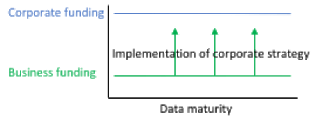
Figure 5 Stimulating local businesses to comply with a corporate data strategy

There are, however, also situations where the first funding comes from the business, and the corporation steps in at a later stage. This is the case when a leading business in the Group explores a data initiative on its own account, and the result is considered a best practice. In this case, the business has funded the pilot and the deployment, and then the corporation steps in to turn the successful initiative into an asset that can be reused (deployed and put in production) by the other businesses of the Group. This situation is illustrated in Figure 6.

Figure 6 Funding starts by a leading business unit. Then the corporation steps in to fund the development of a reusable asset that can be used by other businesses in the Group

Don’t miss out on a single post. Subscribe to LUCA Data Speaks.
You can also follow us on TwitterYouTube and LinkedIn

Leave a Comment on How to fund your data journey

Madrid is IoT

Cascajo Sastre María    2 October, 2018

Madrid has positioned itself as one of the Smart cities of reference thanks to the use of connected devices to manage the fight against pollution, lighting, traffic, parking of vehicles or public safety.

Leave a Comment on Madrid is IoT

Now the lighting is also smart

Cascajo Sastre María    28 September, 2018

Each time we surround ourselves with more interconnected accessories, systems and applications that make our lives easier. Who would have imagined a few decades ago the development of a technology capable of making the objects that surrounds us every day smarter?

IoT surprises us once again with a solution to monitor the use of light through an intelligent system. It is a new technology capable of managing lighting in the home, facilitating energy savings and offering multiple customization possibilities.

Home automation, Internet of Things in the home

Internet of Things finds its way not only in the spaces destined to events and conferences, but it also sets out to be installed in our homes. In fact, the domotic revolution has already brought us several technologies that allow the automation and intelligent control of our homes. Imagine that we have left an appliance plugged in before leaving home and we only realize it when we arrive at work … it will no longer be a problem thanks to smart plugs.

IoT allows us to control electrical appliances so that they can be disconnected from the current easily and from a distance. We can also save time in the management of domestic tasks thanks to the intelligent cleaning that, by means of infrared rays, distributes vacuum cleaner robots or throws air freshener around the house while we are away, so that when we arrive at our home we find it clean and cozy. The same happens with other solutions such as intelligent security, which allows access to video cameras installed in the home through a device.

Intelligent lighting at home, without cables and catered to your needs

Internet of Things in lighting comes from companies such as Phillips and SPC, which have developed technologies that automate lighting preferences in both commercial spaces and at home. Something as innovative as light bulbs connected to WiFi and automatic shutdown devices thanks to geolocation are some of the advances that have been presented and that can be marketed and installed in offices.

These intelligent lighting systems facilitate energy savings, which not only affects the user’s pocket but also the care of the environment thanks to the reduction of pollution in cities. This saving is based on a better use of resources and the study of rates per time slot. In addition, monitoring offers data and analysis that will improve the consumption habits of each company, achieving greater efficiency.

Lighting is not just a means of seeing; it goes beyond for those who value the experience of the illuminated space. Well-treated light totally transforms an environment and is capable of generating experiences that have more to do with the emotional than with the view: would you illuminate the conference room the same way as the work space? That’s why intelligent lighting also offers services such as choosing the color temperature or saving your favorite light scenes to use them to your liking with just a click.

Intelligent lighting in large spaces

Intelligent lighting offers endless possibilities that will allow us to live more efficiently and productively not only at home or in the company, but in many other spaces. Its application on the streets and highways of citiescan be combined with traffic lights and electronic signs to improve traffic flow. Vehicle use can also be reduced thanks to the use of IoT lighting that is able to inform in real time about empty parking spaces.

In a few years we will be surprised at how fast this technology has spread to shopping centers, train stations or airports, improving the efficiency and safety of users.

Leave a Comment on Now the lighting is also smart

Successful digital campaigns with Smart Insights

AI of Things    27 September, 2018

Post written by Carlos Vayas, Business Manager Big Data & Advertising

The key to executing a successful digital campaign is having the appropriate data at the time of decision making and the ability to optimize actions based on real-time data. For that reason, many big brands are exercising in-house activities, previously assumed by the agency, such as planning, budget management, relationship with the media, etc. This path chosen by 60% of the advertisers ensures, in addition to gaining agility, having a team with a greater analytical capacity of the data and greater confidentiality of the same.

Once this team, capable of designing the best online strategy based on data, is formed it is essential to adopt the best solution to ensure good management, analysis and optimization of customer target data. With this objective, Movistar Ads has created SmartInsights, a descriptive and predictive indoor data analysis tool.

With this tool, the target profile of the clients that enter or approach the point of sale is studied, with the aim of delivering relevant insights on their indoor behaviour through the platform. The insights are presented in an aggregated and anonymous form. Only Movistar customers who have given their consent to receive advertising will receive text messages containing the offers.

SmartInsights is a powerful proposal that complements SmartSteps with various cases of use in retail, supermarkets, banking, mass consumption, etc. In this way, the solution supports the construction of the mobile strategy of any company.

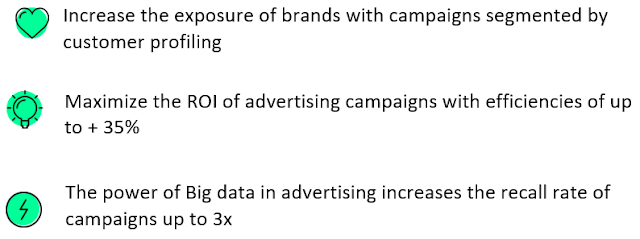
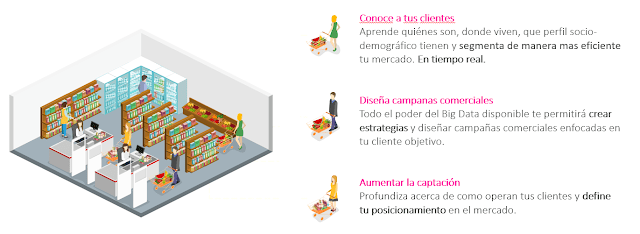
With real time access to data, Smart Insights will radically change the market:

Don’t miss out on a single post. Subscribe to LUCA Data Speaks.
You can also follow us on TwitterYouTube and LinkedIn

Smart Mobility, distances connected

Cascajo Sastre María    26 September, 2018

Thanks to the rapid advances in mobility, we have realized that the systems that facilitate the transport of people and that connect different points of the city are undoubtedly the backbone that sustains the order and proper functioning of the metropolis.

The most outstanding qualities of mobility in a city have always been fluidity and sustainability, however, in recent years it has become essential that this mobility also becomes completely connected. Internet of Things gives us the opportunity to improve mobility services for citizens, correctly manage the demand in transport networks and even generate economical value and protect the environment.

The most outstanding qualities of mobility in a city have always been fluidity and sustainability. In recent years it has become essential that this mobility also becomes completely connected. 

That is why we highlight some solutions that can turn any city into a Technology City in which all mobility resources are managed with sustainability and efficiency.

  • Big Data: The collection of the vast amounts of data that we create in our daily lives allow the most innovative information systems to explore the mobility habits of citizens, identify patterns of movements and establish associations of data that we had not observed before. Thanks to this comprehensive analysis it is possible to develop intelligent solutions that optimize the times and, why not, the emission of harmful gases into the atmosphere by the different methods of transportation. Thus, the bases of the new artificial intelligence are built, thanks to which we can propose operations and systems infinitely more efficient than those that have been developed.
  • Mobility As A Service (MaaS): The concept of mobility as a service has meant an important change in the means of transportation for people, both for large journeys and for intercity journeys. Nowadays the purchase of a car or motorcycle is no longer an essential need in the big city, and is thanks to the development of intelligent mobility systems that we can access the transportation we want through our mobile and in just two clicks, and even calculate the fastest route taking into account the combination of several transport methods. Companies and governments have strengthened ties to develop more efficient, more sustainable and more connected systems and transportation methods, so that all of them can be integrated to offer a solution that not only reduces time and avoids unnecessary traffic jams, but also helps to significantly reduce pollution in large cities. Telefónica has already developed a bus without driver, sensorized and connected through the mobile network that allows users a georeferenced tourist route and download unlimited multimedia content thanks to the 5G connection.
  • Smart signage and autonomous tourism: The signs for the orientation of pedestrians (locals or tourists) are vital to maintain the fluidity of the streets and enhance the walking experience, something important because in many occasions we miss beautiful corners and historical monuments because of not being able to orient ourselves when we are walking around the city. Thanks to IoT we can put an end to this problem and provide smart solutions that improve the movement of people on the streets and prevent tourists from getting lost in their tourist routes. This solution is called “wayfinding” and has already been implemented in large cities such as London, New York or Rio de Janeiro. It is a technique that uses sensory stimuli to help people understand their environment and move through it. The tools that implement this new orientation model will be intelligent screens accessible to everyone, with a universal design and a concept that places pedestrians at the center of urban life. In this way it is possible to incorporate technological elements that provide information in real time, making it possible to interact with tourists and residents as well as expand the information.
Leave a Comment on Smart Mobility, distances connected

The Debate about the future of the Connected Industry 4.0

Mirian Martinez Varas    25 September, 2018

The technological revolution in which we live immersed has transformed, not only our daily lives, but the activities of all sectors of society. It is not necessary to go far to discover that the digitalization and the vertiginous advance of technology have created a globalized and hyperconnected world where the distances are increasingly smaller and the barriers almost nonexistent.

One of the sectors that have evolved the most thanks to the application of technology and the Internet of Things is the Industry sector. The term Industry 4.0 has spread and there is even talk of a new industrial revolution thanks to these advances. The industrial landscape has changed radically with new needs and demands. These include the constant updating of professionals and companies to be able to create and offer solutions to address the new challenges.

But how does this new industrial revolution come about? Mainly due to the union of better connectivity and the development of 5G networks, the use of digital platforms that make possible the development of Artificial Intelligence and other predictive capabilities such as Machine Learning. All this together goes in hand with the evolution of technology in other areas, such as: Big Data, Blockchain or Edge Computing.

The sensorization and automation of industrial plants allows a better understanding of the productive process

With the aim of being competitive in a global market, innovation and the application of connectivity advantages of the Internet of Things to the industrial process are decisive. This advance can be clearly seen in several levels: from the sensorization of industrial plants to increase the knowledge of the production process thanks to automation to the application of the evolution of 5G connectivity to optimize the consumption of batteries and the communication between workers.

With this context and with the objective to give the main leaders in this revolution a way to present their ideas about the transformation of the industrial sector in the present and plan the future of it, the Ministry of Industry, Trade and Tourism organizes tomorrow, Wednesday September 26, 2018, the second edition of the Connected Industry Congress 4.0. The day, which will be held at the Municipal Conference Center of Madrid, has been proposed as a space for reflection and debate on the challenges facing the industry today.

The conference is proposed as a space for reflection and debate on the challenges facing the industry today

This congress will again have the participation of Telefónica as a driving brand of the industry that will address the issue ¿The end of production in chain? The role of IoT in the New Industrial Revolution. That is, how the Internet of Things is going to change our way of producing through new predictive, personalized, more efficient and ecological industrial processes. In addition, it will present on its stand some recent innovations to bring them closer to the consumer. Through an interactive game the will give a demonstration of the operation of anti-fire drones, unmanned aerial vehicles capable of preventing a fire before the it occurs and then act to extinguish it. There will also be a demonstration that shows the potential of the new connectivity together with Virtual Reality.

In short, it is a great meeting that allows the Industry to continue looking to the future and offer Spanish companies a new transformative impulse.

Healthy Cities: a new paradigm to humanize smart technology

AI of Things    24 September, 2018

According to recent studies, urban dwellers are less able to regulate fear, anxiety or stress than residents in peripheral or rural areas. Issues such as rises in rent, perceived insecurity or traffic problems are at the centre of the decline in the health of the citizens.

In coexistence with the term Smart City, every time we talk more about a Healthy City it means: model cities where the health of the inhabitants becomes one of the priority issues in the political and social agenda, giving a strong impetus on public health at a more local level. According to the World Health Organization, a healthy city is a city committed to the wellbeing of its inhabitants, which has processes and structures to achieve this, and which continually tries to improve its physical and social environments and expand community resources to allow the maximum development its people.

Here, the role of technology comes into play. Although for some authors Smart Cities have become innovative proposals that better serve architects and planners, Healthy Cities seem to be the necessary transformation towards an intelligent city that serves the people who reside in it and where citizens can also be involved in these decisions.

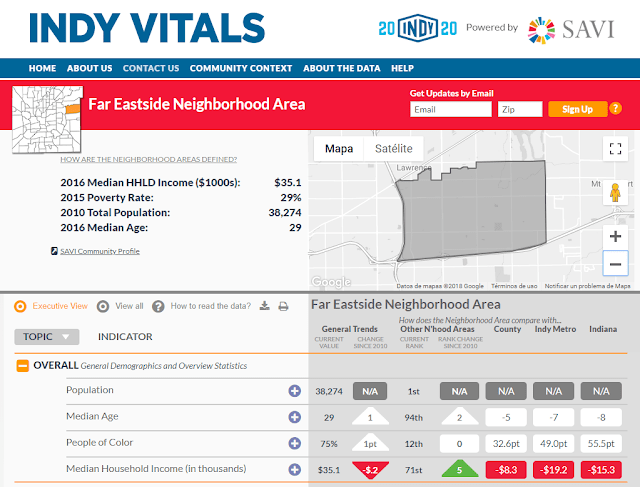
But can this work? Let’s look at a real case. In Marion County, Indiana, they have created a public access platform that makes it possible for all citizens to be involved in neighbourhood planning. This tool collects a set of 50 consistent metrics and values for all possible decision makers; measures the health and sustainability of the neighbourhoods within it and offers data within the following areas: building space, economy and work, education, equality and autonomy, health and safety, natural systems and general demography. In this way, Indy Vitals becomes a platform from which citizens and NGOs can exercise their right to request specific policies for their neighbourhood and companies can find new business opportunities based on transparent data.

Figure 1: Part of an Indy Vitals visualization

The data collected by Indy Vitals comes from both open sources and public and private organizations that have given information for the project. These metrics, when viewed in their entirety, quickly describe the economic and social health of each neighbourhood and allow all stakeholders to work around a common goal based on real data, rather than disparate sources of information as in the past.

Another success story comes from the Department of Health in Baltimore, where a system based on data analysis has also been developed to try to reduce infant mortality. A previous study in public health warned of the negative effects that certain social and urban policies had on the health of the population, in particular where a very high rate of infant mortality was detected in certain neighbourhoods. The new system allowed the detection of the points of conflict and correctly dimensioning the resources.

The data collected included vital statistics of the child population, information on births and deaths, and other public records, such as those of social services, as well as qualitative information obtained through surveys. The analysis made it possible to detect failures and anomalies in the services provided to the mothers and identify which type of protocols had the biggest impact on the users. Thus, it was possible to determine in which situations more support was needed from the community and in what structural change was needed in the policies applied. Finally, the mortality rate was reduced by 38%.

These two examples share a common denominator that makes them successful: the final objective of the technology applied to these projects is to convert inhabited spaces into more inclusive, competitive and cohesive, that is, healthy cities, where residents are at the centre of everything. With this in mind, and with the great possibilities that data analysis and the latest intelligent technologies offer us, we are only a small step away from all cities becoming healthy places.

Original post in Spanish written by Olaya Vide.

Don’t miss out on a single post. Subscribe to LUCA Data Speaks.

You can also follow us on TwitterYouTube and LinkedIn

Barcelona, Singapore and Amsterdam: sustainable cities thanks to Internet of Things

Beatriz Sanz Baños    21 September, 2018

Thanks to IoT technology, we can imagine cities that are increasingly sustainable and intelligent. By installing IoT devices in different parts of the city, communicating with each other and collecting data on the daily lives of citizens, it is possible to improve the day of the citizens by moving towards smarter and more sustainable cities.

Next, we will analyze some examples of sustainable cities thanks to the IoT technology:

  • Barcelona

Since 2012, Barcelona has incorporated IoT technology to improve the lives of its citizens through some 20,000 sensors placed throughout the city.

In the case of this city, problems such as pollution are managed much more efficiently because these sensors collect information on air quality. Other initiatives also stand out, such as the Barcelona + Sustainable Map, which shows the initiatives to make the city more eco-friendly.

Sensors and the development of connected mobile applications have improved mobility and other aspects of citizens’ daily lives. These applications allow you to know the places where there are free parking spaces and go there directly, saving time and reducing the level of contamination.

The same happens with public transport. Through location devices placed on the buses you can know the exact time at which the bus will arrive at the stop, allowing better planning time for the passengers. Another example is the Barcelona metro, where intelligent lifts have been incorporated, which, by using real-time data, await passengers at the platform level just before the train arrives. This accelerates user mobility, reduces clutter and reduces energy consumption.

IoT technology has also been applied to other aspects of the city such as lighting. Intelligent lighting sensors are able to detect when there are pedestrians or not in the street, simultaneously reducing the intensity level of light. An electric saving of up to 30% is thus achieved.

  • Singapur

Singapore is one of the most iconic Asian cities when it comes to intelligent and sustainable development.

For example, in the field of mobility, the purchase of vehicles and the use of roads are subject to high taxes. In fact, the tolls to circulate around Singapore are controlled by sensors, vary depending on traffic and, at peak times, they charge a supplement. In this way it is intended to reduce pollution due to the excessive use of vehicles in the city, thanks to the Internet of Things.

The care of the elderly has also considerably improved and with that their quality of life thanks to the application of IoT. By installing sensors in the homes of older people, they make sure that their health is controlled, warning family members if they detect any alteration in their movements. This attention is not only designed for the home, but also for mobile applications that send notices to their families if something happens to them in the street.

The cleaning and maintenance of the green areas of the city is also one of the most important issues in Singapore. Through surveillance systems, they ensure that citizens do not throw cigarettes to the ground or from the windows. Such is the interest to preserve the clean city that even the sale of chewing gum is restricted so that they are not thrown to the ground.

  • Amsterdam 

Amsterdam, in its role as a sustainable and smart city, is trying to reduce CO2 emissions and energy consumption produced by the city’s homes through the IoT. One example is the creation of sustainable neighborhoods that, through smart meters installed in homes; aim to raise awareness among residents about energy use.

In terms of mobility, transportation produces around one third of the total CO2 emissions in Amsterdam and to combat it they have created a platform that identifies how to contribute to a more sustainable mode of transport. One example is the Smart Parking project that, through an application, allows users to reserve a parking space in both public and private spaces, reducing the time they spend searching for a site and thus reducing the emissions produced.

IoT technology is already applied in all areas of the city of Amsterdam, for example, in the field of health. Through the creation of digital health platforms that work in collaboration with the medical centers of the city, Amsterdam is moving towards treatment models that combine assistance in health centers and home care.

How the fashion industry is applying Big Data and AI

AI of Things    21 September, 2018

Season after season, retailers come up with loads of new products ready to hit shelves worldwide. While at one time, designers had no idea what their customers would like and their creations were merely assumptions based on inspiration, now with the support of data, it’s easy for a retailer to cater exactly to what the customer needs.

The fashion industry, like many industries we’ve mentioned before on the blog, is also undergoing an important shift on various levels. Reduction of waste, shopping platforms and technology are only some of the changes we, as consumers, will experience in the coming years. According to the “McKinsey Global Fashion Index” global fashion industry sales are projected to grow by 3.5 to 4.5 percent this year.

Today we will focus on how technology will create a positive impact on the fashion industry, and what brands have already incorporated Big Data and AI into their DNA. Business of Fashion (BoF) estimates that more than 75% of fashion retailers plan to invest in AI in 2018/2019.

We are living in a connected world, and there is no denying that a large percentage of our day is spent near a screen. This has created a shift towards online shopping, sustainable brands and behavioral changes such as “showrooming”, when a customer visits a brick and mortar shop only to complete a purchase online. According to the “The state of Fashion 2018”  report by BoF, “$1 trillion USD are expected to be spent by global consumers across e-commerce platforms by 2020” this means that traditional points of sale need to be reinvented, to offer better experiences if they want to keep thriving.

By introducing and investing in Big Data and AI, brands now have the power of added knowledge about their products, their customers, and the demand, and with it, make changes in their business model, supply chain and procedures to make more profits, generate less waste, and personalize experiences, which is exactly what clients demand today.

“What artificial intelligence (AI) can do is help turn large and diverse data sets into enriched information that can be used to improve the entire supply chain, from design and manufacturing to sales, marketing and customer service.”

Certain brands that have received significant recognition have started online, and once consolidated, have moved into opening retail shops in prime locations. The true value from being an ecommerce first, and opening a retail location second, is the power to identify where to find your customers. Retailers like Warby Parker (glasses), Everlane (apparel) and Glossier (cosmetics) who all started out as an e-commerce, have been able to build a long list of faithful clients. These particular brands have been able to determine where a physical shop would generate the most profit, by identifying which cities make the most purchases, which products people like the most, and which sold-out items to keep producing again and again .

 
Combining data with personalization, two American brands have created successful e-commerce shops by providing personalizes outfit boxes. Rockets of Awesome and Stitchfix use data from surveys, style quizes and sales, to identify which items resonate most with each customer, to give them an “personal shopper” experience right at home. In the case of Rockets of Awesome, dedicated to children only, their data helped them figure out why a particular sweatshirt kept selling out (the soft cotton material) which led to the buying department to purchase that same fabric in several colors and patterns. This purchase was data-based, and assured them it would only bring in profits, and satisfied customers.
 
Stitchfix, focused on apparel for all ages, uses a similar technique, and depends on their algorithms to tell them what customers are more likely to choose, and even how high or low is their level of risk taking.
 
These online interactions, like picking clothes from a screen, no longer feel impersonal. AI and Big Data have allowed the customers in e-commerce sites, to become highly personal experiences. Another clear example of this is the way Amazon recommends items that each particular user might enjoy. There is not one Amazon homepage, but one homepage customized for every user with their preferences.
 
 
Artificial Intelligence, has also been able to create an impact on a company’s the value chain. Rue La La, US based retailers, worked together with MIT to develop a prediction model for product demand, especially during their flash sales. The introduction of AI helped the brand increase their revenue in 10% without the usual problem of having extra stock and unused inventory.
 
It will be interesting to see how more and more companies become data-driven, and increase their investment in AI and Big Data, to not only create better online experiences, but better in-store experiences as well.
 

Escrito por Eugenia Bollmann

Don’t miss out on a single post. Subscribe to LUCA Data Speaks.  
You can also follow us on TwitterYouTube and LinkedIn

Smart stores, the future of Retail

Salmerón Uribes Marina    20 September, 2018

In the information age, the retail sector, or what is the same, the commercialization of products and services, has been forced to leave behind the mere exhibition of products to focus on the consumer and their needs.

Nowadays consumers are more informed, and it is this information that makes them more demanding. The consumer of the 21st century wants to continue buying as he always has done but with the advantages of electronic commerce. This phenomenon has led the Retail sector to implement new technologies in its physical stores so that the purchase is not only a purchase in itself, but also a true experience for the customer. This concept is what is known as O2O, that is, online to offline.

Thanks to IoT solutions, the smart store obtains data in real time that allows you to know the tastes, needs and habits of the consumer and thus predict their behavior. The customer profile obtained from this data, combined with the analysis of peripheral data, such as the number of products in stock or existing promotions, allows the smart store to configure the best offer for that specific customer, and in that precise moment. It is a level of personalization never seen before.

What do we mean when we talk about IoT solutions in Retail?

IoT solutions encompass both those that are almost imperceptible to the consumer, and physical devices, for example the so-called beacons, which are used to receive information on the location and route of customers in the store and send offers to customers, or as interactive mirrors that show the full range of colors and sizes of a garment and can recommend garments that match well with the one the customer has chosen, or as digital labels, designed to keep the retailer informed and make possible the operation of the Smart tester and receive analytics from the store.

In short, these IoT solutions allow you to know the profile of the buyers who enter the store, their age, their preferences and even the areas of the store with the greatest number of visitors, the frequency of visits by customers, how much time they spend on a particular promotion or the satisfaction obtained after a purchase.

What do consumers think about this new type of store?

In the «Things Matter» report (Telefónica IOT, 2017) it is observed that «the concept of ‘Inteligent Store’ is still to be discovered, compared to other categories. Only 36% of respondents have heard of ‘smart stores’, a figure close to that of those who are aware of having visited them, 21% ». But despite these figures, the report also reveals that consumers’ interest in store connectivity solutions already reaches 30%.

What is clear is that we are facing a reality that advances with a firm step which large corporations such as Amazon or Inditex have already joined and that will undoubtedly revolutionize the Retail sector as we know it.