How to select AI and Big Data use cases?

Richard Benjamins    18 September, 2018

Many organizations that start working with Big Data and Artificial Intelligence (AI) ask themselves the question: where to start? In general, there are two ways to start: 1) start building the capabilities needed to use AI and Big Data (infrastructure, data, skills, etc.), and 2) start with use cases that show the potential value to the organization. Most organizations choose the second option since it is easier to invest in capabilities once there is a clearer understanding of the value that can be generated.

But how to choose the best use case to start with?

In our experience, the best way to attack this problem is by building an opportunity matrix (also called the Ansoff Matrix) with the specific Data and AI opportunities for the organization.

Let’s say, you want to apply Robotics Process Automation (RPA) as part of your AI strategy, and you want to decide what process to start with. The most successful applications of RPA are on processes that are highly-structured and apply to the core business. Figure 1 illustrates how such a matrix could look like, where the size of the circle represents the business value, and the colour the risk involved. The ideal processes to start with would be large, green ones in the top right.
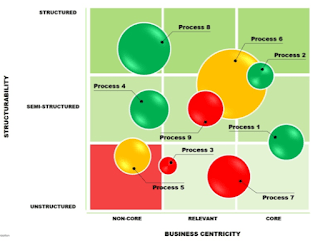
Figure 1. Generic Opportunity Matrix for RPA applications Source

But how do we apply the opportunity matrix to Data and AI use cases for organisations that want to start?

Usually, the two main axes represent value or business impact and feasibility. Value is important because demonstrating a use case on something that is of lateral importance to the business doesn’t convince the organization to invest. Feasibility is important because the results should not come in two years, but in months: the patience of businesses for results of new things is limited. However, other dimensions can be used for the axes (such as urgency to act); this depends on what is most important for the organisation at the time of starting. The additional dimensions (size, form, and colour) should represent other important factors to consider in the decision process.

Figure 2 illustrates an opportunity matrix for big data and digital services when Telefonica Digital started its Big Data journey back in 2012. Here we prioritized the digital services that should include big data (business intelligence) capabilities according to value and urgency. The size of the bubble represented how simple (less complexity) it was to work on the topic, resulting in quicker results. The colour represented the risk of creating a silo solution as opposed to an integrated solution (preferred) where data of all digital services was stored in one single big data platform.
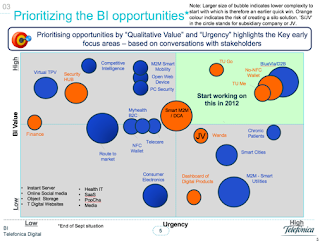
Figure 2. Big Data opportunity matrix for Telefonica Digital in 2012

Sometimes it is hard to estimate the business value of a use case before actually executing it. A good way to estimate the business value of a use case is to multiply the business volume with the estimated percentage of optimization. For instance, if the churn rate of a company is 1% (per month) and there are about 10M customers, with an ARPU (average monthly revenues) of €10, then the business volume amounts to €1M per month or €12M per year. If Big Data could reduce the churn rate by 25%, that is, from 1% to 0.75%, then the estimated value would be €250.000 per month.

The other important dimension to estimate is the feasibility of use cases. This is a more qualitative estimation which might be different per organization. Basically, it estimates how easy or difficult it is to execute the use case, including factors such as the availability of data (location, ownership, cost), the quality of data, the collaboration with the business area (some are champions, others are defensive), the privacy risk, etc.

But how to get an overview of what use cases to consider for your industry? 

Many organisations have an initial idea of some use cases (such as upselling or churn reduction) but might lack a deeper understanding for coming up with a more exhaustive list of use cases to consider. Luckily, there is enough sector-based literature to help organizations with this step. For the telecommunications industry, for example, the TM Forum maintains a list of about a hundred uses cases along with important characteristics such as data requirements, privacy risk, value, etc. For the insurance industry, the website at http://wisetothenew.com/ai/ provides an overview of many Artificial Intelligence use cases (see Figure 3).
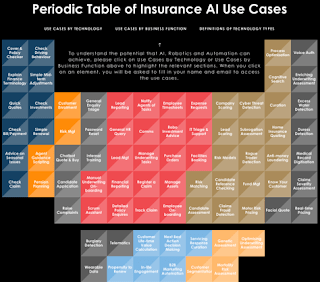
Figure 3. AI use cases for the Insurance industry

And then there are of course the usual research reports, reporting many use cases for different sectors such as the McKinsey report on Artificial Intelligence focusing on the sectors Retail, Utilities, Manufacturing, Healthcare and Education, and the PWC report “Sizing the price”.  If you are looking for AI use cases in a particular sector, you can, of course, use a search engine, which will provide you with many suggestions, as illustrated in Figure 4.
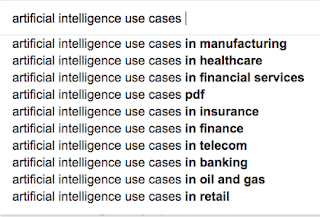
Figure 4. Finding the AI use cases in your sector

Don’t miss out on a single post. Subscribe to LUCA Data Speaks.

You can also follow us on TwitterYouTube and LinkedIn

Leave a Comment on How to select AI and Big Data use cases?

Firefighting drones

Luis Simón Gómez Semeleder    17 September, 2018

In recent years new types of intelligent drones have been developed that are able to act in three phases: before, during and after the fire.

One of the biggest concerns in times of high temperatures is the increased risk of fires in areas with a high density of vegetation. Galicia, Extremadura or Andalusia are communities prone to suffer these catastrophes in their large green areas with the consequent human, animal and plant losses that the fire can cause. This is why public administrations are extending the duration of prevention campaigns all year around instead of only during the most dangerous months.

Our best efforts are not enough in the fight against a scourge that in more than 90% of cases is the result of the actions of a human being, directly or indirectly. It is everyone’s responsibility to contribute to its eradication with all the means at our disposal.

Once again, technology has come to help us with issues that we once had trouble managing in the past. Thanks to IoT, in recent years a series of intelligent drones have been developed which can act against fire in three phases: before, during and after the fire.

Surveillance and monitoring

In prevention work, the drones can monitor high risk areas and help by alerting when the first signs of fire appear, as well as keep an eye on the natural resources of the area. In this way, the performance of emergency services is more efficient and faster, avoiding putting people’s lives at risk and minimize the costs incurred.

During the fire, these drones can detect heat, wind direction and even capture real images thanks to their incorporated sensors and cameras. In addition, thanks to IoT it’s possible to send real-time and detailed information to emergency services. An undoubtedly fundamental help, thanks to it firefighters and security forces, such as the UME, can carry out the extinction tasks in a more precise and guided way.

Intelligent fire extinguishing system

In fire extinction processes there are also larger drones (up to two meters in diameter) that can store up to 300 liters of water and cover between 50 and 100 meters of an area on fire. This drone has structural modifications that allow water misting and transportation, as well as control systems, thermal cameras and navigation. They also include helicopter tracking systems that make the fight against the fire more effective.

With the implementation of these drones it will be possible to save lives by managing the workers correctly in the extinction. In the same way, they will be very effective since they are able to get closer to the flames, preventing the pilot from risking his life or the helicopter from suffering damages. This proximity will result on a more concrete and effective action against the hottest points of the fire, even at night thanks to its infrared cameras, becoming an important working tool for firefighters.

The possibilities of the IoT applied to drones against fires don’t end here. They can be helpful in the reforestation phase too.

Tree plantation

Lauren Flechter, an engineer at BioCarbon, has created a solution to plant up to a billion trees a year with the use of drones. The drone is loaded with germinated seeds that are fired to the ground with compressed air from a height of about 2 meters. The seeds remain inside a nutritious capsule that besides protecting them in the fall will feed the future tree. Thanks to the IoT, the drone determines the best place to plant the seed by taking into account factors such as humidity, location or type of existing vegetation.

Public administrations have taken note of the advantages of these drones in the prevention, detection, and extinction of forest fires. Some communities have already implemented them to inspect the fire safety sections around urban and rural areas safely from the air.
 

Leave a Comment on Firefighting drones

Big Data joins the fight against cancer

AI of Things    13 September, 2018
The medical community continues to make ground breaking discoveries every day, but with a survival rate of only 50% (Cancer Research UK), we still have a long way to go until we live in a cancer free world.

Even with these technological advances, the complicated and diverse disease affects everybody. Although many common types of cancer are curable (breast, prostate, testicular, cervical, melanoma, thyroid and Hodgkin Lymphoma), more must be done to ensure a better future for cancer patients. One of the biggest constraints on cancer research today is the lack of large data-sets that show how patients have responded to various treatments. Could Big Data be the key to unlocking the cure?
 
The Universal Cancer Databank (UCD), set up for free by Australian Billionaire Andrew Forrest and creator of the Eliminate Cancer Initiative (ECI), is a worldwide anonymised database where cancer patients and survivors can input their medical details to aid others in their position. It has the potential to help in the development of better treatments, and speed up the process of discovering new ones. The UCD project aims to connect a range of existing and developing database projects into a unified databank, including the UK’s landmark BRIAN database, led by Britain’s major brain tumour charity.

The organisation is derived from a series of landmark national Brain Cancer Missions launched in the UK, China and Australia, as the governments of those countries recognise that global participation is necessary to progress research. So far those missions have raised £110 million towards a global goal of £500 million, including over £7 million from the Minderoo Foundation, to develop a new international collaboration around brain cancer, including data sharing and the launch of a major adaptive clinical trial for glioblastoma.
Photo of ex UK MP Tessa Jowell
Figure 2. Tessa Jowell

Ex-UK MP Baroness Tessa Jowell became the first person to donate their medical information to the site. The 70-year-old mother of two was diagnosed with an aggressive form of brain tumour in May 2017, a diagnosis she kept secret from the public until September last year when she tweeted: “Thank you for so much love and support on my birthday. More people living longer better lives with cancer is my birthday pledge”.  She has been praised around the world for her bravery and selflessness, with cancer researchers calling her donation a ‘game changer’ in the medical field.

Despite the conviction and dedication of cancer victim Tessa Jowell, concerns around data sharing exist among the public amid growing privacy concerns. There is a risk that people can be identified even when data is pseudonymised. At LUCA, we always work with anonymised and aggregated data to ensure privacy. 
Nevertheless, one must question the value of one’s privacy when joining the fight against cancer. Should it be a part of our society to share our medical data to advance cancer treatments?
Tessa sadly lost her fight in May of this year at the age of 70. Rest in peace. 

Written by Lucy Beardsley
You can also follow us on TwitterYouTube and LinkedIn

IoT helps reduce climate change

Beatriz Sanz Baños    11 September, 2018

We are integrating Internet of Things in our daily lives and jobs without even realizing it. Having applied hyperconnectivity in such a natural way to our life and our work means that it also reaches other sectors, such as our companies and their business strategies. We are even focusing it further to help minimize serious problems such as climate change.

But how is this possible? The key is to look at one of its main advantages: efficiency. Efficiency not only means doing things faster and better, but also with fewer resources.

One of the main factors that are accelerating climate change is the excessive consumption of energy by society. Without going further, the expenses derived from communities with central heating or power plants generate a large amount of pollution, such as carbon dioxide emissions.

So, is it possible to reduce energy consumption without sacrificing our well-being? Yes it is. It must be understood that a large part of this excessive energy expenditure is not caused only by our needs, but also by an inefficient management with little foresight. We consume more than what is needed because of too little data analysis.

The excessive consumption of energy is accelerating climate change

This is where IoT, together with Big Data, offers us a solution: the information network in real time, fast and efficient, that allows us to know the different levels of energy consumption and, in turn, facilitates the analysis of the points of higher consumption

However, this problem and solution do not apply only to the energy industry. From the flow of water to the distribution of food, all industries can benefit from the aforementioned network of sensors and connected devices. IoT has the potential to reduce the waste of resources on a global scale.

Although reducing pollution is an important step in the fight against climate change, it is also important that we take care of nature’s health. Our actions are causing the flora and fauna of many areas to get sick and this is another area where Internet of Things can provide very valuable help.

Monitoring of nature allows us to have constantly control of the fauna and flora and prevent their deterioration

In the same way we try to guarantee the recovery of a sick patient with constant monitoring, we can do the same with nature. Using strategically placed non-intrusive sensors; we can monitor the status of animals and plants in the area constantly and in real time to know where we need to act urgently. These IoT sensors can even warn that a fire is happening and generate an alarm in a Control Center.

We are reaching a critical point with climate change. Individual efforts are not enough to reduce it; it requires a joint effort, coordinated, or in other words connected to find a solution. IoT can make a very important difference so that the balance tilts on the side of the planet.

Four design principles for developing sustainable AI applications

Richard Benjamins    10 September, 2018
Artificial Intelligence (AI) has been put forward as the technology that will change the world in the coming decades. Many applications already have seen the light including recommendations of content, spam filtering, search engines, voice recognition, chatbots, computer vision, handwriting recognition, machine translation, financial fraud detection, medical diagnosis, education, transport and logistics, autonomous vehicles, optimization of storage facilities, etc, etc. However, creating AI applications also introduces challenges, some of which come from related technologies and areas, while others are specific to AI. In order to create sustainable AI systems, several key aspects have to be considered from the beginning of the development process (“by design”), rather than being applied as an afterthought, including data, security, privacy, and fairness.

Data by Design

Data by design refers to the process that organizations consider data (collection, storage, analysis, and usage) as an integral part of doing business. Many non-digital organizations that not apply this principle suffer from typical problems such as:

  • Data accessibility. Too often, data is hidden in complex IT systems and/or sits with a vendor. Getting access to the data is often costly and time-consuming.
  • Data ownership. Organizations work with many service providers to deliver their e2e value proposition. Oftentimes, the contracts with those providers do not clearly state the ownership of the data, leading to confusion and complex conversations when the data is needed for a new value proposition.
  • Data quality. When data is not managed as an asset, there are no quality procedures in place. Checking data quality as late as during the analytics phase is complex and expensive, and should be automated as close as possible to its source.
Organizations that fulfill the Data by Design principle have instant access to all relevant data with sufficient quality and are clear on the ownership of the data for the foreseen uses.

Security by Design

AI systems are powerful systems that can do much good in the hands of good people, but consequently, they can also do much harm in the hands of bad people. Therefore, one of the key aspects of AI development is “Security by Design”. Security by Design is “an approach to software and hardware development that seeks to make systems as free of vulnerabilities and impervious to attack as possible through such measures as continuous testing, authentication safeguards and adherence to best programming practices. It puts emphasis on security risks at all phases of product development, including the development methodology itself: requirements, design, development, testing, deployment, operation, and maintenance.  And is extended to third parties involved in the creation process.

Privacy by Design

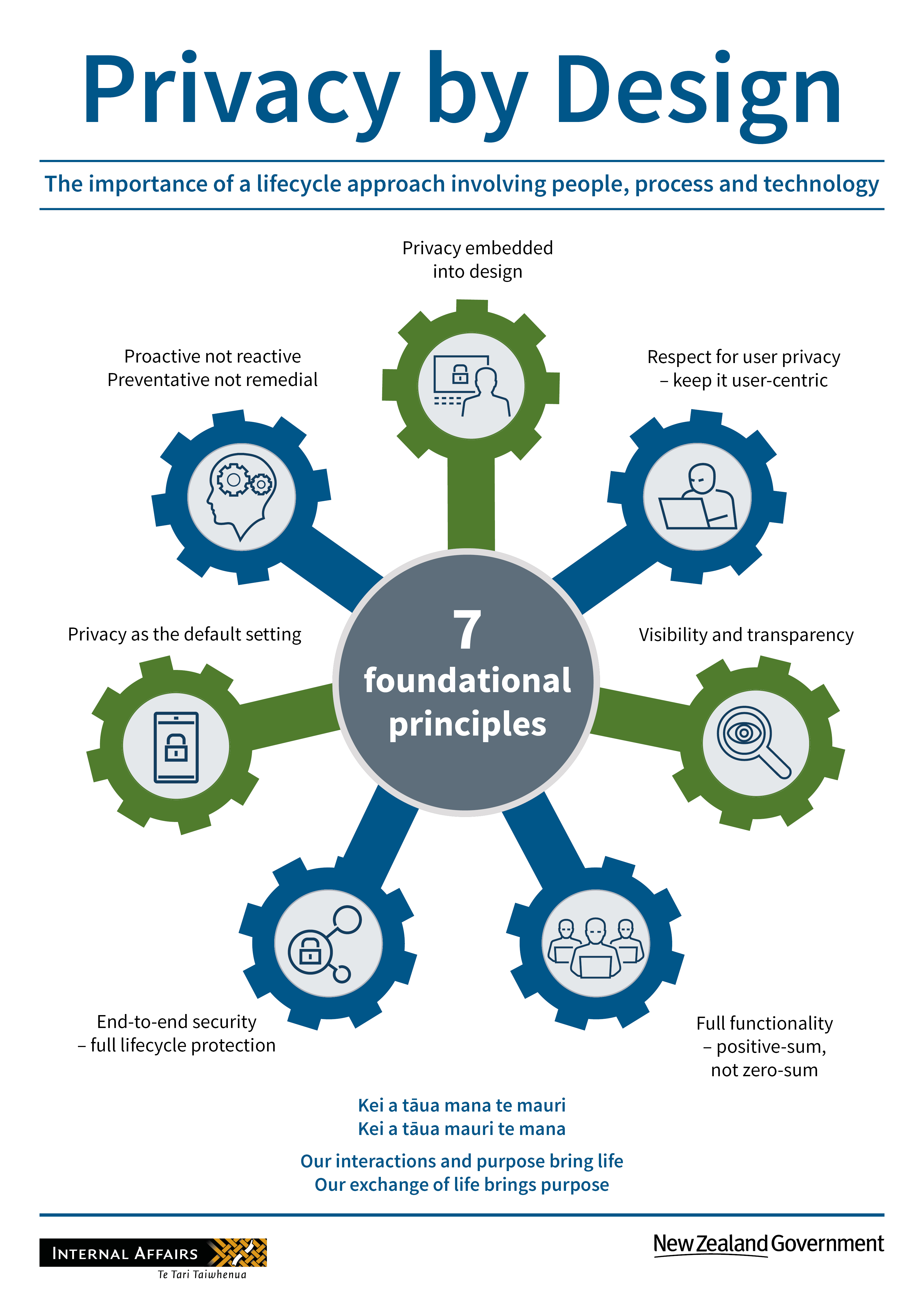
AI systems are fuelled by data, and therefore another important principle is “privacy by design”. Privacy by design calls for privacy and data protection to be considered throughout the whole engineering process. It was originally developed by Dr. Ann Cavoukian, Information and Privacy Commissioner of Ontario, and is based on seven principles:

  • Proactive not reactive; preventative, not remedial
  • Privacy as the default setting
  • Privacy embedded into the design
  • Full functionality – positive-sum, not zero-sum
  • End-to-end security – full lifecycle protection
  • Visibility and transparency – keep it open
  • Respect for user privacy – keep it user-centric
Figure 1 The seven principles of Privacy by Design (source)

Fairness by Design

AI systems support us in making decisions or make decisions on behalf of us. AI and Machine Learning (a subfield of AI) have proven to be very effective in analyzing huge amounts of data to come up with “objective” insights. It are those insights that help to make more, objective, data-driven decisions. However, when we let Machine Learning techniques come up with those insights, we need to make sure that the results created are fair and explainable, especially when decisions have an impact on people’s lives, such as medical diagnosis or loan granting. In particular, we need to make sure that:
  • The results do not discriminate between different groups of people on the basis of race, nationality, ethnic origin, religion, gender, sexual orientation, marital status, age, disability, or family responsibility. We, therefore, need to minimize the likelihood that the training data sets we use, create or reinforce unfair bias or discrimination
  • When optimizing a machine learning algorithm for accuracy in terms of false positives and negatives, one should consider the impact on the specific domain. A false positive is when the system “thinks” someone has, for example, a disease, whereas the person is healthy. A false negative is when a healthy person is incorrectly diagnosed as having a disease. With less false positives and negatives, an algorithm is more accurate, however, minimizing on one usually increases the other. Depending on the domain, false positives and false negatives may have different impacts and therefore need to be taken into account when optimizing algorithms.
  • The AI systems are able to explain the “logic” of why it has come to a certain decision, especially for live-impacting decisions. AI systems should not be black boxes.
When we build AI systems using those four principles- Data by Design, Security by Design, Privacy by Design and Fairness by Design- we can be more assured that we not only build performing systems but also secure, privacy-respecting and ethical systems. And this, in turn, we lead to greater acceptance of AI systems in the long run by societies and governments.

You can also follow us on TwitterYouTube and LinkedIn
Leave a Comment on Four design principles for developing sustainable AI applications

IoT: our elders best ally

Beatriz Sanz Baños    6 September, 2018

There is a widespread belief that technological advances are led by and for the new generations and that our elders are a bit “out of the game” in this area. While it is true that the new generations are leading the change, it is no less true that this change will not be fully implemented if all sectors of the population are not involved.

Demographic change is transforming our society and with that the forms of care for the elderly. We need technology that meets the needs of both the youngest and the elderly nowadays.

Older people do show interest in new technologies and this interest grows when they understand the benefits they bring them far outweigh the initial difficulties that their understanding and use may entail. However, there are initial barriers that would have to be broken down by helping them understand how to use them. In fact, more and more training courses are being created to help older people adapt technology to their daily lives and thus increase their independence and safety.

IoT, positioned as one of the most outstanding advances in the last century, will allow our elders to enjoy a fuller, more autonomous and safer life so they can carry out their daily activities that were becoming too difficult. There are already devices for the elderly that reinforce their accompaniment to home or to the health centers.

The geolocated insole avoids the risk of device loss and allows to track fast the elder’s location

Among the simplest solutions, there are GPS monitoring devices, which thanks to their small size can be worn on the wrist, as a pendant or on the shoe, as is the case of the geolocated insole, which avoids the risk of loss or that they could take it off, since they do not have to know that they are wearing it.

All these devices allow us to know in real time where our relatives are, which gives us a great help in elderly people suffering from diseases such as Alzheimer’s and senile dementia, which can lead them to forget their way.

In the USA, a chain of residences for retirees called Schlegel Villages has put bracelets on all its residents to be able to geolocate their position and be able to track them in case they move away from the facilities. Thus, qualified personnel can reach them easily if it happens. They decided to implant this technology to reinforce the safety of their patients after several cases in which they got lost or disoriented when returning to the center. The locator greatly reduces the time to find them.

There are other available devices used to make seniors feel safe in their homes like watches with integrated GPS that send alerts S.O.S and location data in the case of an emergency. An example of how existing technology used for other purposes, such as a tracker for athletes, can be very useful with a new goal, such as safeguarding the safety of elderly people with location problems.

Many of these incorporate a fall detection function that would immediately alert the emergency services and send a notification to the caregivers or relatives of the person. If they notice a sudden movement, and several seconds pass without response, it emits a vibration. If the device does not still get an answer, a person would call the affected person’s cell phone to check if he or she is well and, in the case of not responding, contact a family member. They are very easy to use and have their own alarm button, which is not even necessary to press to activate it. It is enough to say aloud: “I need help” and the device automatically issues an alert.

There is also a wide variety of sensors that let you know how long the refrigerator has not been opened, if the lights remain on or if the bathroom has been used. If more than the recommended time passes without the refrigerator being used or if the lights of a room do not turn off, the sensor sends a warning to the smartphone of a relative so that he can get in touch with that person and know if everything is all right. It shows how Artificial Intelligence is applied to these devices in a very effective way. It learns patterns of behavior or habits of the person who lives in that house and adapt to the changes to be able to launch a warning if any routine varies from its habitual pattern.

There are also new projects that are starting up like the connected pillboxes that warn the user if a specific medication is running out or if there has been an error in the consumption patterns, that is, if they have taken the wrong pill or taken it at the wrong time.

There are many initiatives that are being carried out from the private sector; however authorities have already set to work with the objective to respond to the demographic challenges posed. The European Commission has created the ACTIVAGE project within the Horizon 2020 program (H2020), which funds research and innovation projects in various thematic areas in the European context.

The project involves around 10,000 elderly people from seven different countries of the European Union, for whom a series of products and services aimed at active and healthy aging based on IoT technologies are developed, such as:

  • Monitoring at home and away from home
  • Emergency Signal 
  • Home security
  • Integrated care
  • Encourage exercise
  • Mobility support
  • Prevention of social isolation

With a society that is increasingly connected, older people cannot remain outside. It is because of this that technology is increasingly focused on them, helping them learn to use the new devices at their disposal and to promote security and independence in their daily lives.

How Drones are making use of Artificial Intelligence

AI of Things    4 September, 2018

By now, you have heard, seen and possibly even own a drone yourself.

You have probably seen them in countless films and TV series, and at concerts and outdoor events. Drones have been featured in films like 1989’s Back to the Future Part II, and more current ones like Interstellar. This technology has not gone unnoticed. When at one time, drones seemed out of our access or devices for military use, they seem to be everywhere now.

Before getting into how and what drones can do for us now, let’s go back to the beginning. The first recorded use of an unmanned aerial vehicle (UAV) was in 1849, in the form of a balloon carrier used by Austrian forces during a battle. It is widely known that drones are used in battle, to oversee areas where it is too dangerous for pilots to cover, so it is no surprise that they got their start this way.

Since then, the use of drones has shifted and diversified from war and battleground use, to commercial use, as we have seen in recent years. The Consumer Technology Association points out that an estimated 2.4 million personal drone units were sold in the USA in 2016, more than doubling the previous year, and not suprisingly, total sales in 2018 are expected to be higher than 3.7 million units. However, according to Gartner, drone sales in 2016 were closer to 2.2 million units worldwide. The difference in numbers is due to how different companies define what a drone is. For Gartner, a drone is an aircraft that has the ability to connect to the internet, and the firm foresees that sales for personal use (photographs/entertainment) will not slow down in coming years.

One thing is sure, drones are more popular than ever, but what are they really for, and can they really help us in the end? The answer is clear, with the added advantage of Artificial Intelligence, drones can become helpful allies when trying to save lives in remote areas, increase the safety of construction workers and monitor safety.

To be able to see for yourself how Artificial Intelligence plays a role in the use of drones, we will show a few examples from different fields, starting with the construction sector, which we have mentioned before on the blog. Doxel, a company dedicated to construction productivity heavily relies on AI. They use drones to capture outdoor data of a work site, and then applies AI algorithms to process the visual data, inspects installation quality and quantifies how much of the material that has been installed, has been installed correctly. In Japan, constructions sites are also relying on drones to have a complete view of the site in a matter of minutes, using drones like Skycatch. This American company has reduced the time to scan, and map in 3D an entire site from days to around 15 minutes.

Figure 2. The protection of natural resources can be largely helped by drones

Drones can also be helpful in controlling the adequate use of natural resources. In Spain, in the region of Extremadura, drones are being used to supervise the Tagus (Tajo in spanish) basin. The drones check for irregularities and infractions related to illegal water extraction. The Tagus Hydrographic Confederation monitors the groundwater levels in the basin, to make sure no illegal extractions are made, as this endangers not only the water resources of the basin, but its entire ecosystem. Also in Spain, the use of drones has been adopted for traffic monitoring and control, especially to identify drunk drivers and traffic infractions.

And while there are many companies that make use of this, the last one we will mention is Zipline. Launched in 2016 in California, the company builds drones and runs delivery services for medical supplies, in areas that are hard to access by land. The focus so far has been Africa, specifically Rwanda, where medical supplies could normally take hours to reach the ones who need it most, when they need it most. With the help Zipline, medicines, blood and even organs reach hospitals and clinics in remote areas in minutes, and have already saved many lives. By incorporating Artificial Intelligence into their processes, the company now transports 20% of the nation’s blood supply outside of the capital city of Kigali.

These are only a few examples of how combining AI technology with drones, can not only be helpful in the construction sector, but help with protecting the environment, and saving lives.

Don’t miss out on a single post. Subscribe to LUCA Data Speaks.

You can also follow us on TwitterYouTube and LinkedIn

The return to school connected

Beatriz Sanz Baños    4 September, 2018

Internet of Things, the new technologies or connectivity, is not a concept that applies only to companies. It is also being integrated into public services such as schools and this has repercussions on the digitization of the place itself as well as the tools of the students.

As a sample of this process of digital transformation of the classrooms in schools, institutes or universities, we highlight:

  • Broadband and WiFi connection: A computer room equipped with computers and an Internet connection was one of the first digital improvements that schools and universities installed so that their students could have access to the Internet. Teachers became accustomed to have it as an extra help in their teaching, to change encyclopedias from books for digital ones and to teach the students to make responsible use of the connection and the Internet. In the case of universities, the Wi-Fi connection makes it easier for students to carry out group work in a simple and comfortable way and to have access to the Virtual Campus.
  • Computers and tablets: The institutes and schools began to equip each class with computers and even in some they give student Tablets to do exercises in certain classes. On some occasions, technology companies have collaborated with educational centers to promote educational projects with young children with large touch screens that reinforce digital learning and they also teach them to be more collaborative. We can also highlight the smart boards, which allow you to send the information that is written to the devices of the students, and also supports multimedia content that can be introduced.
  • Connected backpack: The safety of the smallest one in the house can now be monitored. A tracker in your backpack allows your parents to know where they are at all times and even send a message to your parents if they leave the area set as safe.
  • Communication platforms between parents, teachers and students: Another possibility of remote connection is the digitalization of the classical tutorials, allowing students and their parents to contact tutors and teachers in real time. In Murcia, the “Connected Schools” program has been implemented in February this year, which includes these last two features and will allow broadband to reach all schools in the region, making it almost 230,000 students. In addition, these platforms facilitate distance learning for students who cannot attend the center.
  • Statistics of sports teams: with RFID sensors in athletes’ equipment, coaches can measure and monitor their physical condition, obtaining data on things like their weight, their body fat, the distances they run during training or games. Then they can compare this data during training season to keep track of the evolution of each athlete and team. In addition, on the playing field, you can also install sensors on the field that measure the conditions to optimize your training routines, such as air quality.
  • Intelligent dining: More than two million children in Spain eat at school and the debate about the quality of food is linked to the concern regarding food control by those who are allergic to any particular product. To this end, smart dining kitchens have been created in which children with allergies or intolerances will wear an RFID wristband that will alert the school chefs of what food they are allergic to as the student approaches the food line.
  • Intelligent laundry: Universities situated in countries such as England or the United States, where both faculties and residences and student services are on campus, they are developing projects to apply IoT to facilitate the day-to-day life of their students. The clearest example is intelligent laundry, which notifies students through a message on their mobile phone when their laundry is ready.
  • Tracking of students: The University of Texas Arlington has carried out a project to study how emotions affect learning, so they monitor through wearables the biological factors of their students that correspond to their emotional states and thus can help them if they see that they have problems or concerns. For its part, the Universidad del Pacífico uses Kinect sensors in its classrooms to detect the positions of its students and investigate the correlations between its positions and the interest in the subjects and / or classes.

The new generations, from the millennials to the Z generation (those born between the years 1985 and the present) are digital natives. The term was created by an author of American origin, Marc Prensky, in the year 2011 and he described it as “the people who have grown up with the network and the technological progress”.

For all of them, connectivity, Big Data, IoT or Artificial Intelligence are concepts with which they are familiar because they have been exposed to them since childhood or because they are directly involved in their implementation since many have chosen STEM careers (Science, Technology, Engineering and Mathematics). The technology is in the classrooms in many possible ways and is in constant evolution.

Energy efficiency switches to the Smart side

Beatriz Sanz Baños    30 August, 2018

Companies are submerged in a process of digital transformation that covers each and every one of their departments, which modifies their business strategy and reaches up to their energy management office.

This last focus, energy management efficiency is becoming increasingly important, regardless of its size. That is, companies want to reduce costs on their bills, but also favor optimal management of the energy they use in their day to day activities. In this way, the entrepreneurs reduce the impact of economic and environmental issues.

How do I convert my company into place with more efficient energy consumption? It is the question that many entrepreneurs fear; however, it is very easy. The solutions offered by the Internet of Things can solve it in a couple of simple steps. The first one is to make sure that the managers responsible for improving energy efficiency know first-hand if the company has anomalous patterns and that the IoT solutions they apply provide an accurate prediction of consumption, so that they can know where to act first and what requires attention first.

The next step is the installation of sensors located in different areas of the company that are responsible for measuring temperature, CO2, humidity or light level in order to maintain a pleasant and healthy working environment for its employees. In fact, the sensors can also be used to install a centralized remote management system that allows entrepreneurs to access the control remotely and in real time which facilitates its implementation and maintenance. It’s a very useful solution for companies that have several locations in different parts of the city, the country or even in different countries.

Saving of 23% of energy consumption can be comparated to the annual consumption of 10,000 households

The technology and connectivity provided by the Internet of Things is fundamental in this challenge faced by company managers. Big Data also plays a key role since it will allow entrepreneurs to analyze all the datathey collect which allows them to make the best decision in order to reduce costs and save energy.

One of the most notable benefits is that, thanks to the reduction of operating costs that result from the most efficient solutions, it makes it easier for companies to save over time. That is to say, it is not a question of facing a specific problem, but breaking consumption patterns that are harmful both for the company and for the environment in order to create a healthy habit of energy consumption.

It’s also important to remember that current regulations regarding CO2 emissions and greenhouse gases are hardening, so by applying IoT and efficiency programs, companies can adapt more easily to government requirements.

Companies that have carried out more efficient energy management policies have achieved an average saving of 23% of energy consumption. To visualize it more clearly, this saving can be compared to the annual consumption of 10,000 households. They are solutions focused on improving the energy use of companies that need to be in operation throughout the day such as shops or hotels.

The consumption of energy will continue to grow as our use of technology continues to grow. The good functioning of society depends on technology fulfilling its function and its most vulnerable point is what makes it work: energy. Without good control of energy efficiency suffers and with it the rest of society.

AI, Data and IT – how do they live together?

Richard Benjamins    28 August, 2018

Many things related to AI and Data are about information technology (IT).  Systems, platforms, development, operations, security, all are needed for creating value with AI and Data, and are traditionally in the realm of IT. Yet, AI and Data imply specific technologies requiring particular profiles and skills. It is, therefore, no wonder that many organizations struggle where to put those areas in their organization.

In an earlier publication, we discussed several alternatives that businesses have to “host” their Chief Data Officers. The conclusion was that the CDO is best placed in areas that are transversal to the business and matter to the business, for example, the Chief Operating Officer, the Chief Transformation Officer or the Chief Digital Officer. While this is an important organizational decision, wherever the CDO sits, he or she will always need to collaborate extensively with IT (usually the CIO).  But what is the best relation between Data and AI on the one hand, and IT on the other hand?

Data and IT

Given that Big Data as an enterprise phenomenon exists longer than AI, there is more experience with the relation between Data and IT. Therefore, first, we will comment on the alternatives for the relation between Data and IT, and then bring AI into the discussion.

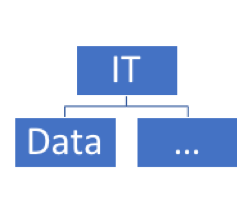
Figure 2. Data reports to IT reflecting the large technological component of Data

In Figure 2, Data is reporting to IT respecting its strong technological foundations. While this might be good to start data initiatives, since it is impossible to start data without technology, it lacks business as a driver of data. For this reason, most organizations are not using this structure today: they recognize that the value of data needs to be driven by business needs.

Figure 3. Data and IT are independent departments reporting into different parts of the organization

Figure 3 illustrates an alternative where the Data and IT departments report into independent parts of the organization. For instance, Data might report into the marketing area, whereas IT sits under the CIO. In such organizations, the relationship is a client-provider relation. This organizational structure usually causes many problems. Data is still a relatively new area and therefore needs many interactions with IT (install new software/libraries, modify permission, install updates, etc, etc.) Client-provider organizations function through a demand-management system with SLAs, and while that works for commodity IT programs, for (still) rapidly evolving technology this does not work since simple things might take weeks to complete. (for this reason, Gartner introduced the Bimodel approach for IT.)

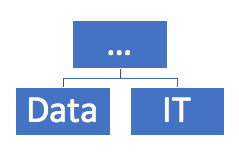
Figure 4. Data and IT are reporting to a common “boss”

 In Figure 4, Data and IT are both reporting to the same “boss”. The benefit of this organizational structure is alignment and coordination by design, and in case there are problems, escalation is simple, fostering quick resolution. Organizations that are not constrained by legacy decisions and structures might opt for this approach.

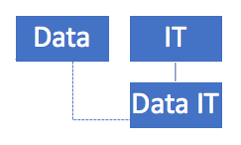
Figure 5 Data and IT report into different organizations, but IT has a specific area dedicated to Data, possibly with a dotted reporting line to Data

In Figure 5, Data and IT are both reporting somewhere in the organization, but IT has reserved (ring-fenced) a dedicated group of IT people to focus on Data. To reinforce this focus, a dotted reporting line to Data can be introduced. There are several advantages of this structure:

  • The Data area will be better served by IT because, in the normal case, it doesn’t have to compete with other IT priorities.
  • It ensures alignment between the technology that Data is using with the strategic choice of IT.
  • The Data IT people still are part of the larger IT organization allowing for training, rotating to other interesting IT projects, etc.

The disadvantages relate to the fact that sometimes the standard, approved IT technology might not be suitable for the rapid changing technology in the data space. Moreover, there are challenges with the teams. Do the Data IT people have Data or IT objectives? Or a mix of both? What happens in case the larger IT organization is under pressure. Will it still respect the Data focus, while it doesn’t necessarily see this effort reflected in its wider objectives? People in the Data IT team might also feel they have two bosses: their Data boss determining their daily work priorities, and their “administrative” IT boss who decides their bonus. If IT and Data get along well, there is no issue, but, unfortunately, in practice that is not always the case… One of the key factors in making this structure work is co-location of the Data and Data IT teams. While this doesn’t solve the HR problems, it does create a sense of belonging to one team, which helps smoothening the mentioned challenges.

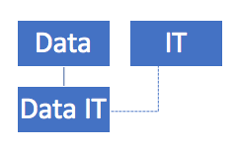
Figure 6. Data and IT report into different organizations, but Data has its own IT area, possibly with a dotted reporting line to IT

Figure 6 illustrates the situation where Data and IT still report into different organizational units (as in Figure 5), but now the Data team has its own IT department, possibly with a dotted reporting line to IT. This structure has the same advantages of the previous structure and solves some of the challenges of the structure in Figure 5, notably, for the Data IT team it is now crystal clear who their boss is and who decides on their bonus. The disadvantage is the risk of a disconnect between technology used for Data versus the official IT technology standard. Moreover, it becomes harder for Data IT people to rotate to other interesting IT projects since they are formally not part of the IT organization. The dotted line will smoothen those issues to some extent, but they still need to be managed carefully.

And what about AI?

Data is fuelling many AI applications, and what is true for the relation between Data and IT is also true for the relation between AI and IT. What we currently see in the industry, however, is that some organizations set up completely new AI departments independent from Data departments. But since Data is a prerequisite for AI (at least for the part of AI that is based on Machine Learning), the same challenges we have discussed here will show up, along with the same alternative solutions. We wouldn’t be surprised, though, to see some political battlefields about whether AI should be a separate department or be merged with the Data department or maybe even absorb the Data area completely.

Don’t miss out on a single post. Subscribe to LUCA Data Speaks.

You can also follow us on TwitterYouTube and LinkedIn

Leave a Comment on AI, Data and IT – how do they live together?