Your feelings influence your perception of risk and benefit more than you might think

ElevenPaths    29 May, 2019

Security is both a feeling and a reality
—Bruce Schneier

Daniel Gardner starts his book The Science of Fear with the shocking history of US September 11 attacks:

And so in the months following the September 11 attacks, as politicians and journalists worried endlessly about terrorism, anthrax, and dirty bombs, people who fled the airports to be safe from terrorism crashed and bled to death on America’s roads. And nobody noticed. […] It turned out that the shift from planes to cars in America lasted one year. Then traffic patterns went back to normal. Gigerenzer also found that, exactly as expected, fatalities on American roads soared after September 2001 and settled back to normal levels in September 2002. With these data, Gigerenzer was able to calculate the number of Americans killed in car crashes as a direct result of the switch from planes to cars. It was 1,595.

What killed all those victims? The fear

We all know that flying is safer than driving a car. In fact, the most dangerous part of flying is the car journey to the airport, as statistics have showed. So, why are we more afraid of flying than driving? Because risk acceptance is not only based on technical estimates of risk and benefit, but also on subjective factors, such as the feelings.

Our beliefs on the world are determined by our emotional preferences
The Affect Heuristic allows someone to make a decision based on an affect ꟷthis is, a feelingꟷ instead of on a rational consideration. This heuristic works according to the following substitution:

If your feelings towards a situation are positive, then you are more likely to judge its risks as low; on the other hand, if your feelings towards a situation are negative, this would lead to a higher risk perception.

You are using your affective response to a risk (for instance, how do I feel about genetically modified food, nuclear power, breast cancer or firearms?) in order to infer how serious a given risk is for you (for example, how many people die of breast cancer or by firearms per year?). Often, you will find that there is an important gap between actual and perceived risk.

On our brains, risk is associated with a number of psychological factors that determine if we are more or less afraid. And how can these factors be measured?

One of the most well-known researchers on risk analysis, Paul Slovic, suggested a psychometric paradigm to measure perceived levels of risk according to the affective response to different threats. In his first research, Slovic suggested 18 characteristics to quantitatively measure risk perception. In order to make it simpler, the following table only includes those risk perception factors most directly related to cybersecurity:

People overreact against those risks that: People play down those risks that:
Strike fear Do not strike fear
Are uncontrollable Are under their control
Are globally catastrophic Impact on a few people
Impact on others, not the activity agent (inequitable) Impact on the activity agent (equitable)
Are externally imposed Are voluntary
Are unknown Are known
Are difficult to understand Are well-understood
Are new, infrequent Are old or common
Have immediate consequences Have long-term effects

Let’s see again the example of flying or travelling by car from this new perspective. If you evaluate each one of the previous factors for both activities, you will reach a similar result to the one represented by the following graphic:
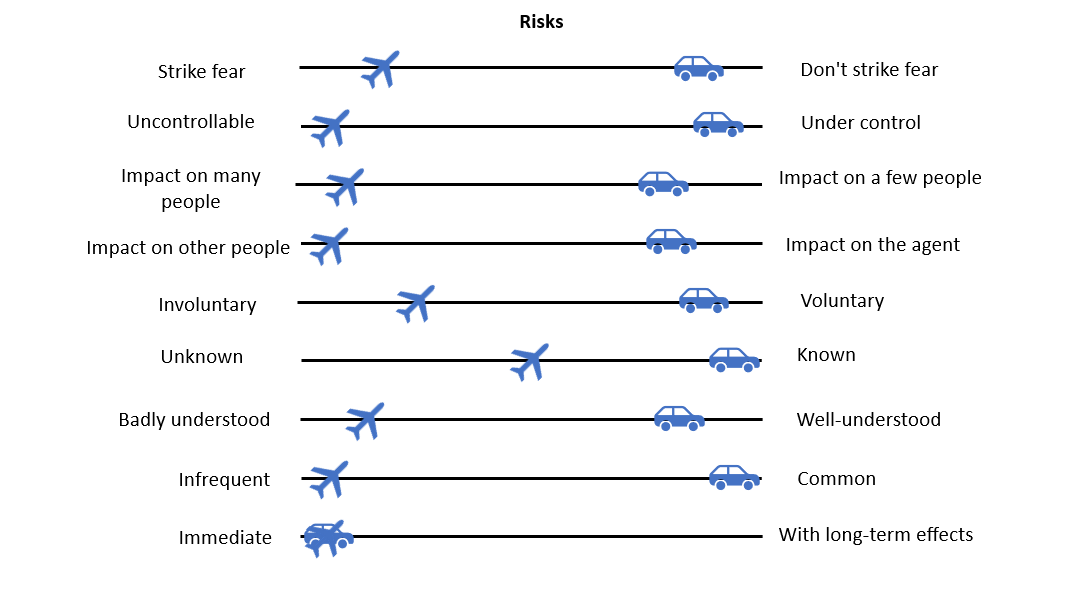
Maybe now it seems clearer for you why we are more afraid of flying than travelling by car in spite of what statistics and studies on accidents and mortality show: We are emotional beings!

Check out the previous articles on availability and representativeness heuristics to see how most of the behaviors listed in the table are explained.

You risk perception against threats is conditioned by fear and familiarity
Later, when going further into the study of these factors, Slovic discerned that there are two main dimensions among all of them: fear and familiarity. Both dimensions may be graphically represented in order to make risk classification simpler.
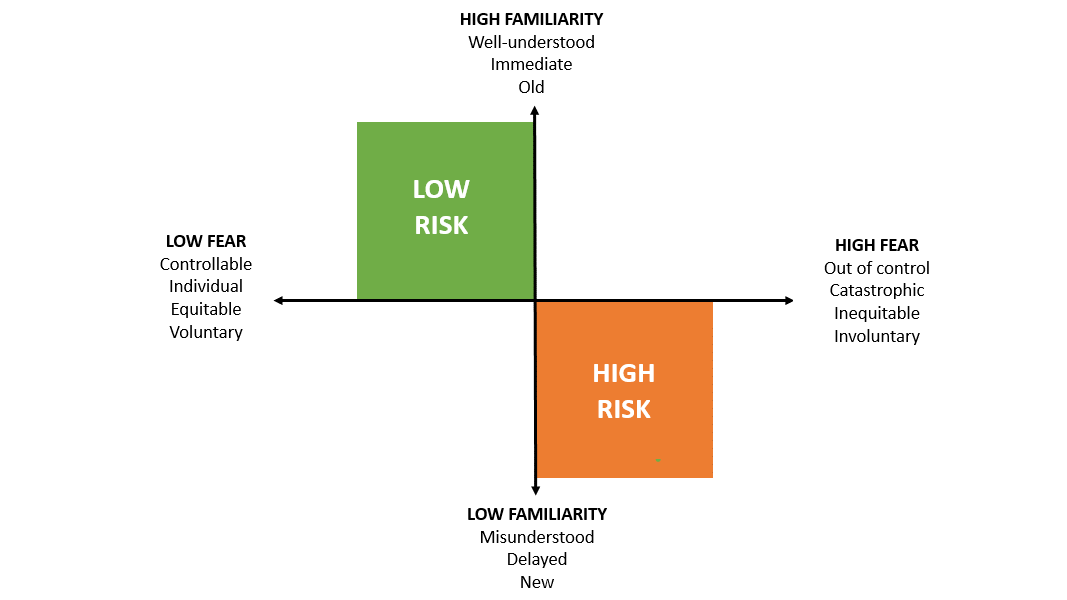
If we focus on these two factors, the Affect Heuristic may be redefined as the following substitution:

When evaluating two threats A and B, the more fear one of them strikes into you and the less familiar it is to you, the higher you will perceive its risk regarding the remaining one.

Unconsciously, you are making a judgement: flying is more frightening and less familiar than travelling by car, so it must be riskier. This way, you place the flight into the bottom right side (High Risk) and the car into the top left side (Low Risk). And not even all the existing statistics will change this affect. You can try it out on your brother-in-law.

This heuristic is specially applied when you must take quick decisions. When you are under pressure and out of time, you cannot avoid feeling affective or emotional reactions towards most of the options. Of course, in addition to affect, psychological shortcuts also leap into action, helping you to determine if a risk seems to be high or low: they are the cognitive biases and heuristics that we have been examining over previous articles.

Familiarity is a key factor to risk assessment. The more familiar you are to an activity or event, the less attention you pay to it. Your brain is bombed by millions of input data and need to filter them, extracting the relevant information. In general, relevant means new, anything that involves a change. Over time, when our brain responds to the same stimulus time and again, it gets used to and ends up ignoring it.

Habituation is a wonderful phenomenon that allows you to get along in your everyday life without having to pay attention to everything. The downside is that you become desensitized to frequent stimuli. The more familiar an activity is, the less risky it ends up seeming to you. For this reason, you may smoke, eat ultra-processed food, whatsapp while driving and cross the road while reading Facebook on your mobile device EVERYDAY! You are so used to these activities (they are familiar to you) that they don’t seem risky to you anymore.

The surprising relationship between our judgements of risk and benefit
But the story does not end there. Paul Slovic did not only reach the conclusions previously described in his risk psychometric paradigm. He discovered surprising relationships between our judgements of risk and benefit as well:

In the world, risk and benefit are positively correlated, while in people’s minds (and judgements), risk and benefit are negatively correlated. […] People base their judgments of an activity or a technology not only on what they think about it but also on what they feel about it. If they like an activity, they are moved to judge the risks as low and the benefits as high; if they dislike it, they tend to judge the opposite-high risk and low benefit.

The paradigmatic example here is nuclear power. As everybody knows, nuclear power is a Bad Thing, so it must involve a high risk. How beneficial is nuclear power? Considering that it is a Bad Thing, it must involve a low benefit. However, X-rays of radiographies are a Good Thing, since doctors use them to save lives, so they must involve a Low Risk and a High Benefit. This is how our brain works. What about data? We do not need them; the decision is already made. They would only be useful for confirming the initial position. The result is that we overestimate the risks of nuclear power and underestimate the risks of X-rays.

Under this model, affect is the first reaction and guides our judgements of risk and benefit. If a general affective view guides perceptions of risk and benefit, providing information about benefit should change perception of risk and vice versa.

Make risk take its rightful place in your empleyee’s affect
All the studies on risk perception confirm that experts in the assessed field succumb to the Affect Heuristic to a lesser extent. After all, they have a greater awareness of the field, gained through experience and study. This is, they know more accurately the probabilities and nature of the threats, as well as the impact of incidents. In conclusion, they are better equipped to assess the actual risk: their gap between actual and perceived risk is smaller than among laypersons in the field.

The conclusion is clear: if you want to help your employees make better security decisions, you must raise their Information Security Awareness (ISA). This conclusion is so obvious that jotting it down is shameful. However, whether this is made or not is another story. And among the major challenges of this awareness, re-educate users on technologies that are quite familiar and helpful for them is one of the greatest ones, since they end up losing sight of their actual risk.

Therefore, one of the key points of any program must be dishabituation. The more familiar employees are to a technology and the more helpful they perceive it; the less risky such technology will be for them. Cybercriminals exploit precisely these high familiarity, low fear and high benefit of a number of technologies in order to turned them into attack input vectors. Some examples of this type of familiar, nice and helpful technologies are:

  • E-mail, a technology we use every single day at any time.
  • USB drives, those small and innocent-looking devices that store so many useful information.
  • Office files from Word, Excel, PowerPoint, PDF, on which we spend our time every day and which we happily share.
  • Ads on legitimate websites, that we view everywhere and are really annoying, even if sometimes they advertise interesting things.
  • Games and apps downloaded on the smartphone, so funny, useful and cute.
  • Photos and videos shared on social networks.
  • The company’s employees themselves, with whom we drink coffee every morning and whose children we know.

There is no harm in carrying out from time to time security campaigns intended to remind employees that e-mail, USBs, office files, browsing, games, multimedia, the colleagues themselves, etc. are the main cyberattack input doors, however familiar and friendly they seem.

Finally, your security perception is not merely a rational issue, but emotional as well. You cannot fight against the affect heuristic directly, because this is how our brain works. Instead, you can guide your employee’s affect towards the various technologies, raising their awareness level.

Gonzalo Álvarez de Marañón
Innovation and Labs (ElevenPaths)
[email protected]
“Artificial Intelligence is amazing, but it must act with principles and values.”

Fernando Menéndez-Ros    27 May, 2019

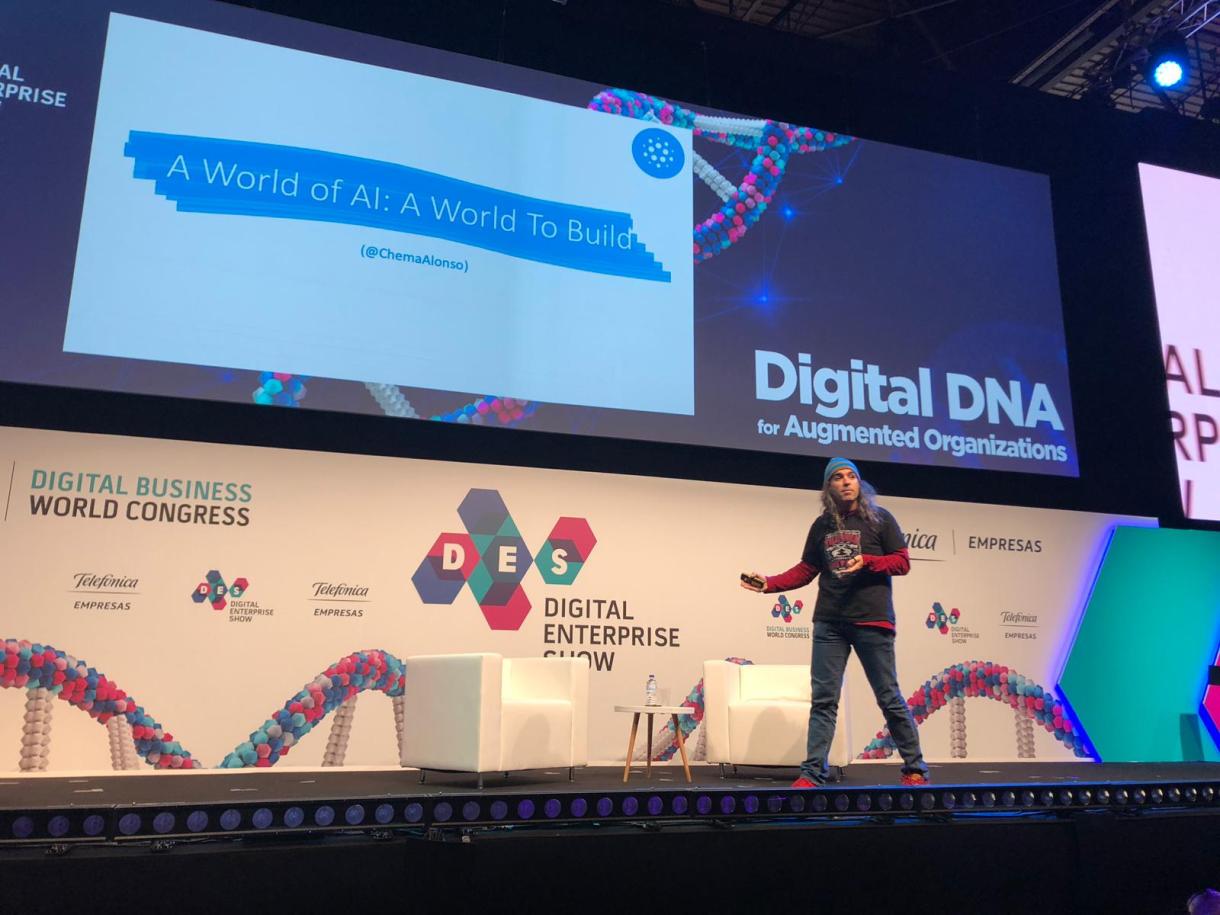
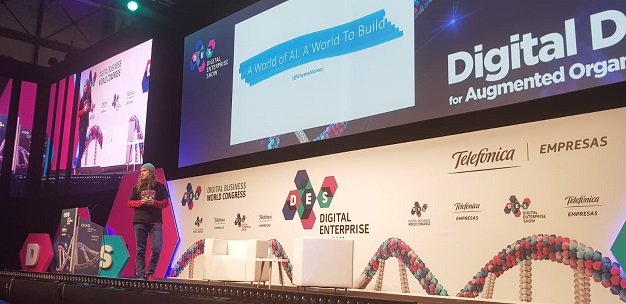
This week, Telefónica has played a very important role as a Global Partner Leader in the Digital Enterprise Show (DES 2019), Europe’s largest professional forum dedicated to the digital transformation of businesses and technology trends. This fourth edition was presented by Chema Alonso, Chief Data Officer of Telefónica, who gave the auditorium a master class on the novelties, challenges and dangers of Artificial Intelligence: A world of AI: a world to build

Chema Alonso beginning his presentation

The executive began by talking about Telefónica’s commitment to digital transformation and the launch of its Artificial Intelligence, Aura, in seven countries.

“We have created an AI that is useful and relevant to our clients, as they can communicate in real time and in a personalised way with the company. It was not our goal to make a funny AI or one that tells jokes.”

Chema Alonso

He also remarked that there are many other positive uses for this technology, such as how it can help people who speak different languages understand one another.  Despite all this, he reminded everyone that we must be careful because AI has a dark side, such as the fake news, deepfakes or face swapping, as AI can manipulate reality and recreate anyone’s voice or physical aspect.

Artificial Intelligence learns from Internet data

AI is amazing, but it must act with principles and values, such as those put into practice by Telefónica. We have to take responsibility and integrate values into technology,” Chema stated. In this regard, the company has committed to implement some principles into its AI products and services to help create a more inclusive society that offers better opportunities for everyone. Telefónica’s Chief Data Officer ended his speech by declaring that “technology must be transparent, human-focused and offer privacy and security by design”

Responsible AI by Design in Practice

AI of Things    24 May, 2019

How organizations can minimize the risk of undesirable, unintended consequences of AI using a methodological approach

The use of Artificial Intelligence is increasing rapidly and can be applied in many contexts such as content recommendations, chatbots, image recognition, transport and many more for example for social good like reducing the impacts of climate change.

Recently however, with more firms using these technologies there has been a growing concern over its use and in particular the potential for discriminatory results, issues with the interpretation of algorithmic conclusions, its impact on jobs and its potential for malicious use.

With these concerns becoming ever more apparent, here at Telefónica, we have taken the opportunity to explain how we are managing such issues. This Whitepaper written by Richard Benjamins, Big Data & AI Ambassador at Telefónica aims to show how a large multinational corporation such as Telefónica is approaching such an intricate problem, hopefully paving the way for other businesses to do the same.

You can download this Whitepaper in pdf format here.

Responsible AI by Design from LUCA Data-Driven Decisions

“Data, Cloud and AI are the fuel for digital transformation.”

Fernando Menéndez-Ros    23 May, 2019

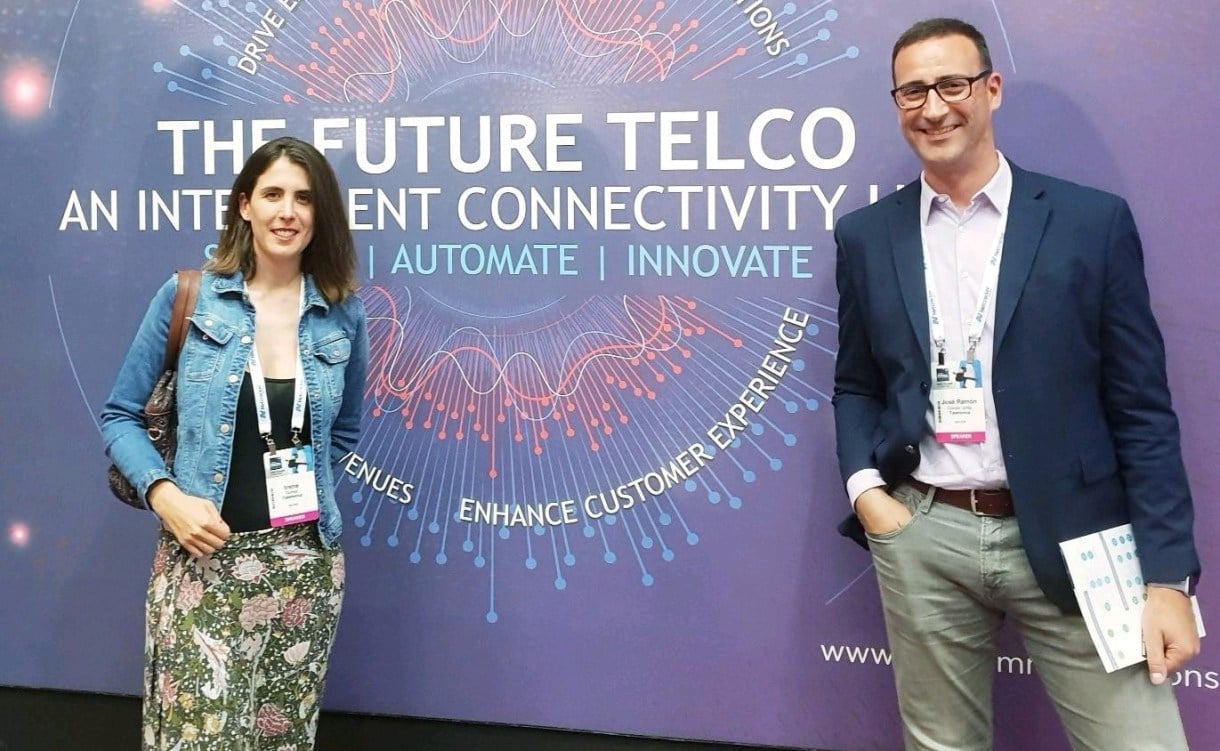
The TM Forum 2019 has recently taken place in Nice (France), a forum that encourages the industry’s association and drives the digital transformation of companies, that was attended by leaders of the most important telecommunications and technological industries. Telefónica has been represented by Irene Gómez, Global Director of Aura, and José Ramón Gómez, Head of Product Strategy at Aura, with the collaboration of Rick Lievano, Director of Industry Technology Strategy and Communication at Microsoft. “Data, Cloud and AI are the fuel for digital transformation”, said Irene Gómez.

Irene Gómez and José Ramón Gómez

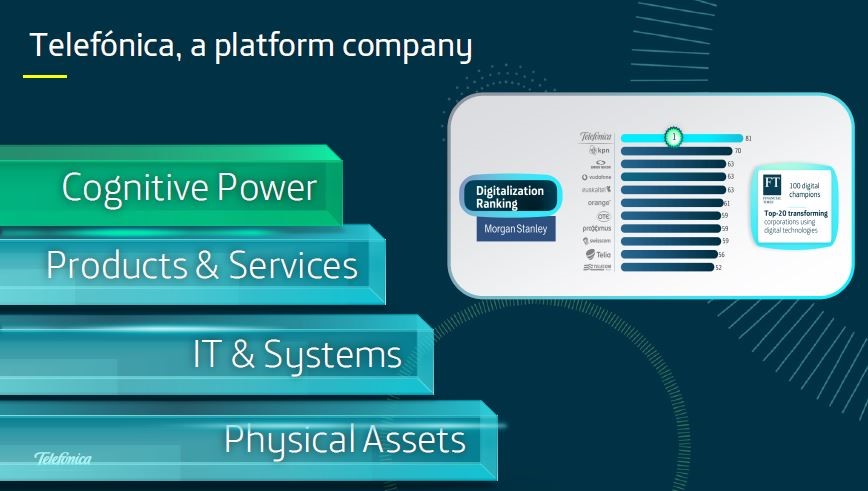
Irene stressed that the history of Telefónica is the history of continuous change. Born as a fixed-line network company, it opened up to mobile networks and then to the world of data by incorporating digital services into its portfolio. More than three years ago it was idealised as a platform company, and significant efforts were made to execute that vision successfully.

Telefónica, a platform company

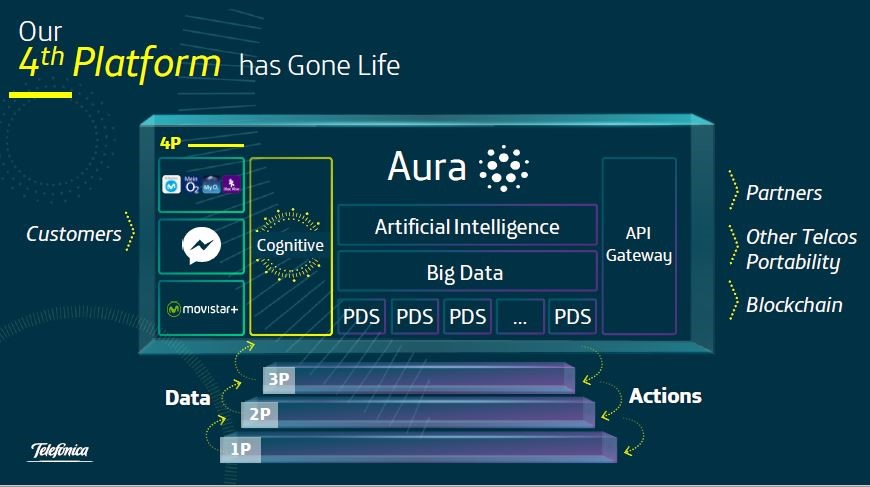
The First Platform is networks and other company services, which serve as a fundamental base to support the rest of the assets. The Second Platform is unified IT systems, while the Third Platform encompasses all the digital products and services that it offers to its customers. On the basis of the capabilities provided by these platforms, the Fourth Platform was developed to reinforce Telefónica’s capacity to collect, store, analyse and understand customer data in real time and offer them personalised experiences. It is a cognitive power realised through Aura, Telefónica’s Artificial Intelligence, which is already established in seven countries and soon to be in two more.

“Aura has become a new way to create a relationship based on trust with our customers. Our customers want a simple, reliable, multi-channel experience. This is Aura’s mission.”

Irene Gómez

In addition, she stressed that the company has already been recognised by Morgan Stanley as number 1 in the digitization ranking or by the Financial Times as one of 20 leading corporations that are using digital technologies to transform themselves. For his part, José Ramón Gómez commented on some of the challenges they face with Aura:

Multi-local operation: launched in seven different countries with different languages and dialects. To scale up the project, local teams have been created with a Global/local Government, so that they can locally create relevant cases of Aura use in each country.
Time to market: Telefónica has an internal team that builds the product in-house, supported by Microsoft, which allows them to be quick at deployment.
Global Product: it has to have the same user experience for all customers while remaining both personalised and relevant.

Graphic explanation of the Fourth Platform

Aura, an international project

The Telefónica executive also pointed out that Aura is currently present in seven countries with 2 million active users per month, 6 million conversations per month through 20 different channels, which is why it will continue to evolve gradually with each new case of use and channels, depending on the needs of each country. In addition, Aura has recently been launched in Ecuador and will arrive in 2019 in Colombia and Uruguay.

To conclude, regarding the implementation of Artificial Intelligence in companies, the three pointed out that change is constant; it is necessary to transform, so that data, cloud and AI are the fuel for digital transformation, that innovation will come from each person, and that technology must have a human side and create different and personalised experiences for customers and employees.

5G – The Key Technology for the development of IoT

Beatriz Sanz Baños    20 May, 2019

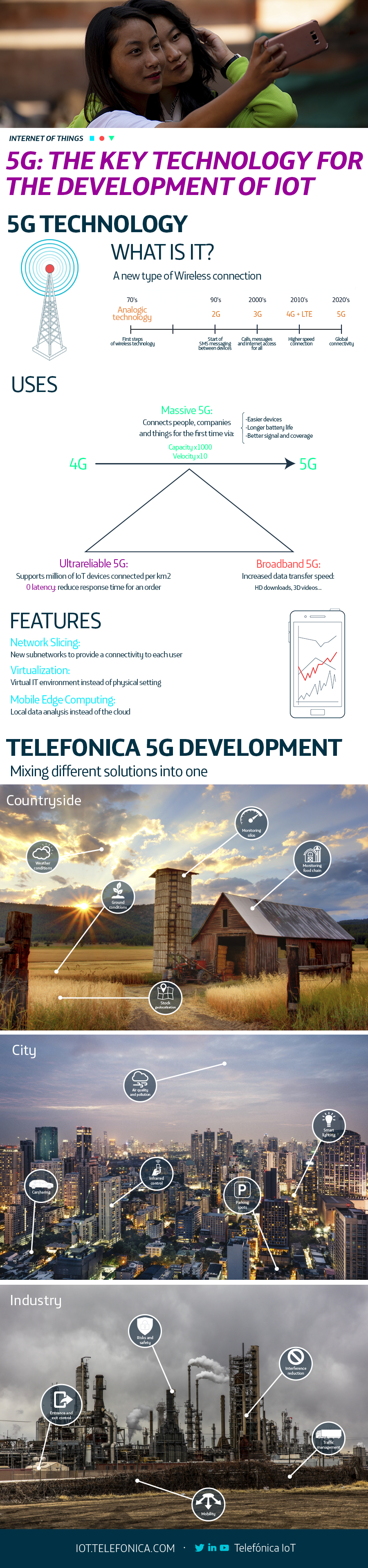
The development of 5G technology represents a disruptive advance in the telecommunications sector. It is a new type of wireless connectivity that provides a higher speed of data transfer and a greater capacity of connectivity between devices.

Why you are late delivering all your projects and what you can do to address it

ElevenPaths    20 May, 2019

Anyone who causes harm by forecasting should be treated as either a fool or a liar. Some forecasters cause more damage to society than criminals.

—Nassim Taleb, The Black Swan, 2007

In 1957, the Sydney Opera House was expected to cost $7 million and to take 4 years to be carried out. Finally, it took 14 years to be completed for around $102 million, resulting in a cost overrun of 1,400%! Probably the highest in the whole History.

Cost overruns and delays constitute a constant in engineering works: the Panama Canal, the new headquarters for the European Central Bank, the M-30 tunnels, the Madrid-Barcelona high-speed train, the Pajares turn-off (variante de Pajares), the Barajas Airport T4, the L9 of the Barcelona metro… It is an endless list. After having studied hundreds of works in 20 countries over the last 70 years, Bent Flyvbjerg −Infrastructure Policy Expert and Professor at Oxford University−, concluded that 90% of the projects were not able to meet the budget.

And this does not happen only with big civil works, but also with major engineering projects: the A400M Airbus, the Australian F-100, or the Galileo project intended to replace the GPS, that has accrued 10.000 EUR million in terms of cost overruns and a 15-year delay. Imagine!

What about your projects? Are they more resource-intensive than it was originally budgeted? Do they take longer than expected to be completed?

Why we are so bad estimating costs and deadlines: the tension between inside and outside views
Throw the first stone if you have never been over-optimistic when estimating the time and resource costs needed to complete something!

The psychologists Daniel Kahneman and Amos Tversky coined the term planning fallacy to refer to this paradoxical phenomenon: although all of us have miserably failed time and again when estimating the completion time and execution budget of all type of personal and professional projects where we have been involved, the next time our planning remains absurdly optimistic!

In his book Thinking, Fast and Slow, Daniel Kahneman explains how you can address a problem by using an inside view or an outside view:

  • When you use the inside view, you focus on your specific circumstances and search for evidence in your similar experiences, including anecdotal evidences and fallacious perceptions. You imagine idyllic scenarios where everything goes according to plan. Nevertheless, in addition to all the variables that you consider on your mind, there is an incalculable volume of unknown and undeterminable variables: diseases, accidents, security incidents, breakdowns, disagreements within a team, other projects that are more relevant, firings, unforeseen exhausted funds, strikes… so many unexpected things may happen! Unfortunately, it is impossible to anticipate all of them. What is clear is that the likelihood that something goes wrong increases as the project is more ambitious. In summary, we underestimate what we don’t know.
  • Conversely, when you use the outside view you are looking beyond yourself —beyond your own experience, beyond the details of a particular case and paying attention to additional objective information, such as the base rate. Instead of thinking that your project is unique, you look for similar projects and check their data on average budget and duration.

Unfortunately, you tend to discard, even to scorn, the outside vision. When statistical information of similar cases comes into conflict with your personal feelings, you will reject the data. After all, those projects were so long and had such a high cost because other people executed them, but you are different and the same thing might not happen to you, right?

Let’s see it from a different angle, thanks to this piece of dialogue from a real conversation between two parents:

“I’m going to enroll my son at the TAI School.”

“Are you sure? It’s really elitist. The probability to be admitted is quite low, only 8%.”

“Well, the probability of my children will be close to 100%, his grades are excellent.”

This father thinks that his son has a very great probability to be admitted because, indeed, the child is quite intelligent and his grades are excellent… as the hundreds of children that apply for this school every year, of whom only 8 out of 100 are admitted. This father is only using its inside view to evaluate the situation. Sadly, the best probability estimation that his son will be admitted to that school remains 8%, that is, the base rate.

To sum up, the outside view looks for similar situations that may provide a statistical basis to make a decision: Have other people faced similar problems in the past? What did it happen? Since we consider the outside view is an unnatural way of think, we prefer to believe that our situation is unique.

According to Kahneman in Thinking, Fast and Slow:

In the competition with the inside view, the outside view doesn’t stand a chance

Welcome to Lake Wobegon, where all the children are above the average
Acknowledge that your perception of events is asymmetrical. According to a high number of psychology experiments:

  • You attribute your successes to your skills and your failures to your bad luck, exactly the opposite of how you apprehend successes and failures of others.
  • You consider yourself more intelligent than others.
  • You think you are a better driver than others.
  • You think your marriage will last longer than others.

In essence, you think you are special. Well, this is another thought error known as optimism bias. This bias is closely related to the illusory superiority. In other words, we believe within ourselves that we are different, when actually we are all quite similar.

The optimism bias plays a critical role in the planning fallacy. As explained by the expert Bent Flyvbjerg in his study mentioned above:

“In the grip of the planning fallacy, managers make decisions based on delusional optimism rather than on a rational weighting of gains, losses, and probabilities. They overestimate benefits and underestimate costs. They involuntarily spin scenarios of success and overlook the potential for mistakes and miscalculations. As a result, managers pursue initiatives that are unlikely to come in on budget or on time, or to deliver the expected returns.”

Not everything is our imperfect thought’s fault
The optimism of planners and those who make decisions is not the only cause of these increases. In Thinking, Fast and Slow Kahneman points out other factors:

“Errors in the initial budget are not always innocent. The authors of unrealistic plans are often driven by the desire to get the plan approved—whether by their superiors or by a client—supported by the knowledge that projects are rarely abandoned unfinished merely because of overruns in costs or completion times.”

In order to obtain funding at all costs, overstating the returns of the coming project and easing the risks and costs is frequent. In such a way, Bent Flyvbjerg provides a formula that stresses this pernicious spiral where the projects that are best presented are the most funded ones:

Underestimated costs + Overestimated benefits = Funding

At the end, people don’t fund real projects, but idealized versions of them with oversized returns, while costs and problems are swept under the rug.

What you can do to better plan your next project
Statistical information on similar projects may save us from the planning fallacy. However optimistic you are, you may expect to find, on average, similar bottlenecks to those faced by similar projects’ teams. Bent Flyvbjerg suggested the method known as Reference class forecasting to set the optimism bias aside when forecasting projects’ completion time and cost.

Reference class forecasting requires the following three steps for your particular project:

  1. Identify a relevant reference class of past projects. The class must be wide enough to be statistically significant, but also restricted enough to be truly compared with your project. Naturally, the rarer the problem you are dealing with, the more difficult this step will be. In case of common decisions (at least for others, although not for you), reference class identification is immediate.  
  2. Establish a probability distribution for the selected reference class. This requires access to credible empirical data for a sufficient number of projects within the reference class in order to obtain statistically significant conclusions.
  3. Compare your project with the reference class distribution, in order to establish the most likely outcome for your project.

When evaluating plans and forecasting, we tend to focus on what is different, leaving behind that the best decisions often focus on identical factors. Even if the situation you are dealing with seems to be a little different, at the moment of truth it is almost always the same. However painful it may be, let’s assume we are not as special as we think.

Learn from ancient stoic philosophers to think about what may go wrong: project premortem analysis
It is attributed to Seneca the meditation exercise that Stoics called premeditatio malorum: something like a reflection on what may go wrong before undertaking an enterprise. For instance, before undertaking a sea journey, what may go wrong? A storm may break, the captain may get sick, the ship may be attacked by pirates, etc. In this way, you may get yourself ready for these eventualities. And in case nothing can be done, if the worst happens, at least it will not catch you by surprise.

The American psychologist Gary Klein takes this old idea up and recommends performing a premortem analysis of the project under study:

A premortem in a business setting comes at the beginning of a project rather than the end, so that the project can be improved rather than autopsied. Unlike a typical critiquing session, in which project team members are asked what might go wrong, the premortem operates on the assumption that the “patient” has died, and so asks what did go wrong. The team members’ task is to generate plausible reasons for the project’s failure.

If you wish to apply this analysis, try to give the following speech to your team:

 “Imagine that a year has passed. We have followed the project to the letter. The project has failed spectacularly. Over the next few minutes those in the room independently write down every reason they can think of for the failure—especially the kinds of things they ordinarily wouldn’t mention as potential problems.”

The reasons that have been pointed out will show you how things might happen. After all, a premortem may be the best way to avoid a painful postmortem.

Gonzalo Álvarez Marañón
@gonalvmar
Innovation and Labs (ElevenPaths)
www.elevenpaths.com

The future of OpenAI and the alternatives to its end as a non-profit business

AI of Things    17 May, 2019

Just a few days ago, the well-known research company within the Artificial Intelligence environment, OpenAI, has announced the end of its non-profit operations. Since starting, OpenAI have championed the development and promotion of an artificial intelligence which is beneficial to humanity. The company was founded on 11th December 2015 by Sam Altman and Elon Musk in San Francisco together with various entrepreneurs in Silicon Valley. In order to be able to act as a non-profit, they relied directly on wealthy sponsors, which they could not make cover the costs of the business.

Although OpenAI has “closed its doors”, the company itself has just announced its decision to create another company linked to this one, capable of generating profit and therefore being able to attract capital and new employees with the possibility of obtaining stocks and shares in the company. This decision has been taken because for the company to continue to grow and to do its job, it will need to invest millions of dollars during the coming years on cloud computing as well as recruiting new experts in AI. According to Ilya Sutskever, head scientist at OpenAI, the investigations within the AI field require enormous investments, which has led them to make this decision, so as to continue being a competitive company.

Other reason why OpenAI was no longer feasible for its founders is that, in reality, some artificial intelligence experts earn higher salaries than those of elite sportsman (some earning than millions of dollars per year). The OpenAI team was initially made up of 100 people but was increased with various experts within this field over the following year. Many of these specialists actually work for successful companies in Silicon Valley, in which they can acquire shares (on the contrary of what they could get at OpenAI). Although OpenAI LP now offers the possibility of having shares, OpenAI. Inc will continue being the only shareholder with the ability to control the company. In fact, if any member of the governing body of OpenAI is also an investor in OpenAI LP, they will not be able to vote on decisions which affect the relationship between both companies.

Although the tools launched by OpenAI continue to be available, their maintenance will be affected by this change. For this reason, we take this opportunity to present to you all some alternatives to the OpenAI tools with which you can work comfortably in your Machine Learning projects.

Scikit-learn:

It is a library completely focused on machine learning, it offers simple and efficient tools for the extraction and analysis of data, including various regression, classification and group analysis algorithms, is accessible to the whole world and is based on NumPy, SciPy and Matplotlib. This projects began as a Google Summer of Code project by David Cournapeau, SciKi-learn is mostly written on Python, but it also has some algorithms written on Cython, a language that makes it easier to write extension modules for Python in C and C++.

Pandas:

This is one of the best libraries for the analysis of data, it is open-source and provides a high performance level and ease of use making is unnecessary to change our code into other languages such as R to be able to analyse it.

Azure ML:

This tool developed by Microsoft has recently changed its name to Azure Machine Learning Studio. It offers a service which allows the creation and development of analytical solutions with easy handling which doesn’t require an understanding of programming and you use it with a mouse. This service on the cloud comes with various tutorials which you will be able to find on Azure’s web page. If you are a developer or a data scientist Azure ML Studio will be a very useful tool for you, the software is optimised for use in applied Machine Learning.

OpenCV:

OpenCV (Open Source Computer Vision Library) is published under a BSD licence and therefore is free as long as for academic or commercial use. It has interfaces on C++, Python and Java, as well as being supported by principal operating systems (Windows, Linux, Mac OS, iOS and Android). This tool was designed with efficiency as its main characteristic and it focused on applications in real time. Written on C and C++ this library can take advantage of multi-core processing. At present, it has a large user community that amounts to more than 47,000 people and has more than 14 million downloads.

Written by Sergio Sancho

Para mantenerte al día con LUCA visita nuestra página web,  suscríbete a LUCA Data Speaks o síguenos en TwitterLinkedIn YouTube.

MWC 2018: How Telefónica will create a better future with IoT

Mirian Martinez Varas    13 May, 2019

On February 26, the MWC 2018 will be launched, a new tech gathering where the most important and innovative firms in the technology industry will meet. And naturally, Telefónica will be there presenting our latest developments and projects related to Internet of Things, the new revolution with infinite possibilities. People are at the core of this revolution because our goal is to connect people with the things that matter to them.

They include numerous aspects related to the retail sector, connectivity, and especially Industry 4.0. The Telefonica Stand will be in the pavilion of the main device manufacturers in Hall 3, Stand 3K31, and there we will offer several demonstrations about what the future of technology holds. What will you find at our stand?

Transforming business

Digitization is one of the leading features in the connected world. And the IoT is an enabler of the digital transformation which is already starting to change everything, especially with regard to the fourth industrial revolution. This is transforming all sectors, and best of all, everything from institutions to companies, not to mention small businesses and other actors in the retail sector have the opportunity to adapt to this reality to remain competitive.

Improving customer experiences, increasing productivity, and achieving more flexible business models are just some of the consequences of digitization. And Telefónica is leading the change by supporting companies in this transformation. Virtual, augmented, or extended reality, connectivity and social experience are put at the service of change, as you will be able to see in the stand at the congress.

Industry 4.0

The fourth industrial revolution is here to stay, a change that is advancing by leaps and bounds. And Telefónica is one of the main players in this evolution, as you will discover at our stand at the MCW 2018. There you will see how the assembly line of this Industry 4.0 is being transformed by combining IoT, 5G connectivity, Big Data, along with industrial robotics and a connected workforce.

Thanks to all this technology, workers will be more efficient and work will be safer, assembly lines will be increasingly productive, and industry will spend less energy, pollute, less and become more effective in transportation. Visitors will witness all of this at the forthcoming congress.

A whole connected world

None of the above, or in fact any other aspect related to IoT, would make sense without the technology that allows the entire world to be connected. Therefore, in our stand you will see how connectivity and the exponential growth in data will transform our lives beyond the imaginable.

From any place and with any device, with the highest quality and enjoying the best experience: this is how people want to be connected. As one of the world’s leading operators with the largest deployment of fiber in Europe, Telefónica continues to be one of the greatest exponents of technological innovation. Furthermore, we have already embarked upon the path of change towards 5G.

But we never lose sight of the fact that after connectivity, people still there. And this is one of the keys to social inclusion. At Telefónica, we focus on an “Internet for Everyone” by working on the ways networks are designed, implemented, operated, maintained, and marketed in order to continue expanding mobile Internet coverage, as you will see interactively during the conference.

The best IoT experts

In addition to everything we have prepared for the stand, at the MCW 2018 we will also welcome the participation of a fascinating panel of experts including Andrés Padilla, Head of New IoT solutions; Andrés Escribano, m2m Global Horizontal Products Director; and Vicente Muñoz, Chief IoT Officer at Telefónica.

Andrés Padilla will speak on Sunday the 25th at 2:40 p.m. on Scaling Global Deployment and the Invaluable Role of the Low Power Wide Area, or LPWA, in the mobile industry and the IoT. This technology is the hard core of connectivity, and Padilla will tell us about its current deployment and its future availability, as well as its future importance in communications.

On Tuesday the 27th at 2:00 p.m. , Vicente Muñoz will talk about the secrets to the massive, industrial application of the IoT and the most innovative solutions in this sector. Finally, on Wednesday the 28th at 3:00 p.m., Andrés Escribano will talk about the challenges in the implementation, growth, and evolution of the IoT ecosystem.

The week of February 26th to March 1st, all this and much more awaits visitors to the MCW, an indispensable event for everyone who wants to learn firsthand about what the future holds. A technological future, connected and more efficient. A future in which the IoT will play a fundamental role in its full expression.

The intelligence of IoT

Beatriz Sanz Baños    13 May, 2019

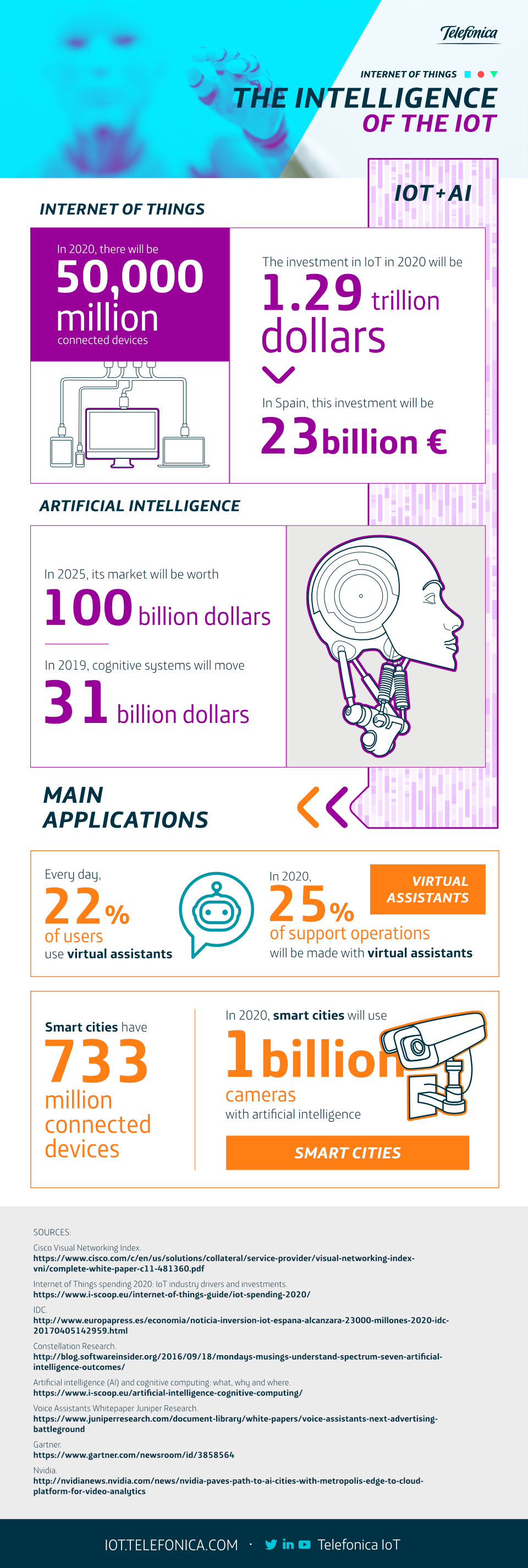
The combination of IoT technology with Artificial Intelligence makes it possible to improve people´s daily lives. This is demonstrated by applications such as virtual assistants or connected smart cities devices.

Telefónica IoT and Honda reduce motorbikes robbery

Beatriz Sanz Baños    13 May, 2019

Pucallpa, located in the middle of the Peruvian jungle, has a big concern with the safety of their citizens and their vehicles. With a population of 200.000 inhabitants, the motorcycle is the easiest way to move around the city.

However, the main problem for those who live there is only one: security. Well, the lack of security. The bikes are a comfortable way of transport, easy to park and to drive around, but they are also easier to steal. This problem significantly started to affect the best-selling brand in the area.

Honda, for its quality and reputation is a reference brand among the citizens who wanted to buy a motorcycle. However, that recognized prestige started to become a scourge for the selling brands.  With the stealing problem in the city, having a Honda was a risk, paying a higher price for the ransom from the thieves after being stolen.

How could the Internet of Things help to reduce the kidnapping problem? Telefonica contacted the main motorcycle dealer of the city and proposed to apply a solution, and started to track all the Hondas wherever they were in real time.

This device has an incorporated GPS, a SIM card similar to the ones in the telephones, and an accelerometer that allows them to know all the mobility data. The device is strategically located to be invisible and this way the users regained the trust in the brand and were confident to show off their Honda.

In addition, when buying a “connected” motorcycle, the owners have an application on their smartphones that offers all the information that they need about the bike. The feeling of tranquility and control over your vehicle is total. So much so that Honda dealers refer to the IoT device as “a series reassuring”, which allows motorists to attend work or dine in a restaurant with their family or friends without the fear of being robbed, or knowing that, if it is stolen, in a few hours and thanks to the GPS location, they will be able to recover it.

The data offered by the application is:  The possibility of knowing the exact location (with good GPS and telephone signal) if the motorbike has been moved. In addition, they can see the time the motorcycle was parked, request for the location in real time, make an emergency call and share it with anyone they want.

Not only the safety of motorcycles, but also the motorists are safer now thanks to the device. By having a GPS that sends the exact coordinates of the location of the motorcycle, in case of an accident it sends an emergency message so that medical teams can help and get to the exact point where the accident has taken place.

So, with the implementation of the IoT on their motorcycle and in their lives, Honda users feel safe in a cybersecurity and physical way. In fact, the riders have commented to Telefónica IoT that they feel they are not the ones who have to worry about their motorcycle, now it is their motorcycle the one who cares about them.