
Understanding the visitors of the Reina Sofia Museum in Madrid

AI of Things    7 November, 2017

Every organization needs to understand who their target audience is, in order to know how to direct their activity and through this, define their strategy and lines of action. In the case of museums, the analysis of their visitors and their behavior, likes and preferences is important, since it helps the museum to understand their profiles and interests, and to help define their activity. In this post, we reveal the recent collaboration between Synergic Partners, the area of analytics and consultancy at LUCA, and the Reina Sofia Museum in Madrid, the first Big Data study carried out in Spain.

The exposition titled “Pity and Terror: Picasso’s Path to Guernica” has been open in the Reina Sofia Museum for the last five months, coinciding with the 80th anniversary of Guernica’s creation by Pablo Ruiz Picasso in 1937, and the 25th anniversary of this painting’s arrival in Madrid. Normally when we buy an entry ticket for a museum or exposition, we will be asked where we come from, if it is our first visit or our reason for visiting. All this is done in order to produce internal statistics and to help the museum to understand the atendees. However, the Reina Sofia Museum in Madrid wanted to go one step further and has become the first museum in Spain to carry out a Big Data study which can be used as a basis for undertaking a more comprehensive analysis.

According to Carme Antigas, cofounder and CEO of Synergic Partners and author of the study, “Big Data is the ability to be able to process large volumes of data, to analyze this data and to extract behavior patterns that allow us to predict what is going to happen”. The analysis in this case has generated the “enormous quantity” of 157 gigabytes of information. “The complete works of William Shakespeare total 5 megabytes. We are talking about an amount that is 30,000 larger than the works of Shakespeare”, she explains.

Thanks to the large amount of data generated through the Big Data study carried out, the Reina Sofia Museum is able to determine the behavior of the general public that has visited the exposition. They can work with different sources of information, including those from the Museum’s own activity, external sources and those totally independent of the visitors’ activity such as meteorological data, live tracking of social networks, festival calendars and mobility data. On this occasion, the Smart Steps solution has been used to make the most of mobility data. According to Manuel Borja-Villel, the museum’s director, “it is important to understand this data in order to make the visit as pleasant as possible”.

Data relevent to the study

In the figure below, you can see some of the data obtained through the collaborative project between LUCA and the Reina Sofia Museum, using the Smart Steps technology and its large computing and storage capacities:
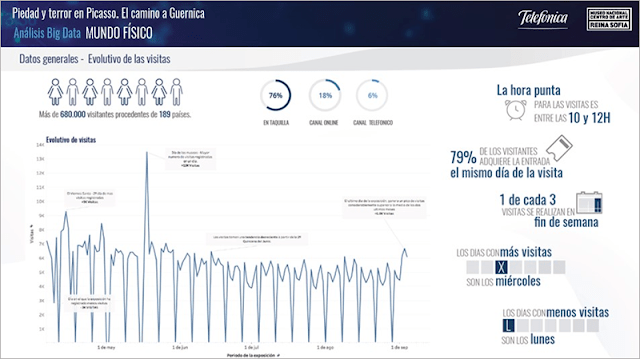
Figure 2 : Data about the profiles and behavior patterns of the visitors to the exposition.

Many factors have been taken into account during this study, including the tourism that occured during these months in Madrid, major events that had taken place, the weather and even financial transactions, In this way, they have been able to include that, for example, of those tourists that had been in Madrid during this five-month period, 11.5% visited the Reina Sofia Museum. The peak time was during 10 and 12 o’clock, the most popular day to visit was Wednesday and the least popular was Monday.

Furthermore, applying this analytical study carried out by Synergic Partners has also revealed that the 680,000 peaople visited the exposition from 189 countries, with an average of 4,800 daily visitors. Over 60% of the visitors were from abroad and among them the most common countries of origin were Italy (17% of the total), France (11%), Germany (7%), the US (7%), Great Britain (5.6%), Japan (1.4%) and Portugal (1.3%).

For the museum, it is also interesting to understand the behavior patterns of these visitors. It can be seen in the study, among other things, that extreme weather conditions led to an increase in visitors, both for rain and sudden drops in temperature during the warm months. For example, on the 4th and 5th of June, there was a significant fall in temperatures, and this resulted in a 33% increase in visits to the museum. Another significant piece of information is that 79% of visitors acquired their entry ticket of the day of visiting, and that an individual would spend, on average, an additional 5 euros in the area around the museum. Thus, the exposition become one of the catalysts of economic activity in the vicity, with an 18% increase compared to the previous trimester.

Don’t miss out on a single post. Subscribe to LUCA Data Speaks.

New tool: SKrYPtEd, your Skype conversations local database protector

ElevenPaths    6 November, 2017
Did you know your Skype conversations are stored in plaintext in your hard drive? Did you know anyone could just grab them with some kind of malware and upload it to a server of his own with a simple malware in just a second. Literally. SKrYPtEd is a service that runs in your Windows and keeps your database encrypted with a password. You do not need to enter your password every time Skype is used. SKrYPtEd encrypts the messages every time Skype is closed, and do not decrypt them when Skype runs unless you decide it with your password. So, unless you need to check for old messages on a daily basis, it is quite transparent for you. And if you do, it is just about typing a password to get your old messages back.

Skype stores database in plaintext in your profile. It is a SQLite
database with lots of data. SKrYPtEd just encrypts the text of the
messages so every metadata is kept.
It protects from local or remote attacks if an attacker would be interested in
conversations by grabbing or sending this database somewhere.


Functionality

Just install it. It will ask for a password that is not stored in your system. Everytime Skype starts up, it will ask for the password, but introducing it is not required. Just use it when you need to get your old messages back. SKrYPtEd allows you to keep your database transparently encrypted while you use the program and comunicate with your contacts. 

With SKrYPtEd, meesages are encrypted

The Skype database is stored locally in whatever device Skype is used, so take into account that this program only provides protection for a local storage of the database and conversations.
It allows to decrypt as many days back as you want to, but it will always allow to use Skype “normally” if no password for SKrYPtEd is provided. It does not work for Skype for Business version.

This video shows an example of how an attacker could just grab the Skype database using a simple malicios document with a specially crafted macro and how SKrYPtEd could help.

You can download SKrYPtEd (there is a 32 and 64 bit version) from here.

Innovación y laboratorio

The stand-out moments of BDID2017 (I) : Thank you for enjoying this day with us!

AI of Things    3 November, 2017
Last
Tuesday, the 31st of October, we celebrated the
Big Data Innovation Day 2017 enjoyed a fantastic afternoon. The
main Auditorium of Distrito Telefonica was full of guests and many others
followed the event via streaming from various countries. In order to thank you
for the reception and welcome we received
, we want to share with you some
standout moments from BDID2017 and from our experts’ talks. We want to keep on
growing with you
on the exciting Data-Driven journey. Shall we begin?

The Big
Data Innovation Day 2017 saw a total of
467 attendees
to the event, completely
filling
both the Central Auditorium at Telefonica as well as the Innovation
Center. Also, over 800 users in more
than 20 countries
connected with us via streaming, with clients coming
together around the world to follow minute by minute the event, meaning it was
a global gathering.


Figure 1 : Part of the LUCA team at BDID2017


aA 

The
conference began with a welcome from
Javier Magdalena, Director of Digital Business and
TSOL at Telefonica España, who led into the talk by 
Chema Alonso, Telefonica’s CDO. Joined on stage
by one of LUCA’s hackers, Chema gave particular emphasis to how data can make businesses more competitive
in their digital transformation and business development. He presented the
latest developments in LUCA Transit, LUCA Comms, LUCA Fleet and LUCA Verify and
also shared with the room the desire to give users back the value of data so that their digital life is easier and more safe

Elena Gil Lizasoain, CEO of LUCA, showed us that Big Data is a reality at that we keep
growing with you
, since the value of Big Data is in combining data with
insights in order to make data-driven insights. She presented the latest
solutions and technological integrations that we at LUCA have developed this
last year, as well as the different case studies of well-known clients in the
retail, tourism, banking, logistics and transport sectors. As well as showing
how Big Data can transform the business world, this technology also contributes
to the improvement of society with projects having been carried out with Unicef, the Profuturo Foundation and the
Telefonica Foundation.
These “Big Data for Social Good” projects are
designed to achieve the Sustainable Development Objectives set by the UN for
2030.

Lourdes Cubero, Retail Business Developer at
Telefonica España, continued the presentation alongside Elena Díaz, Senior Analytical Consultant at LUCA. They presented
the benefits that data brings to the retail sector with LUCA Store. To show
this, they passed the baton over to Jesús
Hernández
, the assistant manager of the La Vaguada Shopping Center, who shared with the audience about the
collaboration carried out at the shopping center, and the benefits that they
have been able to receive thanks to the great value of data and the solutions
developed by LUCA.

Carme Artigas, CEO and cofounder of Synergic
Partners, the area of analytics and consultancy at LUCA, then gave her talk
titled “Big Data: Show Me The Money!” This
focused on how, thanks to the combination of data and insights, businesses can notably
increase their profits.

To finish, the collaboration between
LUCA and Movistar Riders
was revealed in a presentation by Pedro de Alarcón, head of Big Data for
Social Good at LUCA, and Fernando Piquer,
CEO of Movistar Riders. In their talk titled “How can you build the best eSports team using Big Data?, they
presented the dual purpose of this partnership; analyzing how the physical and
mental preparation of the players affects their performance, as well as
designing an analytical tool which makes the most of the data available to
extract conclusions that can improve decision making. There was even a real
time demonstration that showed how the analysis is carried out.

After the
presentations, the event concluded with a cocktail event where guests had the
chance to visit the four corners; Imagine, Build, Grow and Dream. Several demos
of LUCA products were shown in addition to presentations from our partners Qlik
and Pindrop.
Do not miss
the recap video from BDID2017, enjoy the presentatio
ns,
and remember that if you want to stay up to date with the latest news, you can
subscribe to the LUCA newsletter.

Don’t miss out on a single post. Subscribe to LUCA Data Speaks.

#CyberSecurityPulse: Last Update About Bad Rabbit Ransomware

ElevenPaths    31 October, 2017

On October 24th infections about a ransomware called Bad Rabbit began to spread. Less than one day, it has been targeting organizations and consumers, mostly in Russia, Ukraine, Turkey, Bulgaria and the United States.
The ransomware dropper was distributed with the help of drive-by attacks. While the target is visiting a legitimate website, a malware dropper is being downloaded from the threat actor’s infrastructure. No exploits were used, so the victim would have to manually execute the malware dropper, which pretends to be an Adobe Flash installer.

However, Bad Rabbit uses the EternalRomance exploit as an infection vector to spread within corporate networks. The same exploit was used in the ExPetr. This been a targeted attack against corporate networks, using methods similar to those used during the ExPetr attack. The code analysis showed a notable similarity between the code of ExPetr and Bad Rabbit binaries.
Analyzing the sample, it looks like the criminals behind this malware are fans of the famous books and TV show series Game Of Thrones. Some of the strings used throughout the code are the names of different characters from this series. They have also discovered that files encrypted by Bad Rabbit can be recovered with following specific procedures: “We have discovered that Bad Rabbit does not delete shadow copies after encrypting the victim’s files. It means that if the shadow copies had been enabled prior to infection and if the full disk encryption did not occur for some reason, then the victim can restore the original versions of the encrypted files by the means of the standard Windows mechanism or 3rd-party utilities”.

Top Stories

Dutch Privacy Regulator Says Windows 10 Breaks the Law

The lack of transparency about what Microsoft does with the data that Windows 10 collects prevents consumers from giving their informed consent, says the Dutch Data Protection Authority (DPA). To comply with the law, the DPA says that Microsoft must be clearer about what data is collected and how that data is processed and respect previously chosen settings about data collection.

» More information at Arstechnica

The CSE of Canada Releases a Malware-fighting Tool to the Public

The Communications Security Establishment (CSE) releases one of its own cyber defence tools to the public, in a bid to help companies and organizations better defend their computers and networks against malicious threats. Assemblyline is an open-source malware analysis tool that, according CSE, is used to protect the Canadian government’s sprawling infrastructure each day.

» More information at Bitbucket
Rest of the Week´s News

Microsoft Releases the Open Source Scanning Tool Sonar

Microsoft announced the availability of Sonar, an open source linting and website scanning tool that was developed by the Microsoft Edge team. Sonar is a linting tool that analyzes the code for a wide range of issues, including related to coding errors, performance, accessibility, security, Progressive Web Apps (PWA), and interoperability.

» More information at Github

APT28 Racing to Exploit Flash Vulnerability Before Patches Are Deployed

The CVE-2017-11292 Adobe Flash vulnerability allows attackers to make use of a bug which can lead to code execution on Windows, Mac, Linux, and Chrome OS systems. As a result, attackers are moving quickly to exploit it while they can and researchers at Proofpoint have attributed a campaign designed to spread trojan malware using the vulnerability to APT28.

» More information at Proof of Point

Further Reading

Google Play Bounty Promises $1,000 Rewards for Flaws in Popular Apps

» More information at Google Play

FBI’s Recruitment Strategy For Cybersecurity Pros Focuses on High School

» More information at Cyberscoop

DUHK Attack Lets Hackers Recover Encryption Key Used in VPNs & Web Sessions

» More information at The Hacker News

Planning retail site locations using data

AI of Things    30 October, 2017
One of the key business decisions for any brand is deciding where to ‘set up shop’. This involves having an understanding of your consumer base and is particularly important when a brand wants to move from a purely online model to having physical retail spaces. In this blog, we explore the success story of the cosmetics brand Natura and how LUCA Store technologies helped the company to grow its presence in Brazil.


Natura Cosméticos S.A. or simply Natura, manufactures and markets a wide variety of cosmetic products in the skin care, beauty, perfume and hair care markets. The company has a strong focus on being innovative and sustainable. In total they have more than 3200 stores internationally in addition to selling products through representatives. Natura is now the largest Brazilian cosmetic company by revenue and in July this year bought The Body Shop from L’Oréal.

Figure 1 : Natura is the largest Brazilian cosmetics company by revenue
In the past, Natura operated with a direct-to-consumer sales model that relied heavily on their sales representatives. Whilst successful, they later made the decision to open retail stores and wanted to identify locations with high sales potential. This potential would be measured by the number of pedestrians that pass the location and the demographic group they belong to.
 
The project with LUCA involved the combination of VIVO Big Data, Natura’s internal customer indicators and knowledge of the sector, as well as LUCA Store technologies. Our LUCA Store solution analyzes billiones of mobile data points in order to provide invaluable insights which help retailers to understand the who, what, when, why and how of their consumers. The result of combining our data and technologies with Natura’s KPIs was the ability to suggest with greater accuracy the best locations to open a store. These suggestions even took into account at which time and on which days the stores would be open. You can watch a live demo of LUCA Store technology below:

The insights provided by LUCA Store meant that after only one month of work, Natura possessed valuable information regarding over 40 million people from five major Brazilian cities. If you would to find out more about this LUCA solution, and others, you can do so on our website.

Don’t miss out on a single post. Subscribe to LUCA Data Speaks.

Under a week to go until #BDID2017!

AI of Things    25 October, 2017

We are now less than 1 week away from Big Data Innovation Day, which will be held on the 31st October 2017 along with the first anniversary of the launch of LUCA, Telefonica’s Big Data unit.

After the past year, here at LUCA we want to show all of the advances and innovations that have arrived at the department, demonstrating with case studies our establishment in the Big Data market. Big Data Innovation Day is a global event with clients and opinion leaders in the market; the event will kick off with Javier Magdalena, Director of Digital Business and TSOL at Telefonica and this will lead on to a presentation from Chema Alonso, Chief Data Officer for Telefonica. Chema will speak on the endless innovation possibilities of Big Data.

Elena Gil, CEO of LUCA, will focus on our growth and how our clients are growing with us on their journey to become data-driven. This is followed by  Lourdes Cubero, Retail Business Developer at Telefónica España and Elena Díaz, Senior Analytical Consultant at LUCA who will give an insight into using Big Data with points of sales and customer service.

Carme Artigas, CEO and co-founder of Synergic partners, will give the presentation “Big Data: Show me the money!” and then to close the presentations, Pedro de Alarcón, responsible for Big Data for Social Good and Fernando Piquer, CEO of Movistar Riders team, will discuss how to create the best eSports team with Big Data. You can see the full schedule with the timings here.

After the main event, there will be a cocktail networking event with clients and you will have the opportunity to experience complete demos from Telefonica’s portfolio prepared in the “Sala Ciria”. There will be four demo areas, allowing you to gain hands-on experience with our products.

If you are yet to sign up for Big Data Innovation Day 2017, request an invitation from your Telefonica representative, or write to us at [email protected]. If you can’t make it… we understand your boss won’t let you have time off work… then you can tune into our livestream by signing up here!

Discover more on the Big Data Innovation Day 2017 Website

Information on the event:
Location: Auditorio Principal at Distrito Telefonica
Date: Tuesday, 31st of October 2017

Don’t miss out on a single post. Subscribe to LUCA Data Speaks.
Boosting Peru’s Tourism Industry with Big Data

AI of Things    23 October, 2017


When people first think of Peru, stunning images of the Inca Trail and Machu Picchu are likely to come to mind. The “Land of the Incas” is one of incredible historic and cultural significance and possesses a remarkably diverse landscape. From the Andes mountains in the north to the Amazon basin in the east and coastal regions in the west, there is certainly a lot to explore. This is even before you include Lima, the country’s capital city and the third largest city in the Americas! In this blog, we reveal how LUCA Tourism technologies are helping Promperú to understand and analyze the tourists that were visiting this amazing country. 

Figure 1: Machu Picchu is just one of the many wonders of Peru.

Promperú is a specialized technical agency attached to the Ministry of Foreign Trade and Tourism, in charge of promoting Peru in the field of exports, tourism and image. With high amounts of tourists, Promperú wanted a better understanding of net tourist numbers within Peru. Traditional methods of data collection were slow and never truly representative of the demographics of the tourists. In addition, they had little or no access to real behavior information; something which would be of great value to a company in the tourism sector such as Promperú. But why would all of this information be of use? They would be able to monitor numbers, set targets and strive to increase tourist numbers in a sustainable manner. They looked towards the power of Big Data and LUCA Tourism for the answers.

LUCA Tourism provides a deep understanding of tourism through Big Data. It allows the optimization of commercial actions and it can help companies to discover new business lines. LUCA Tourism utilizes mobile data combines with Insights in order to give detailed information on the net movement of tourists. Movistar is the largest mobile network in Peru, accounting for around half of the country’s population. Clearly, this will a give a larger data set when compared with traditional methods. The Insights provided by our data scientists were varied and included; demographic information about gender and age, information on the duration of stay in Perú as well as origin and destination analytics that reveals the most popular places to visit and where the tourists come from.

With these Insights, Promperú is able to achieve their mission of positioning Peru in the world through the promotion of its image, tourist destinations and export products with added value, contributing to the sustainable and decentralized development of the country. This can be done with much greater precision than using traditional methods, and is a great example of how Big Data can be used in the tourism sector. For more examples, head to our website and YouTube channel.

Don’t miss out on a single post. Subscribe to LUCA Data Speaks.

#CyberSecurityPulse: The Attack Against the WPA2 Encryption that Poses a Threat to Our Wireless Security

ElevenPaths    17 October, 2017

On October 16, a research has been published about an attack to the current recommended encryption standard for WiFi networks, WPA2. Although the risks to these networks are not new and attacks against WEP or WPA have already proliferated, making these protocols unsafe, the current scheme was considered robust. Until now.

The scope of the attack, proposed by Mathy Vanhoef and Frank Piessens and known as Key Reinstallation Attack (KRACK), exploits a severe weakness that would allow an adversary phisically located in the range of the wireless connection to have access to previously assumed information as safe. Once reviewed the information that has just been released, the consequences are serious if the attack is confirmed and would involve up to 10 different CVE whose content has not been published yet. However, that does not mean that all our connections are affected. The attack affects the WPA2 Wi-Fi networks and the most dangerous scenarios would assume the physical proximity of the attacker to the networks and would always affect the confidentiality of the communications within that WiFi network that would be potentially readable if they did not include another layer of additional encryption as HTTPS does for example. Under certain circumstances, the researchers have also been able to not only decrypt, but also inject packets into the network. In any case, the problem is still serious, because it would be expanding the range of attacks that have traditionally been implemented on public networks to a number of environments that we have assumed to be reliable.

Sharing the concern of the community while the full details are explained, the usual recommendations are still valid in this case. For those who are really concerned about the potential impact it has on their own wireless networks, they can always reinforce the security measures for home networks by considering them as public networks, for example by forcing connections through VPN and, overall, keeping up to date all the usual security elements to benefit from the security updates as soon as they are published. Being concerned is healthy and is well justified, but, at the same time, we have the obligation to face events that are happening live like this one with the appropriate serenity too.

» More information at KRACK Attacks

Top Stories

Outlook Has Attached a Plaintext Copy of Encrypted Emails for 6 Months

The encrypted emails sent using Microsoft Outlook have been sent with an attached plaintext copy of the original encrypted content. This would expose the content of the emails to an attacker with access to the email server, one of the threat cases against which encryption tries to fight back. The vulnerability, which has been correspondingly classified as severe, has affected the S/MIME end-to-end encryption protocol which is precisely one of the most spread encryption standards for email communications.

» More information at The Hacker News
 

Bitcoin Reaches a New Maximum over 5000 USD

Cryptocurrencies are experimenting a new wave. Satoshi Nakamoto’s Bitcoin has reached a new maximum after widely surpassing the figure of 5500 US Dollars per Bitcoin exchange rate for the first time since its appearance. Because of that, it has almost reached the 100 billion dollars of total market capitalization for the Bitcoin economy itself. As usual, such an increase has also boosted the exchange of many other cryptocurrencies which are also benefiting from the Bitcoin upswing so as to  almost reach new historical records in the case of Ethereum and relevant local maximums in several other cryptocurrencies such as Litecoin or Ripple.

» More information at Coinmarketcup
 

Rest of the Week´s News

ASD Revealed Hacker Stole Sensitive Data on Australia’s Military Capabilities

The Australia’s foreign intelligence agency, the Australian Signals Directorate (ASD), admitted that a hacker has stolen over 30 GB of military documents. The hacker stole the huge trove of confidential data on military capabilities at an unnamed Department of Defence contractor. The ASD spokesperson Mitchell Clarke, confirmed that not “top secret” data was compromised, but it included information not publicly accessible.

» More information at Security Affairs
 

US Congress Mulls First Hack Back Law

The Active Cyber Defense Certainty Act (ACDC) amends the Computer Fraud and Abuse Act to make limited retaliatory strikes against cyber-miscreants legal in America for the first time. The bill would allow hacked organizations to venture outside their networks to identify an intruder and infiltrate their systems, destroy any data that had been stolen, and deploy “beaconing technology” to trace the physical location of the attacker.

» More information at United States House of Representatives
 

Disqus Confirms Database Breach

Disqus confirmed a database breach impacting some data for 17.5 million users and including information dating back to 2007. “The snapshot includes email addresses, Disqus user names, sign-up dates, and last login dates in plain text for 17.5mm users,” Jason Yan, the company’s CTO, wrote in a blog post. Additionally, passwords (hashed using SHA1 with a salt; not in plain text) for about one-third of users were included.&nbsp

» More information at Disqus

Further Reading

Iranian Hackers Compromised Theresa May’s Email Account

» More information at Security Affairs
 

Ukraine Police Warns of New NotPetya-Style CyberAttacks

» More information at The Hacker News
 

DoubleLocker, the Android Ransomware That Encrypts Files and Changes PIN Lock

» More information at Security Affairs

Telco Data Analytics Europe

AI of Things    13 October, 2017
The third annual Telco Data Analytics Europe conference takes place in Madrid on the 24th and 25th of October. The two-day conference will see over 60 pioneers of data analytics speak on a variety of topics. Granular data is being created in larger volumes than ever before and with the introduction of 5G and IoT, the management and analysis of this data is vital. TDA Europe will cover all of the technologies and approaches needed to achieve this.

Figure 1 : Telco Data Analytics Europe takes place in Madrid this October.

Telefónica is the Host Operator of the event and Andrés Vegas Aneiros, Global Big Data Director at Telefónica, will be presenting on the latest developments of the 4th Platform. Pedro de Alarcón, Head of Big Data for Social Good at LUCA, will also be speaking at the event. His talk will look at the recent collaboration between LUCA and Movistar Team during the recent Vuelta a España. A host of other big names in the Telco sector will be represented, including Orange Group, Deautsche Telekom and Telenor Norway.

The conference will cover a wide range of topics linked to the sector. Some of the standout themes include AI, machine learning, data governance and data monetization. On both days, attendees will have the opportunity to network with leading figures in the telco industry and to discover new ways to harness data analytics to strengthen their organization. The 3rd Annual Data Analytics Awards ceremony will also take place, where the achievements in the industry will be celebrated.
To find out more information about the event, you can check out its website here, as well as the full agenda. If you are interested in attending, you can also contact LUCA at [email protected].

Is Data Science the Answer to Ocean Pollution?

AI of Things    9 October, 2017
The United Nations have set out a series of Sustainable Development Goals that they hope will become a reality by 2030. The 14th of the 17 listed goals relates to “Life Below Water” and has the aim of protecting marine life by cleaning up oceans and combatting overfishing. But how can this be achieved? Does the power of Big Data and data science hold the answers?

Firstly, it is essential to understand the true impact of the damage that the human race has inflicted upon the Earth’s Oceans. The true scale of this can be captured through statistics. There are believed to be more than 5.25 trillion pieces of rubbish in the oceans and this number is growing. Oil spillages have also caused devastating damage which has led to the death of innumerable sea creatures.  Another issue to consider is overfishing; nearly 80% of the world’s fisheries have already been fully exploited and multiple sources predict that we will run out of seafood by 2050 if overfishing persists at the current level. However, the human race is taking steps in the correct direction as we optimize the power of sensors and Big Data in order to create a better future for all living creature
Now, let’s focus on the spillage of chemicals and oil in the oceans. Sometimes this can be accidental, but on other occasions, substances are purposely dumped. Big Data is allowing us to make more informed decisions when it comes to the positioning of oil refineries. Currents can be tracked over a period of time to assess if an area is suitably calm. This minimizes the risk of accidental spillage, such as the incident which occurred in 2010 in the Gulf of Mexico. In this instance, it is estimated that roughly 4.2 billion barrels of oil spilled into the Gulf… if such an event was to reoccur, it could be catastrophic.
Oil spillages can be catastrophic
Figure 2: Oil spillages can be catastrophic
Now let’s take a closer look at plastic pollution and general rubbish in our oceans. As already mentioned, there are an estimated 5.25 trillion pieces of rubbish scattered throughout the oceans, a high proportion of which are non-biodegradable plastic products. With that being said, multiple experts claim that ‘biodegradable’ options are not, in fact, any better. In order to decompose, they must be exposed to high temperatures over a prolonged period of time, something unlikely to occur in the depths of the ocean. Plastics often break down into substances known as microplastics, tiny plastic fragments, and it is currently unclear as to how these microplastics affect marine life. If fish were to consume these fragments, then humans consume the fish… in effect, we are eating our own waste.
The waste is accumulating in areas known as trash gyres, also called ocean rubbish dumps. Due to currents, trash is pulled together and is heavily concentrated in some areas. The most talked about dump is the ‘Great Pacific Garbage Patch’ which is estimated to be larger than twice the size of Texas. But, sadly, this is not a unique occurrence. There are multiple ocean dumps of a similar magnitude and they are growing at an alarming rate. But with the power of data science, we can begin to address this out-of-hand issue. Thanks to satellite imaging, it is simple to locate and track ocean trash, giving us a picture of the true scale of the disaster. The study, conducted in 2014, was the first time plastic debris of all sizes was measured.
to save our oceans is a massive but achievable task.
Figure 3: to save our oceans is a massive but achievable task. 
The final area is overfishing; Big Data is helping us to catch the over-fishermen. As some background, it is believed that supplies of popular larger species such as Tuna have already been depleted by up to 90%. Evidently, action must be taken if we do not want to run out of seafood. If this was to happen, the hardest hit would be poor coastal communities around the world who rely on seafood as their primary source of protein. By using radio responders and satellite observations, all boats can be tracked. This will highlight when boats enter prohibited areas or act in a suspicious manner. The only slight limitation is that captains can turn off transponders, but in doing so this will give cause for concern. All of this information results in greater control and policing of fisheries and fishermen. Harsh penalties are also in place to dissuade the illegal activity.
It is clear that the human race is making movements in the correct direction through the power of data science. Here at LUCA we believe that the situation will improve further, as more data is collected and a greater impact can be made. Ultimately, we hope that the Sustainable Development Goals set by the United Nations can be reached in the near future.

Don’t miss out on a single post. Subscribe to LUCA Data Speaks.