
How has the NFL Super Bowl evolved with the introduction of Big Data?

AI of Things    1 August, 2017
Last year saw the 50th anniversary of the NFL Super Bowl and it is clear that it has become one of the most hotly anticipated events of the year, not simply for the american football but for the spectacle of the half time show. Iconic performances from Beyoncé, Bruno Mars and Madonna to name just a few. The current trend that the NFL have followed is that of Big Data, They have even hired a Chief Data Officer.

Data has been collected on football games since the very beginning however, our collection techniques have became smarter. Real time data with sport is becoming increasingly popular, not only with american football but also in tennis, basketball and swimming. Let’s focus on the NFL for now, new sensors in stadiums and on NFL players’ pads and helments help collect real-time position data, show where and how far players have moved, and can even help indicate when a player may have suffered a damaging hit to the head.
Through the use of tablets, coaches have been able to review play from the sidelines, as well as access real-time data from the NFL’s databanks. This real-time data access is without a doubt opening up the opportunities for coaches to improve play and do it in a much more responsive way.
Tablets for real time data
Figure 1: Football coaches in action with the tablets.

Sports analysts have been keeping up with statistics from the game since the first Super Bowl, with the addition of computer algorithms people are starting to be able to predict more and more outcomes of the games. Big Data, IoT sensors, and new analytics abilities makes even more data available, including real-time distance travelled and position on the field, how weather conditions affect individual plays, and even predicting individual plater matchups.
Although we now have access to a plethora of data the accuracy is still something that businesses need to work on. Varick Media Management created their own prediction machine to predict the outcome of all the games in the season. They also offer users access to its “Trend Machine” which can analyse many different matchups from more than 30,000 games over 35 years of play. However, their prediction rate is far from perfect with a 69% accuracy rating. They did however, predict the Seattle Seahawks blowout win over the Denver Broncos in 2014. Facebook had tried to use social data to predict the outcome, and predicted the Broncos would take home the trophy.
Trend Machines for Sport
Figure 2: Companies are trying to create accurate “Trend Machines” for sport.

Big Data could also change the game in the field of advertising. It is common knowledge that a Super Bowl ad cost millions of dollars – a record $5 million for a 30 second spot this previous year. From research, Big Data showed marketers that the internet and social media took off after the Super Bowl took place. The repercussions could mean that well targeted ads and online advertising could have a better return on investment than television, even ads aired during the most-watched event on live TV. This is topped of with the fact that social media users talked more about the brands, commercials, and half-time show than the did the game.
This use of Big Data truly shows how big the scale for its use is and we hope to enjoy future sporting collaborations here at LUCA. Keep up to date with our latest projects on our website!

Big Data combating crime in New York

AI of Things    27 July, 2017
Original content from Lourdes Tejedor, Community Manager and Editor at Telefonica.
One city: New York; one problem: crime. How can we contain and control it? When and where is it the worst? Are policemen well located to dissuade robbers? Thanks to Big Data, the local government now knows that Brooklyn is the district with the highest crime, that the crimes usually take place between 15:00 and 19:00 with the lowest rate in January (maybe due to the Christmas holidays); that the majority are thefts on a small scale, with the greatest frequency on Fridays when there is the largest concentration of people near banks, where four times more crimes take place.

Figure 1 : New York is the 10th most dangerous city in the world
   
In order to access all of this information, the local government of New York (which was named as the tenth most dangerous city in the world in 2010 according to the World Security Institute) and the Spanish firm Synergic Partners, the consultancy department under LUCA from the Telefonica group, used data from the local police (complaints), census data (purchasing power, levels of unemployment etc.) articles about incidents taken from the New York Times, stock prices, events scheduled in the city, as well as meteorological data.
In total, they studied 78 variables and 4,2 Tb of information. “We have achieved a precision average of 72%, in reference to the time when a crime will take place, as well as the identification of false threats” explained Santiago González, Director of Innovation at Synergic Partners. This level of precision can reach up to 83%  for murders (the type of crime with the greatest amount of available information) and as low as 67% when it comes to predicting a kidnapping. “There are fewer cases of kidnapping and they are usually handled by the FBI, which means that we have access to less data,” said González.
These figures show an important potential, with real information. Furthermore, the idea for the coming months is to delve into the data, focussing on areas to cover in neighborhoods and residential blocks, with the analysis of more than 200 variables including times of real murders in order to better detect serial murders.
Here is another example of how Big Data can make the world a better place by helping to predict incidents and by making the decision-making process easier when faced with, for example, natural disasters, expansion of epidemics, contamination, agricultural productivity, medical diagnoses…

Case Study: How Jacobs is using LUCA Transit to Improve Transport Planning in the UK

AI of Things    26 July, 2017
 
Transportation infrastructure forms an integral part of our daily journeys around the world. Whether it is workers on a daily commuter train, travelers catching a plane for a business trip or road travel for a family vacation, it is important that these journeys are as smooth as possible. However, infrastructure development needs are constantly evolving. Strategic transport planning and forecasting is therefore crucial to maintaining and improving our Cities infrastructure. Jacobs, one of the world’s largest civil engineering firms, play an important role in the development of transportation plans in the UK. Recently, Jacobs partnered with O2 and LUCA Transit to help make their strategic planning even more data driven.

 
Jacobs has always relied on data to make informed planning decisions. However, traditional data collection processes can be time-consuming, laborious and expensive, and the results are usually limited to a specific transport mode and have varying levels of inaccuracies. For example, Road side interview surveys are highly subject to the veracity of driver’s self-reported information, collected over a short time period and are only able to include road users, neglecting rail, buses, bicycles and other travelers.

Due to the limitations of traditional transportation data collection methods, Jacobs were looking for a more robust source of data to serve as the foundation for their clients’ planning strategies. Jacobs partnered with O2 and the LUCA Transit (O2 Smart Steps) to help solve this problem. Through LUCA Transit, Jacobs have the power of anonymized and aggregated movement data of all mobile O2 customers. O2 have approximately a 33% (25m mobile phones) market share in the UK. This means that transport consultancies and public sector now have access to over 6bn population movement events generated everyday, offering consistency of data for the whole of the UK and 3yrs of historic data. The data is then segmented by mode of travel with sight of the true origin and destination for each trip. Recent advancements in LUCA platform technology now mean that this processed, validated and verified data can be made available for any specific region or model, within 5 days of a request.

O2 have worked with Jacobs, public sector authorities and other Transportation Consultancies on numerous projects, to help shape the mobile phone data for use on transport planning projects. Most importantly to help define the limitations of the data, in order to understand how far to push the data improvements without jeopardising the integrity that this rich data source provides. Collaborating together, the power of the LUCA technology stack coupled with the experience, expertise and knowledge of the transport consultancies has been the key to success of creating a product that is ‘fit for purpose’ in the UK transportation sector.

Together we were able to deliver this innovative technology whilst offering Public Sector savings of time and money.

 
Case Study, LUCA Transit
Figure 2: Jacobs helps with forecasts and strategy development for key transit clients in the UK. 


The results from using LUCA Transit speak for themselves. 
 
Case Study, LUCA Transit
Figure 3: LUCA Transit enabled Jacobs to save money and gather better data faster.
 
Check out this video about the partnership between Jacobs and LUCA Transit:


The partnership between
Jacobs and LUCA Transit has enabled the company to offer better, more accurate service to their clients. As Darren Martin, Jacobs Head of Digital Solutions, said: “By using good data sources we’re able to devise schemes using the arguments and knowledge O2 Smart Steps gives us, to advise clients on exactly which schemes they should go forward with, on both the supply side and the demand side, to make cities a better place to live.

Written by Dave Sweeney, Commercial Director – Smart Steps (Public & Transport) at O2.

  To learn more about LUCA Transit and the rest of the LUCA product portfolio, visit the website

Securing a Cloud Environment With a Telco Cloud Provider

ElevenPaths    25 July, 2017


Nowadays, nobody can deny the remarkable benefits of cloud computing, both infrastructure as a service (IaaS) and software as a service (SaaS). Cloud computing drives cost savings, agility to support customer demands and innovation; definitively it is a fundamental factor in the corporate digital transformation. Otherwise, cloud computing also involves some level of complexity in dealing with IT security, since organizations delegate certain responsibilities to third parties in storing and controlling sensitive data. During this article, we aim to identify the cloud security handicaps and propose a security model according a Telco Cloud Provider perspective to make easier and safe the cloud voyage.


IT and security professionals were fully aware about security information risks and how they affect to cloud environments. However, the continuous news bombardment about cyber-attacks, apart from encouraging in general public the security awareness –which is clearly needed–, is contributing to spread some misleading ideas about the level of security in the cloud.
What do you consider more convenient?, stuffing money in a mattress or in a bank? If you have your money with you in your home, then the money will be always available (simplicity) and you may be less likely to be a target for criminals, but if for some reason somebody break into your house you will certainly need the best protection systems, are you able to implement similar security measures than a bank?
As IDC presented in its 2016 cloud view report, security concerns remain the key inhibitor to continue cloud growth. Is this impression based on a true story? We believe not. Most of the cyber-attacks are not related to the cloud infrastructure itself and cannot be ascribed to the cloud services provider. Additionally, Gartner supports this assumption in a recent analysis that reports, through 2020, 95 percent of cloud security failures will be the customer’s fault.
Although the security risk is the same in a cloud environment than on premise, it is required to introduce three main handicaps, namely: complexity, vulnerable communications and exposure.
Complexity of a borderless environment
Boundaries of today organizations have been demolish by technologies, such as mobility, software-defined networking (SDN) and cloud services, and also by operational demands like secure production processes and supply chains. As reveal by a Gartner press release : by 2018, 25% of corporate data traffic will flow directly from mobile devices to the cloud, bypassing traditional enterprise security controls. This is a real pain for IT departments, who inevitably need to deal with dozens of third-party cloud services, SaaS-application providers and shadow clouds not only from within perimeter, but also from outside, which seems practically impossible to manage.
Then, organizations require from cloud services providers the implementation of proper security controls, at least similar what customers would put in places in its own datacentre and, additionally, establish a flexible and effective control and notification mechanisms.
Quality of Service in communications
Although customers can access their Virtual Private Clouds through the Internet, this option presents diverse and costly inconveniences, such as communications security issues, latency, delays, data loss, and jitter, among others. This, definitively, does not guarantee the service quality (QoS) expected of a data network in a professional environment when it comes to accessing corporate applications.
Exposure of applications
At the time of leaving the perimeter and making use of SaaS or customer applications on IaaS, there is a greater exposure and vulnerabilities are much easier to exploit. This risk is an indirect consequence to migrate corporate applications to the cloud, it´s not intrinsic to the cloud itself, but the risk the non-solved vulnerabilities of the corporate applications that for being in a closed environment have gone unnoticed. As organizations have assumed that live in a hole in the ground is not any longer an option, then it is necessary to implement some best practices, such as security monitoring, vulnerability assessment or identity and access management.
Security of the cloud
Cloud providers focus on securing the infrastructure itself, implementing similar mechanisms than datacentres usually do, making transparent this measures for customers. These measures include:
  • Data resilience in multiple regions: the cloud provider must have distributed storage in multiple regions to ensure global availability. As part of its global Cloud services offer, Telefónica offers nodes in different countries to solve local regulatory problems, without undermining a unified and global perspective that may be required by multinational clients and the portability of information between regions.
  • Segmentation: in a shared environment, complete isolation between users must be ensured and the use (or abuse) of one of them does not affect the performance of the rest.
  • Certifications: third party certifications provide assurance regarding implementation of Systems and security Measures. Organizations such as the Cloud Security Alliance (CSA) award certifications such as CSA Star, based on the ISO 27001 standards group and suited specifically for cloud services.

Security towards the cloud
The better option to address the communication issue between the private network and the VPC is to enable the extension of end clients’ virtual private networks (VPN) over IP/MPLS technology and with global coverage. Then, all corporate resources, instances, databases or end-points, independently where they are, are visible in the same LAN. This model allows to easily include an additional security layer by means of next generation firewalls deployed in the access network itself to filter and block any malware and unwanted traffic, which is known as Clean Pipes. By last, organizations can delegate the deployment of the perimeter defence in the internet access provider, obtaining easy-scalable architecture, greater resilience and a cost-reduction (moving CAPEX to OPEX) and, in addition, if the internet access provider supply the cloud environment the synergies are quite remarkable and ensuring end-to-end security.
Additionally, an integrated proposal for cloud and telecommunications services allows you also to contract for differential best-of-class services such as the AntiDDoS (Global Shield) service that stops attacks from the network, before they even affect the datacenter.
Security in the cloud
A competent cloud platform shall include a bunch of security services to secure the environment and the customer applications, such as:
  • Visibility and control: it is worth highlighting the importance of having tools that allow intuitive visibility into the overall safety state, as well as cross-monitoring, detection and response tools. A vulnerability analysis platform, like Vamps, can be integrated into testing processes and contribute to a more secure development process
  • Integration with managed security platforms: a differential factor of an integral security proposal for the cloud is the level of integration with Managed Security Services (MSS). If the same provider can offer both, the complexity, main handicap of the managed security, will be strongly minimized. Telefonica has specifically defined its cloud security solution with this principle in mind to simplify the day-to-day operation.
  • Identity Management and Authentication: the cloud services platform must offer the capacity for a comprehensive and generic identity management, which is interrelated with that of the other services used by the organization, such as communications or applications. For this, Telefónica offers services as well known as Latch and Mobile Connect in its cloud services offer.
  • Security governance: additionally, some interaction among the resources deployed in the cloud environment with risk management and security compliance tools will bring a higher level of security understanding. Telefónica has in its portfolio a specific regulatory compliance solution, Sandas GRC, which interact with the Telefonica’s cloud environment to provide real-time risk and regulatory compliance.

The Telco Cloud Provider solution
A Telco Cloud Provider model has multiple benefits, since comprises in an integral offering hosting, security of the platform itself, QoS and secure communication between private network and VPC (Virtual Private Cloud), and security for both customer environment and its applications. This model brings multiple advantages, such as scalability, compatibility, resilience, global visibility and an important cost reduction.
In summary, Telefónica, thanks to its capacity as integral provider, is able to offer a unique cloud security solution that combines cloud-hosting with the Telefónica’s renowned experience communication services and also with the most advanced protection of ElevenPaths’ products, operated from Security Operations Centers (SOCs) all over the world.
Mercedes Soto Rodríguez 
Jefe de Producto de seguridad en la nube 
Francisco Oteiza Lacalle 
Jefe de producto de Seguridad Gestionada 

What makes the Levi´s Commuter Jacket next level Wearable Tech?

AI of Things    24 July, 2017


Levi’s have teamed up with Google to produce a new wearable tech product that takes on the element of actually being considered fashionable and wearable. Levi’s have succeeded as the jack literally puts tech at the tip of the users finger tips but in a way that is much less obvious than a smart watch perhaps. It is estimated that the wearable tech industry will be worth a staggering $34 billion. Big Data has played a pivotal role in terms of giving these companies access to real-time data and information to provide these services.

Levi’s started by weaving the jacket with fibres that let the user take phone calls, get directions and check the time, by tapping and swiping their sleeves. This feature keeps security at the forefront of the technology as the user can keep their eyes fixated on the road, information is sent through their headphones giving them the requested action. What makes the jacket even more practical is that it can be washed as it is powered by a form of “smart cufflink”. Simply remove the cufflink to wash the jacket and the cufflink gives users two days of battery life.
Levi Wearable Tech
Figure 1: Close up of the Levi “smart cufflink”.

Today’s market is looking for more design and fashion led products that are complemented by technology rather than led by it. The Levi and Google partnership shows that there is a definite demand for this fusion between technology and fashion. Collaborations have seen companies like Apple and Fitbit make their wearable tech more chic. Levi’s have solved the problem of a wearable that is functional and not dangerous. Thanks to the funcionality of Big Data we can also see the progress in such diverse markets.

At LUCA we look forward to seeing the future developments in the wearable tech market and hope to see the effective fusion of design and technology!

Telefónica and Subex sign a global framework agreement to provide a disruptive FMaaS solution

ElevenPaths    22 July, 2017

Madrid— June 18, 2017—  Subex Limited, a leading telecom analytics solution provider, has been selected by ElevenPaths, Telefónica’s Cybersecurity Unit to offer a Fraud Management-as-a- Service (FMaaS) solution. Telefónica is one of the world’s largest telecommunications companies, with a global presence in 21 countries and an average of 125.000 professionals and 350 million accesses.

The agreement between Telefónica and Subex will result in the new ’Telefónica FMaaS Powered by Subex’ to protect against a comprehensive set of digital risks and threats, along with a library of fraud detection processes. The solution addresses Subscription Fraud, Internal Fraud, Premium Rate Service Fraud (PRS Fraud), and International Revenue Share Fraud (IRSF), amongst others. Additionally, ROC Fraud Management technology deployed by Subex will deliver the ability to deploy client-specific detection processes, techniques and strategies, based on particular business needs at each site.


“We are excited to partner with Telefónica for enabling Subex’s industry leading ROC Fraud Management Solution. In the process of undergoing digital transformation, organizations today foresee emerging threats and newer frauds, due to which customers are demanding real-time and proactive fraud management solutions. This partnership is an important step to make our customers more successful in the years to come with the power of cloud whilst they transform themselves for the Digital Journey ahead” said Surjeet Singh, CEO & MD, Subex Limited.
“We are delighted with our partnership with Subex, a global leader in managing fraud in the digital world. Compared to traditional solutions, the enablement of FMaaS will ensure much faster deployment times, providing far more flexibility, easier access and agility, to our business operations. Subex’ capabilities together with ElevenPaths’ expertise in the development, deployment and operation of antifraud products and services across the world, will enable us to deliver customized Fraud Risk & Business Resilience though a best-of-breed Adaptive & Convergent Fraud Risk Management Solution. This, in turn, will help our customers deal with fraud risks more quickly and effectively”, said Pedro Pablo Perez García, CEO of ElevenPaths.

»Download the informative notice: “Telefónica and Subex sign a global framework agreement to provide a disruptive FMaaS solution”.

CTGBCN: Solutions from the Catalan Capital

AI of Things    19 July, 2017
The Barcelona edition of Changing the Game with Big Data took place last Thursday at the Edificio Telefónica Diagonal. In case you weren’t able to make the event or access the streaming this post will round up the highlights from last week. This will give you an idea of the in depth insights that were given with regards to optimization in tourism, retail and transport.

Enrique Santiago started the proceedings and gave a brief introduction to both the audience and the viewers who were engaged with the live streaming. He highlighted the digitalization of the global market and the importance of reacting to this transformation in a reactionary, pro-active manner.
Bruno Vilarasau Mitjans led the first talk and gave the audience an insight into various business models that are leading the digitalization in today’s market having mentioned companies like JustEat, Uber and Whatsapp. He made it clear that the amount of data that is created through these applications can be transformed and anonymised in a secure way to lead to the creation of informative Big Data.
Carlos Martínez Miguel gave an overview of his role within LUCA and gave an insight into how various problems have been addressed through the use of Big Data. He highlighted the variety of case studies and the broad nature of the use of LUCA. Mario Romero followed this introduction with a closer look at the benefits of LUCA Transit. This was then brought to life through the example of Zaragoza with Juan Ortiz Taboada and their collaboration with LUCA Transit.
The morning of insights was finished by Alváro Alegría from Synergic Partners and Miguel Angel Díez Rincón with exciting partnerships that have developed in the retail sector.
Figure 2: LUCA Transit was amongst one of the products discussed.

The event in Barcelona gave the LUCA team another chance to share more success stories and good practice, follow this link to find out more from each speaker. Keep up to date with our social media platforms to find out more about upcoming events!

Case Study: Netshoes sponsors its mobile website and app with great results

AI of Things    18 July, 2017
In our recent blog post explaining the benefits of sponsored data, we looked at how the company Netshoes used sponsored data to increase their key metrics. In this post, we are going to look at that case in greater detail to see the benefits of sponsored data in action.

Case Study, brand sponsored data
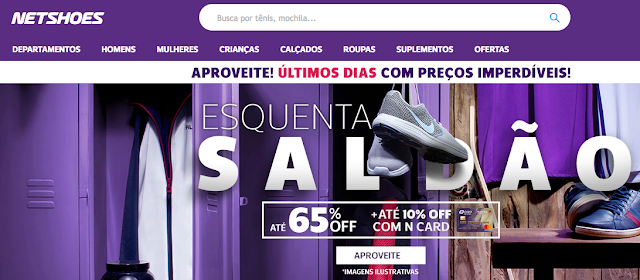
Figure 1: Shopping via mobile phones is key to the success and growth of Netshoes.


Brand sponsored data is when a company opts to allow its customers to access its content without having to use their monthly wireless data plan. This is a great tool when a large proportion of customers are on limited data plans and are making conscious decisions for which services they use their mobile data. By sponsoring mobile data, a brand makes its key connection points much more accessible and attractive to mobile phone users on the go, breaking down the barriers between consumers and brands.

Netshoes is a popular online fashion retail company based in Brazil. As an online store, the mobile phone customer segment is a crucial target group for Netshoes. If these customers aren’t using Netshoes’ app or shopping on the website due to data usage concerns, that significantly impacts Netshoes’ sales and growth. Two years ago, Netshoes saw an increasing number of customers visiting their mobile website or app, but the conversions didn’t follow. Many users dropped after a short period of time, so Netshoes wasn’t able to convert the increasing potential of users.

Figure 2: Netshoes is a popular online retailer using sponsored data to increase key metrics. 

To tackle this problem, Netshoes partnered with Telefonica Brazil (Vivo) to leverage brand sponsored data around one of the most important shopping days of the year: Black Friday. Black Friday is particularly important in the cyber shopping calendar, so online shopping activity is key. The attractive bargains offered by retailers and the hype around this shopping day usually result in a significant increase in transactions.
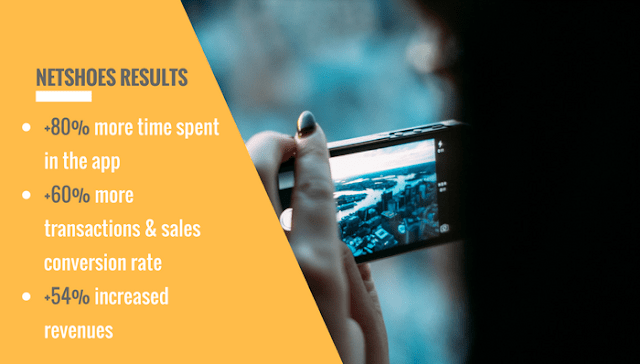
And this also proved true for Netshoes. They kicked off their brand sponsored data promotion on Black Friday and continued the sponsorship of their app and websites afterward. The results were impressive. Here is a snapshot of the main key performance indicators after 3 months.

Figure 3: Netshoes had great success with sponsored data.

In total, sponsored users resulted in:
  • 54% increased revenue
  • 60% increased sales conversion rate
  • 60% increased transactions
  • 80% increased average time spent on App & Mobile
Also thanks to sponsored data, for the first time, sales via mobile phones surpassed those from desktop.
The Netshoes team was very pleased with this significant return on the investment and decided to continue using sponsored data as a key component of their yearly marketing mix. Still today – two years later – Netshoes mobile access points are sponsored for their users and sponsored data became part of their brand value.
For more details see Netshoes’ showcase video:

Netshoes is just one of many brands that have leveraged brand sponsored data with great success. Read more about those cases and the other benefits of sponsored data on our website.

ElevenPaths is a Fortinet’s Alliance Technology Partner

ElevenPaths    18 July, 2017
Solutions Integration with Vamps and Metashield

Fortinet is a Strategic Partner of ElevenPaths, Telefónica Cyber Security unit, with more than 15 years working together, and on June 2016, we strengthened that strategic alliance by adding Fortinet’s Security Fabric architecture to deliver solutions integrated with some of Telefonica’s key managed security services.

In addition to being currently a Fortinet’s Reseller Platinum Partner and a MSSP Platinum Partner, we are proud to have been recognized recently as a Fortinet’s Alliance Technology Partner, to offer these joint Fortinet and ElevenPaths integrated solutions, aiming to help our customers get even more value from their security deployments:

  • The integration of Fortinet’s FortiWeb Web Application Firewall (WAF) with ElevenPaths’ Vamps, a Vulnerability Assessment and Virtual Patching joint solution: a technology partnership to help organizations simply and cost-effectively maximize the timely implementation of virtual patches, and to enforce security policies to prevent the exploitation of a known vulnerability. By integrating Fortinet’s FortiWeb Web Application Firewall (WAF) solution with ElevenPaths’ Vamps, customers could easily deploy virtual patching of their web applications, web-based APIs and web services.
  • The integration of Fortinet’s FortiGate firewall with ElevenPaths’ Metashield, a joint solution for a comprehensive protection of information and assets: a technology partnership to help organizations prevent and detect the leakage of sensitive information resulting from metadata. By integrating ElevenPaths’ Metashield for ICAP with Fortinet’s FortiGate enterprise firewall, customers can easily implement homogeneous corporate policies to prevent and detect leaks of sensitive information, and reduce the economic and reputational impact resulting from the malicious use of exposed metadata.

These joint solutions will enable our customers to increase the value of organization’s FortiWeb and FortiGate deployments, as Metashield could complete any reasonable program of GDPR compliance by preventing the filtering of metadata; and improve organization’s detection and response capabilities by allowing together with FortiWeb and Vamps the timely and early patch of the vulnerabilities detected by Telefonica’s expert analysts.
At ElevenPaths we believe in the idea that “together we are stronger”, and this recognition as Fortinet’s Alliance Technology Partner confirms our vision to continue working with state-of-the-art Partners, to help organizations transform themselves digitally in a secure way.

Pablo Alarcón Padellano
Strategic Alliance Manager at ElevenPaths

Quito becomes the first Smart City in Latin America

AI of Things    17 July, 2017
How many people use the metro on a daily basis? What stop do they get off at? How long is their journey? We can now answer all of the above questions through the coallition of the Quito City Council, the “Banco Interamericano de Desarrollo” and LUCA and further understand the flow and behaviour of Quito’s citizens.


LUCA Transit is the platform that gives users access to anonymised mobile data to estimate the movements of people throughout the city. The system collects trends and aggregates mobile data from Telefonica’s network to understand how the segments of the population as a whole behave.
Taking Ecuador a specific case, Telefónica have 4.4 million users nationally and in Quito they have access to 1.4 million users. Telefónica manage and anonymise their users data with the utmost care in terms of security and privacy.

To apply this technology, Quito was divided into 673 urban areas with 30 rural areas, this allows us to evaluate the flows between all areas of the district. This information gives the municipality the ability to create exact studies on the future users of the city’s transport system. The information will detail data such as the movement of people through each metro stop, the number of passengers per metro line, how long a person spends on the metro and will also detect the starting point of their journey.

These type of solutions have already been successfully implemented in other countries such as Spain, Brazil, Colombia, Peru, Chile, Mexico amongst other countries in Central America and Argentina. Another successful example includes the Nuequén City Council collaboration with LUCA to analyse the urban mobility with LUCA Transit. This included the number of trips generated between the areas of analysis and also both the purpose of the trip and hourly distribution of each trip.
Mobility management is not an easy task for public bodies in cities globally. However thanks to Big Data and initiatives such as LUCA Transit cities such as Quito will be able to improve their mobility conditions therefore improving the living conditions for their citizens.