Browser Extension Usage by the Islamic State Propaganda

Florence Broderick    13 January, 2017
One of the tools that the Islamic State has been using to spread its propaganda is the use of social networks. In the past they have shown how capable they are of expanding their capabilities to cover smartphones and mobile devices, but recently they have also opted for the development of browser add-ons in order to further facilitate access to their content.
Although Firefox extensions are mainly distributed by means of the official market run by Mozilla, the Amaq News Agency, identified as part of the Islamic State’s propaganda apparatus, is also distributing .xpi files in related websites. These files are compressed in .zip and renamed to a .xpi that contains the Javascript, CSS and HTML code that defines the behaviour of the extension.


About this extension, we have identified at least two different versions, 1.0.1 and 1.0.2, whose folder structure contains the same series of source and data files.
.
├── bootstrap.js
├── data
   ├── safe-16.png
   ├── safe-32.png
   ├── safe-48.png
   ├── safe-64.png
   ├── safe.png
   ├── unsafe-16.png
   ├── unsafe-32.png
   ├── unsafe-48.png
   ├── unsafe-64.png
   └── unsafe.png
├── icon.png
├── install.rdf
├── lib
   └── main.js
├── META-INF
   ├── manifest.mf
   ├── mozilla.rsa
   └── mozilla.sf
└── package.json
The most interesting files are three: package.json, install.rdf and the Javascript source file found at lib/main.js:
  • package.json contains metadata and information about the extension like the name, the author, the licenses or the permissions required.
{
    “name”: “amaq”,
    “title”: “Amaq AR”,
    “id”: “jid1-5Fs7iTLaaUaZBgwdar@amaq”,
    “description”: “Amaq AR.”,
    “author”: “Amaq AR”,
    “license”: “MPL 2.0”,
    “version”: “1.0.2”,
    “icon”: “icon.png”,
    “permissions”: {
        “private-browsing”: true
    },
    “engines”: {
        “firefox”: “>=38.0a1”,
        “fennec”: “>=38.0a1”
    },
    “main”: “lib/main.js”,
    “devDependencies”: {
        “gulp”: “^3.8.11”,
        “gulp-image-resize”: “^0.6.0”,
        “gulp-rename”: “^1.2.2”
    }
}
  • install.rdf defines in the field em:targetApplication that the extension is thought to be installed in certain versions. In this case, it explicitly shows that it is valid for different versions of Firefox Browsers, including Firefox for Android (this is defined by the tag <em:id>{aa3c5121-dab2-40e2-81ca-7ea25febc110}</em:id> tagasda).
<em:targetApplication>
    <Description>
        <em:id>{ec8030f7-c20a-464f-9b0e-13a3a9e97384}</em:id>
        <em:minVersion>38.0a1</em:minVersion>
        <em:maxVersion>43.0</em:maxVersion>
    </Description>
</em:targetApplication>
<em:targetApplication>
    <Description>
        <em:id>{aa3c5121-dab2-40e2-81ca-7ea25febc110}</em:id>
        <em:minVersion>38.0a1</em:minVersion>
        <em:maxVersion>43.0</em:maxVersion>
    </Description>
</em:targetApplication>
  • lib/main.js defines the code of the extension itself. In this case, it opens a new tab pointing to a given URL as shown in lines 107 and 108. The only difference between versions is the IP address shown in line 108.
var tabs=require(“sdk/tabs”);
tabs.open(“http://190.14.37.220/v/”);

Using the extension as a bookmark

In the case of the first release of the add-on 1.0.1, the URL opened was hosted at 88.80.20.1 IP address (a non-accessible address linked to an internet services provider settled in Sweden) while in the most recent version this IP address is 190.14.37.220. This address, still accessible at the moment of writing this article, is linked to an anonymous hosting provider settled in Panama that runs a nginx 1.6.2. However, this resource seems not to be hosting the contents itself because if we access to this URL it responds a 302 Moved Temporarily code and redirects us to jkikki.at, the agency website.  There, this Firefox extension can also be downloaded as amaq_news_agency_ar-1.0.2.xpi together with a hash of the file that would ultimately allow users to verify the legitimacy of the extension.
$ curl http://190.14.37.220/v/ -I
HTTP/1.1 302 Moved Temporarily
Server: nginx/1.6.2
Date: Tue, 10 Jan 2017 11:02:55 GMT
Content-Type: text/html
Content-Length: 160
Connection: keep-alive
Location: https://jkikki.at/
The referred website is hosting news in Arabic about Amaq and the Islamic State and is protected by Cloudflare making it impossible to know the real location of the systems used to serve the contents.  By using this approach, banning the access to jkikki.at would not be enough to stop their propagation mechanisms considering that the application developer would only need to modify the Location field to redirect to the new domain in which the content would be hosted.

Identifying other affiliated websites

The structure of the URL found in the extension suggested the possibility of the existence of other domains. The tests conducted have returned new 302 responses that pointed to at least 6 other domains also protected by Cloudflare and whose content is also tied to the Islamic State. The details of the certificates used indicate recent validity periods as can be seen in the following table.
URL
Redirected domain
Language
Certificate valid since
http://190.14.37.220/b/
bibifm.at
Arabic
2017/01/10
http://190.14.37.220/f/
vosn.pw
N/F
2016/01/06
http://190.14.37.220/g/
baqiya.ga
German
2017/01/01
http://190.14.37.220/h/
halummu.at
N/F
N/F
http://190.14.37.220/t/
nikmat.gq
Bengali
2017/01/10
http://190.14.37.220/u/
vijestiummeta.ga
Bosnian
2017/01/05
http://190.14.37.220/v/
jkikki.at
Arabic
2016/12/31
Apart from this extension, there is no evidence of the existence of others with a similar behavior that point to the rest of domains. However, the recent creation of the certificates suggests that newer similar add-ons could be created easily by modifying only the URL of the original file to point to one of the URL shown before.

Registrant information and other metadata

Regarding the registry of identified domains, those that do not present special privacy protection measures have been registered email accounts using the tutanota.com encrypted email provider taking into account that the @keemail.me, @tuta.io, @tutamail.com and @tutanota.com (used to register a domain linked to the organization which is no longer used like jkikki.de) are different domains that make use of this service.
Domain
Registrant
bibifm.at
vosn.pw
baqiya.ga
N/F
halummu.at
nikmat.gq
N/F
vijestiummeta.ga
N/F
jkikki.at
jkikki.de
On the other hand, the rest of files identified in the extensions do not show too many details apart from some EXIF data found in the agency logos and icons. These files seem to have been edited with various Adobe products for Windows according to its metadata.

Assesment

The Islamic State has shown in the past that it has used the means at its disposal to massively spread its content in both, social networks and mobile applications. In this case, the use of a browser plug-in is another example of how the individuals linked to this organization are capable of adapting themselves to ensure the dissemination of content using not only a technological assets located in different countries, but tools and systems such as Cloudflare and various servers and methods to ensure the effectiveness of the difussion of their message. 


Félix Brezo
Intelligence Analyst at ElevenPaths
Yaiza Rubio
Intelligence Analyst at ElevenPaths

Big Data: moneymaker and force for social good?

Ana Zamora    12 January, 2017


This article was originally posted by the Chairman of Telefónica, José María Álvarez Pallete, on the World Economic Forum blog.

Big data and, more recently, artificial intelligence have become some of the world’s favourite boardroom buzzwords in the past three years. Every CEO feels some level of nervous excitement about the immense opportunity of big data, with the International Data Corporation predicting revenues will rocket from $122 billion last year to more than $187 billion in 2019. Forrester Research forecaststhat the big data technology market will grow three times faster than the IT market overall.
All this buzz about becoming data-driven has led us to make more than significant investments in big data technology, convinced that data scientists and their advanced analytics will give us answers and reshape our businesses as we know them. But how should we be measuring our success when it comes to big data? Is it a lift in our average revenue per user (ARPU)? Is it a slight drop in our churn? Or is it a marginal increase in the efficiency of our network? For me, it’s all of those things, but equally, as a private sector multinational, we want to ensure that we are going above and beyond to apply the capabilities we develop in big data for social good.
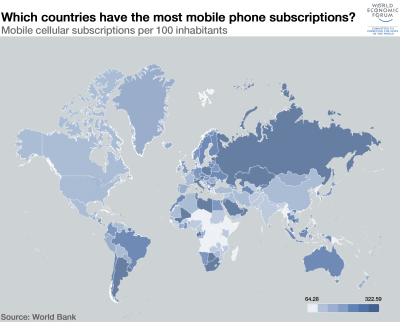
When I think about big data in telecommunications, I think about the 350 million customers we serve worldwide and the 23 billion mobile events they create every day in 21 countries. When I think about social good, I think about the commitments we have all made with the UN when it comes to the 17 Sustainable Development Goals (SDGs) for 2030, which represent 169 targets with 241 proposed indicators. Forging a relationship between our big data and work for global social good is fundamental, especially as 80% of the 6 billion mobile phones in the world are in developing countries, which is where we can have the greatest impact.
 
Mobile cellular subscriptions
Figure 1: Mobile cellular subscriptions per 100 inhabitants.

To maximize this impact, I strongly believe we have to go much further than just telco data. To accurately measure our progress on the SDGs we will need to focus on goal 17, which is about working in partnership to achieve the goals.
Collaboration between the public and private sector is crucial to advance a global open data initiative, but it is also of great importance to ensure more private sector data is used. This means bringing together data from the financial services sector, utilities providers, retailers and search engines, amongst others, to investigate how combining multiple data sources can provide achievable insights for policy-makers and NGOs.

As an example of this, linked to SDG 3 on good health and well-being, our Telefónica R&D team carried out research on our data in Mexico during the H1N1 flu outbreak. Human mobility directly accelerates the spread of diseases, so, using our Smart Steps mobile phone data technology, we investigated mobility patterns before and after the government advised citizens to stay at home. This showed that only 30% of people actually stayed at home, whilst 70% showed barely any changes in their day-to-day behaviour. Over time, this data-driven approach to epidemic response will inevitably help us to control such challenges for global health.
Vaccine
Figure 2: A nurse holds up a bottle of the vaccine against H1N1 influenza 
at a hospital in Guanajuato, Mexico. Image: REUTERS/Mario Armas.

Equally, data from the financial services sector can also help us achieve SDG 13, which focuses on climate action. In September 2016, BBVA used its sale payments and ATM cash withdrawal data to
measure people’s economic resilience to natural disasters during Hurricane Odile, one of the most destructive hurricanes in almost 25 years in Mexico. Of course, combatting climate change requires a shift in the way we behave, but big data projects such as this or our study on commuting and pollution, are pivotal in ensuring climate doubters start to take this seriously. We’re already taking it seriously having committed to run 100% of our business with renewable energy sources by 2030.


Making big data for social good a success has its challenges. Chief data officers are inevitably concerned about privacy and security. Legal implications vary in every country, meaning that anonymization and aggregation processes need to be adaptable and exceptionally robust. Equally, chief communications officers are worried about what using customer data does to their organizational reputation – even if it has an overwhelmingly positive outcome for society.
However, if we want to make big data the success everybody projects it to be, then we must ensure we overcome these challenges and start measuring its success, not only on its commercial potential, but also its ability to bring value to society. If we can find a consistent way for NGOs and the private and public sectors to work together, such as the Open Algorithms Project, then we will see big data as a different kind of buzzword: not just as a moneymaker, but as a society-shaker.

Our “telco” take on Uber Movement

AI of Things    11 January, 2017
This week Uber excited transport planners around the world sharing the news of the launch of their Uber Movement product. Often dubbed as the world’s leading “taxi” company, Uber has revolutionized personal transport in many cities around the world with their first-class interface and their customer-centric, peer-to-peer approach – valued at approximately $66bn in 2016.
Uber Movement will provide open access to anonymized data from over 2 billion trips to help improve urban planning all over the world, engaging not only city officials and transport planners but also the general public. These datasets will allow individuals to explore and discover mobility patterns from hundreds of thousands of Uber vehicles in 66 countries around the world.

Here at LUCA, we were very excited to see the news as we are also passionate about making cities smarter and more efficient by using Big Data – something which we started to do 4 years ago when we launched our Smart Steps product, providing groundbreaking transport insights to bodies such as Highways England, the DGT and a wide range of city councils across Europe and Latin America. We also recently expanded our technology to China, working alongside China Unicom to roll out our insights platform outside of Telefónica’s footprint.

Ingesting billions of mobile networks events everyday, we’ve learnt a great deal about the immense value of having a consistently large and diverse sample size and we’ve also refined our anonymization, aggregation and extrapolation methodology alongside sector experts such as Jacobs and AECOM to ensure we’re providing robust and actionable insights which can reshape the way transport is optimized all over the world –  and we’re proud to have done that in supercities such as London and São Paulo where the sheer size and population density makes modelling and planning a unique challenge.

Our Smart Steps product lead, Timothy McHugh said: “We’re particularly curious to see how the Uber Movement product works. As experts in population movement understanding and overcoming challenges such as bias and spatial accuracy have been key to delivering world class output, something we’ve always been eager to be transparent about with our partners and clients.”

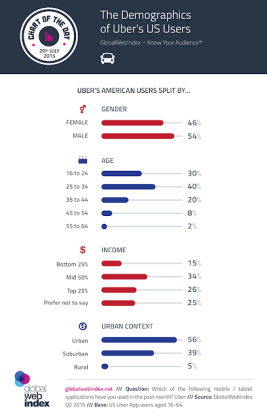
We also think it will interesting to see how they take on the sample bias, given that, for example, almost three quarters of their user base in the US is between the age of 16 and 34. Equally, many countries aren’t just facing an urban traffic problem, and therefore need to understand the way people move between different cities to plan infrastructure and public transport more efficiently at higher level.

Furthermore, the question around “when” data is captured is also fundamental in understanding how Uber’s new product can be applied in modelling. Fortunately with mobile data, the network never sleeps and we are able to analyze datasets created 365 days per year, 24/7 – unlike GPS based apps which we all tend to use more sporadically. We have explored the use of such GPS data alongside Smart Steps and there is definitely room for the two data types to compliment each other in transport planning projects in the future.

Overall, it’s clear that Big Data, and indeed Open Data, are going to disrupt the way cities are managed and therefore optimized in the future.  We strongly believe that combining multiple data sources and validating new innovative data sources is crucial in enabling the public sector to make meaningful progress on the Sustainable Development Goals 11 and 13 (Sustainable Cities and Communities and Climate Action).

p.p1 {margin: 0.0px 0.0px 0.0px 48.0px; text-indent: -48.0px; font: 14.7px Calibri; -webkit-text-stroke: #000000}
span.s1 {font-kerning: none}
As private sector companies, it’s important that we work closely with the public sector (in a sustainable way) to give back the value of data to society. We’re keen to see how Uber Movement insights could compliment our Smart Steps data in the future – “finding smarter ways forwards” together as their slogan suggests.

p.p1 {margin: 0.0px 0.0px 0.0px 0.0px; font: 13.0px Times; color: #747070; background-color: #ffffff}
span.s1 {font-kerning: none}

Nicolas de Cordes: “It’s time to scale up Big Data for Social Good”

AI of Things    10 January, 2017


This week we interviewed Nicolas de Cordes, Director for Marketing Anticipation at Orange and a pioneer in the field of Big Data for Social Good. After spending his career between strategy and innovation, both in consulting at Boston Consulting Group and in marketing and innovation at Orange, Nicolas has more recently become a member of the World Economic Forum’s Global Agenda Council on Data-Driven Development and the Council on the Future of Humanitarian System, as well as being a key part of the UN Secretary General’s Expert Advisory Group on the Data Revolution for Development. We quizzed Nicolas on his experience in using data to have a social impact as well as gaging just how big this opportunity could be in the next few years.


So Nicolas, how did you end up working in this space and where did the Data for Development Initiative come from?
Well, everything started at the NetMob conference in 2011 at MIT where I was taking part as a member of the scientific committee for these analyses on mobile data. In one of those typical “networking coffee breaks” I ended up discussing the data for social good opportunity with several colleagues and a few months later we formed the Data for Development initiative at Orange. Fortunately, my current role allows me to explore new business opportunities in the telco sector and mobile data for social good is one of the most exciting ones I’m working on at the moment. 


And which project within the initiative are you proudest of?


There are so many incredible projects out there, however, I was particularly fascinated by one analysis which combined mobility data with medical data to fight Malaria in Senegal. We received a request from a local coordination body to provide Data as a Service (DaaS) sending weekly data to doctors on the ground enabling them to optimize their deployment of resources. If we manage to develop this service for example, they could be distributing mosquito nets and vaccines in the most efficient way possible.
Spread of Malaria
Figure 1: How did the Data 4 Development challenge help in restricting the spread of malaria?
Other projects have been looking at poverty index and literacy rates. This was particularly rewarding because we really helped the National Statistic Office to be a lot more precise. Mobile data allows them to measure things more frequently, which is so important in terms of development. Of course there is a lot of bias in our data (e.g. market penetration) but you can still gather great insights and take better decisions as a result. 

What are challenges of working with national statistics organizations being a mobile operator?
There are many, but fortunately there is a common opportunity. They need data more regularly and more granular in particular to measure the new sustainable Development Goals, and we want to contribute. However, there are always some disparities in culture and skills between the private and public sector. By nature, telcos are able to develop Big Data tools with weekly and monthly insights (sometimes even in real-time) from data provided by their mobile networks whilst public organizations don’t always have the resources or infrastructure to extract insights at the same pace and their decisions are taken with different time scales in mind. The key is to work closely together to find a healthy way to collaborate going forwards for both policy making or strategic decision needs on one side and for operational and tactical needs on the other side. 


And how do you think we can achieve that healthy collaboration?


Advancing social good projects is unfortunately quite slow, however, if you take a step back, we can see significant progress over the past 3 to 4 years. Going forwards, data privacy is going to be one of our greatest challenges to address.

“Going forwards, data privacy is going to be one of our greatest challenges to address.”

Everybody is talking about it, whether it’s the data of groups of people or individuals and it’s a legitimate concern which needs to be taken into account. We must work through that issue together to overcome these barriers.

p.p1 {margin: 0.0px 0.0px 0.0px 0.0px; font: 16.0px Calibri; -webkit-text-stroke: #000000}
span.s1 {font-kerning: none}

From your experience, do attitudes towards privacy vary much across different geographies?
Absolutely yes, but to answer this one I’ll use an anecdote from a project we participated in in Senegal. The first thing we did there was to visit the Data Protection commission. Coming from Europe, I was expecting to encounter some challenges, however, the head of their legal department stopped me in my tracks and said: “We have a different attitude here, in this country people die because of the lack of information, so we really need your project.” This was the moment when I realized that the mind-set is completely different depending on the stage of development the country is in. 
NGOs organizations
Figure 2: Using data enables NGOs and medical organization to deploy resources in the most efficient way possible.

Many are starting to talk about Data Philanthropy in the world of Big Data for Social Good. How do you think we can set a sustainable model which keeps all parties happy?
Doing this is fundamental so that we grow from doing some exploratory pilots here and there to doing something frequently, as a service. In order to scale up, we will have to make this profitable. Of course, due to the nature of these projects, we can’t make profit the main driver of our actions, the private sector has to take into account the indirect social benefits of making such projects work.

“Of course, due to the nature of these projects, we can’t make profit the main driver of our actions, the private sector has to take into account the indirect social benefits of making such projects work.”

With regard to Data Philanthropy, I prefer to call it Data Access Philanthropy as it’s all about finding ways for communities to access and work with information safely – without completely opening the data in an insecure way. We need a model to enable institutions to explore the use of data, understanding that it can’t always be free – which is precisely what we are trying to do with OPAL (Open Algorithms Project).

It’s 2017 and suddenly we’re hearing a lot more about Artificial Intelligence than Big Data. How is that applicable to your projects? 
As a new complementary tool, next to more classic algorithms developments, AI is really important for the sector, particularly the Machine Learning element. It should enables us to work with massive volumes of anonymous data in a more efficient way, as a lot of the information we extract is not direct, allowing us to infer from correlations, reapplying data sets and achieving valuable insights. In the case of OPAL, when we open code and algorithms, Machine Learning will also be a key piece of our model and we will need to find a way to make it transparent and subject to human oversight by local constituencies.

“Machine Learning will also be a key piece of our model and we will need to find a way to make it transparent and subject to human oversight by local constituencies.”

One of the essential aspect of the OPAL project is to work on the Local Data Governance, to ensure that the outcomes of the project will fulfil the needs of the local communities and partners in term of societal, profitability and environmental aspects. AI is just a new tool to support this more global approach focusing to answer to multiple user needs.

What’s your dream for the Big Data for Social Good space in the next few years?

The biggest priority has to be cooperation, between telcos like ourselves, in line with the 17th Sustainable Development Goal. I cross my fingers for the OPAL project, hoping that the platform will be built within 2 to 3 years with initiatives in both Senegal and Colombia through a co-design between telcos and users focusing on Development sector. I believe that it can become a reference for other industries apart from telecommunications so that we start to see similar platforms, using a “Safe Q&A” mechanism, in different sectors, allowing more diverse projects to access insights, which bring even more value to decision-makers in developing countries.

p.p1 {margin: 0.0px 0.0px 0.0px 0.0px; font: 16.0px Calibri; -webkit-text-stroke: #000000}
span.s1 {font-kerning: none}

p.p1 {margin: 0.0px 0.0px 0.0px 0.0px; font: 16.0px Calibri; -webkit-text-stroke: #000000}
span.s1 {font-kerning: none}

LUCA and the UN World Data Forum: 7 ways mobile data is being used to change the world

AI of Things    9 January, 2017

It’s just 6 days now until the United Nations World Data Forum in Cape Town and today we are honoured to be featured as guest contributors on their blog, alongside a wide range of other organizations and thought leaders who are passionate about the power of Big Data for Social Good.

After the release of “A World That Counts”, in November 2014 by the UN Secretary-General’s Independent Expert and Advisory Group on Data Revolution for Sustainable Development, the Statistical Commission decided to found a UN World Data Forum on Sustainable Development Data which would allow them to bring together a wide range of data stakeholders from the world of IT, geospatial information, Data Science as well as key leaders from the public sector.

The first UN World Data Forum will be hosted by Statistics South Africa in Cape Town, South Africa next week, with the Opening Ceremony taking place on January 15 in the evening and the Forum closing on January 18.
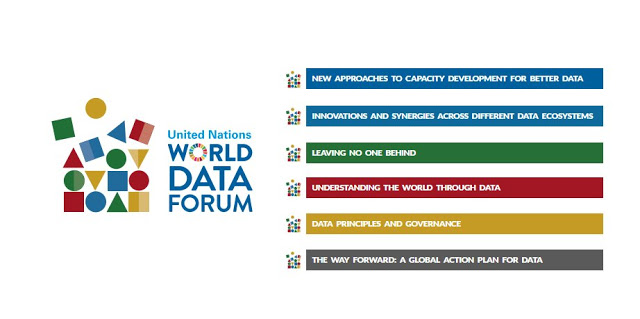
A variety of topics will be discussed including statistical capacity and data
literacy; synergies between traditional statistics and new
data sources; innovative technologies
for data production and analysis; mobilizing resources
needed; privacy and data protection; data governance
and standards; geospatial information systems as well as data
communication and visualization tools.
Figure 1: What is the UN World Data Forum all about?
In our exclusive blog post, we discuss 7 ways in which mobile data is being used for social good giving concrete examples of how our society’s “connection obsession” can actually change the world and enable policy makers to shape their decisions in a data-driven way.

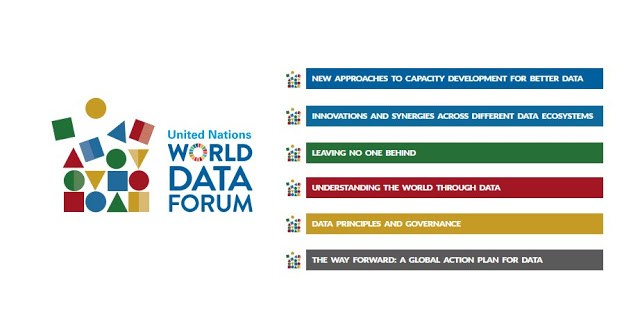
Figure 2: Our participation in the UN Data Forum.

See the full article here to find out how we believe mobile data can change the world.

Programming languages in the IoT era

Beatriz Sanz Baños    4 January, 2017

Under each machine, every connection, any kind of interface… there is a programming language. IoT connects a myriad of devices to each other, creating a massive, complex network. But there are thousands and thousands of programming languages, too. Which is the most commonly used in the development of IoT? The choice of one language over another determines the end product or service, as well as the technical possibilities or the user experience. In the age of Internet of Things, choosing the programming language properly is vital to the success of the project.

Choosing one among thousands

One of the most critical points when understanding the role of different programming languages in development projects is to understand what reasons lead us to choose them. Traditionally, there are two fundamental questions when choosing a programming language: the end user and the device with which you are working. The former determines the end experience that you want to achieve while the latter describes the technical possibilities you have.

There are hundreds of thousands of devices connected to IoT. But what do we consider a device within the Internet of Things? According to the definition of Ian Skerrett, Marketing Director at the Eclipse Foundation, the architecture environment in IoT devices is divided into three main types: sensors that create the information, local hubs or gateways that organize it, and servers that store it, usually remotely.

This definition also helps us to understand why there is a need to choose between programming languages. When you work with a sensor, which measures or creates the data, you could choose a language like C, which is able to work directly with the RAM, for example. But to develop any of the other links in the chain, you may prefer to choose other more multiplatform-oriented languages, or simply one that is more familiar to you than others.

Java, C and JavaScript, the kings of the hill

Over the past year, the Eclipse IoT Working Group conducted an interesting survey of 592 developers within the IoT world. One of the intentions of the study was to probe the developers’ opinion regarding the use of programming languages ​​in their projects. The Eclipse data points to Java, C and JavaScript as the most often chosen and highly valued languages, with a notable difference compared to the others. Although Python and C ++ also rank strongly, the advantages of the first three continue to stand out.

These are the languages that are ​​generally preferred for the development of almost any project, where they recurrently appear because of their versatility, their availability in different platforms or their efficiency. However, when asked, several experts in the industry also mentioned other languages ​​such as SWIFT, Ruby, Lua or even assemble language. This matches the Eclipse survey, where these other languages were also chosen among the thousands options.

However, the choice of Java seems to spark some controversy. Beyond the document drafted by Eclipse, many experts usually opt for C as the main language, especially in IoT. Its role as the starting point of many other languages makes it a very convenient tool to master. C is used in embedded devices, which places it in a privileged position on the Internet. This language is used in the lower layers of the software, as close to the hardware as possible. C is flat, sober and very powerful, perfect for controlling any element in IoT.

On the other hand, in recent years Java has gained ground at the expense of C, especially when we talk about Internet of Things. The premise “write once, run everywhere” is a point that no developer underestimates. Its incredible multiplatform versatility coupled with the current possibility of embedding Java on any chip with JVM are the main reasons why it is chosen. So why there is any debate at all? The consumption of resources is the main reason why Java is not used more often. Despite the security and versatility this language offers, its consumption is the main limiting factor. It really determines most of its uses.

Finally, JavaScript is gaining importance in servers. Collecting and managing information through hubs and gateways is trending. Nowadays we can see JavaScript and Node.js running on large machines or microcontrollers right from the very start. JavaScript allows developers to programme in a familiar environment, without the need to learn new languages, which is making a difference. However, although it is gaining in importance within IoT-related needs, its use is still quite limited.

Scenario of emerging languages

“Internet of Things is a polyglot; it does not speak just a single language,” explained Skerrett when talking about Eclipse’s efforts. The results of the survey, in fact, support this statement. After all, there is no single choice. In fact, it is not even necessary to choose. IoT is an environment with the same technical possibilities as any other within computing. The choice of one programming language over another is due to multiple factors. This means a scenario where languages ​​that are not so commonly chosen are gradually emerging. Many of them are quite familiar to developers, while others are carving a niche for themselves thanks to the needs of the Internet of Things ecosystem.

Python is a “veteran” which began as a scripting language but is increasingly used as the main tool by developers. Python is the preferred language for one of the most popular microcontrollers on the market, “Raspberry Pi.” Many schools use this platform to teach programming, and manuals are easily accessible. Likewise, if the project is relatively simple and there are no large resource demands, it is possible to develop powerful tools easily thanks to this language.

Although Swift is mainly used to develop applications for iOS and MacOS, its presence in IoT solutions is indisputable. If you need an App or service to interact with an iPhone or iPad, both of which are incredibly widespread in the market, you need Swift. But in addition, Apple’s effort to make its devices the center of the home automation network is making Swift increasingly prominent. In this case, the Apple HomeKit platform plays a crucial role in Swift’s growing interest within IoT.

PHP is the most common choice among bloggers and web developers. But it is also surprisingly popular on IoT. Its role in servers is widely known, but it is being used at lower levels, too. Its simplicity is also a major benefit when using this language instead of other “heavyweights” like C. In addition, it is now easy to find languages ​​like C#, C++, Lua, Ruby or Go, among others. The future of IoT is clearly a scenario in which many languages ​​work together to interconnect a growing network of devices and services, a network in which there is no one main language.

Aim for 2017: Change the World

AI of Things    3 January, 2017
Have you already made your New Year’s resolutions? How would you feel if one of those was to change the world?

Three nights ago millions of people had 12 grapes (as the Spanish custom dictates) with the hope of a better 2017. Using Figure 1 we can get an idea about the proportion of men and women who attended to one of the most emblematic places of Madrid for New Years: Puerta del Sol. We can also identify their normal place of residence the rest of the year and their age.

Distribución asistentes Puerta del Sol
Figure 2: Breakdown of those who celebrated New Year´s Eve in Puerta del Sol (Madrid) by age, gender and place of residence.
Continue reading “Aim for 2017: Change the World”

LUCA’s first 70 days

Richard Benjamins    30 December, 2016
We are almost at the end of 2016, which has been a big year for the world of Big Data. One important milestone was the creation of LUCA, Telefonica’s new Data Unit, which focuses on developing Big Data solutions for private and public sector organizations. Our launch event took place on October 20th, which you can see an overview of here.
LUCA (Last Universal Common Ancestor) has been warmly welcomed by the press, Industry Analysts and most importantly, our clients. Analysts firms such as Gartner, IDC, OVUM, and 451 said that Telefonica’s strategic move with LUCA puts it well ahead of its competitors.

Since our launch, the LUCA team has worked frenetically to set up the business in the different countries where we operate, and LUCA is now launched world-wide in Germany (through Telefonica Next), UK, Brazil, ColombiaPeru, Chile and Argentina.

We have also regularly shared our views on the world of Big Data and Artificial Intelligence on our blog “Data Speaks”.  In our first 70 days of existence, we have shared various types of content as you can see below:

Our top 3 posts included our launch in Peru, our Mannequin Challenge and our proof of concept on commuter traffic in Madrid. We’ll continue to post on such topics and much more in 2017 so make sure you don’t miss out by subscribing here.  Our goal is to bring you the best content possible in a timely fashion, sharing insights on cutting-edge technology and hands on-data science with the widest range of data sources possible.
Since we started working towards the launch of LUCA in the summer of 2016, we have participated in 22 external events giving talks or participating in panels. Most of the events were related to Big Data, and some of them about Artificial Intelligence, as you can see here.
We also carried out several proof of concepts in our Data Science team including Global Comms, a US Elections analysis using Hue lamps, Global Rider and a Commuting & Pollution analysis – all of which were published on our blog. We will deliver 12 more new proof of concepts in 2017. Last week we also published our first white paper on the fundamentals of Artificial Intelligence, and we’ll be sharing plenty more throughout 2017 to give the latest insights on the world of Big Data and AI.
Over the past few months, we have become obsessed with data, measuring as much as we can, aligned with our philosophy of making data-driven decisions. We are real fans of Lean Analytics, and we embed analytics in everything we do. We are not afraid to recognize our weaker points (“the KPIs that hurt”), and work hard to improve them, listening carefully to the data.
We will also significantly progress our projects on Big Data for Social Good, so watch out for our announcement at the Mobile World Congress in February in Barcelona. We will also be making considerable progress as partners in the OPAL project, as well as applying Big Data to Digital Education in the Profuturo initiative.
We are also working to create what we like to call an extended organization, in the sense of Salim Ismail’s Exponential Organizations. There are many people, foundations and companies who are willing to contribute to help achieve the UN’s Sustainable Development Goals with data, so we believe in bringing those individuals together. We will be working with several universities around the world, including the Pontificia University of Salamanca in Spain, and the ESAN Graduate School of Business in Peru. If you are interested in collaborating with us for the greater good, please contact us at [email protected].
To give our activities in Big Data for Social Good a boost, we will start a Talentum Lab where 10 recently graduated students will work enthusiastically to accelerate our projects which harness the power of data to have a social impact.
However, at LUCA we also think it’s important to have fun whilst we’re working hard. We came together with the rest of our CDO area, collaborating with different teams to work as one big family. For example, we filmed our very own Mannequin Challenge just over a month ago:
After the success of this viral challenge, with more than 6500 views, we decided to spread the Christmas spirit by doing a Global Christmas Lip Sync, in which Telefónica colleagues from more than 7 countries participated:

Video 2: Telefónica employees all over the world wish you Merry Christmas.

As you can see, it’s been a busy 70 days in the LUCA team and now we’re ready to make 2017 a success.  We’ll be bringing exciting new products and services to our customers, driving forwards our Big Data for Social Good initiative and creating the most compelling content possible to make sure data is being used in the most innovative ways possible.  We’ll be taking the most data-driven approach possible to our work, ensuring the best experience for our users and clients – so watch out and keep in touch with us on our blog or website.
Leave a Comment on LUCA’s first 70 days

LUCA’s First White Paper: Surviving the AI Hype

AI of Things    23 December, 2016
LUCA has published its first white paper today entitled “Surviving the AI Hype – Fundamental concepts to understand Artificial Intelligence“.  Written by Dr Richard Benjamins, this piece aims to empower our readers to interpret and assess the increasing amount of content around AI currently available online.

Artificial Intelligence (AI) is one of the hottest topics out there at the moment, and it is often merely associated with chatbots such as Siri or other cognitive programs such as Watson. However, AI is much broader than just that. To understand what we read in the press and on the Internet, it is important to understand some of the “AI basics”, which are often lost in the midst of AI hype out there at the moment. By understanding these fundamental principles, you will be able to make your own judgment on what you read or hear about AI.

You can download this whitepaper in pdf format here:

Our Christmas Lip Sync

AI of Things    23 December, 2016

It’s been a busy few months since our LUCA launch in October, but finally the time has come to have a few days rest and enjoy the festive spirit. Our team, alongside other colleagues from our Telefónica offices in 7 different countries, felt the Christmas vibes and decided to take part in this Lip Sync to wish you a very Merry Christmas and a Happy New Year – filled with data-driven decisions and actionable insights: